
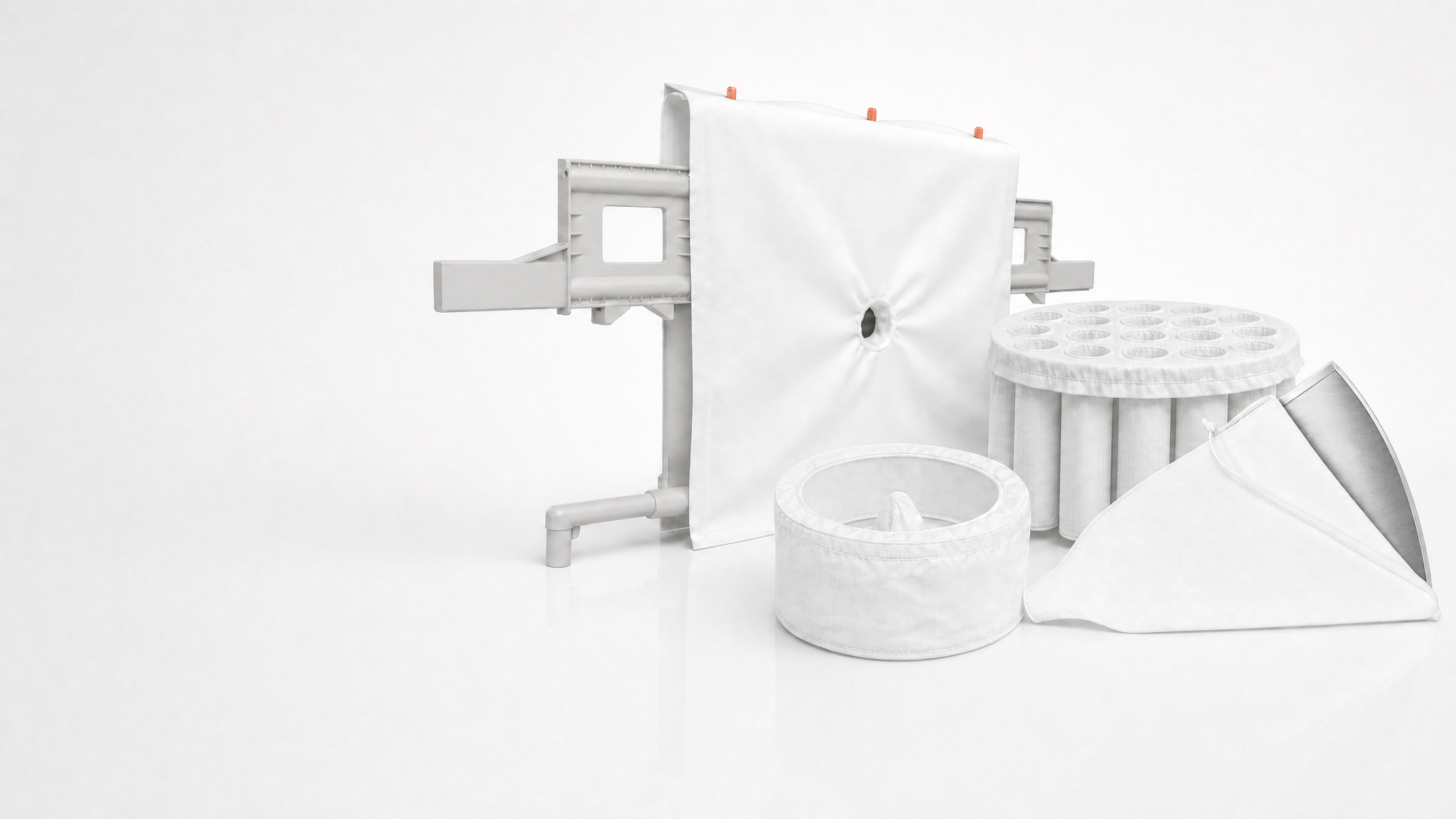
Fluid bed dryer filter bags do more than keep dust in check — they directly affect airflow, product quality, and uptime. If you operate a fluid bed dryer, knowing when to replace the bags can help you avoid pressure build-up, product loss, and unstable fluidisation before they turn into costly stoppages.
In this guide, we’ll look at the practical signs of worn FBD bags, how to judge end-of-life in daily operation, and why many plants choose RF-FBD Series fluid bed dryer filter bags for reliable performance in demanding drying cycles.
🔑 Key Takeaways
- A rising pressure drop is often the first sign that fluid bed dryer bags are nearing replacement.
- Visible product loss or dust carryover usually means filtration efficiency has already declined.
- Uneven fluidisation can indicate clogging, fabric fatigue, or bag damage.
- Right-sizing the replacement fabric and matching it to your process helps extend service life.
⚙️ What Changes When FBD Bags Start to Fail?
From the operator’s seat, degraded filter bags usually show up as a process problem before they become a visible fabric problem. You may not see tears right away, but the dryer starts behaving differently: the same air volume no longer gives the same fluid bed, and the filter section begins to work harder.
That’s why fluid bed dryer systems need regular fabric checks, especially in continuous production or when fine powders are being dried. If your dryer is used in a sensitive process such as pharmaceutical processing or chemical production, the cost of waiting too long is usually higher than the cost of planned replacement.
⚠️ Caution: Do not wait for a bag failure to become obvious. A damaged or overloaded FBD bag can release product fines, reduce containment, and create unplanned downtime.
Common operator symptoms
- Pressure drop increases even after normal cleaning or pulsing.
- Product loss appears in exhaust, filters, or downstream dust collection.
- Uneven fluidisation creates dead zones, channeling, or unstable bed movement.
- Longer drying times are needed to reach the same final moisture level.
🔬 The Three Main Signs It’s Time to Replace the Bags
1) Pressure drop keeps climbing
A gradual increase in pressure drop is usually the earliest and most useful indicator. If the airflow has stayed the same but the dryer is pulling harder, the bag surface may be blinded by fine particles, sticky residues, or agglomerates. Once cleaning no longer restores normal resistance, replacement becomes the practical option.
2) You start losing product
Visible dust carryover, contamination in the exhaust line, or unexplained yield loss often means the fabric is no longer retaining fines as intended. In a stable setup, the filter bag should protect both product recovery and plant cleanliness. When that performance slips, the bag may be worn, damaged, or no longer suitable for the process conditions.
3) Fluidisation becomes uneven
If the bed begins to move unevenly, the bag system may be restricting airflow or leaking in selected zones. That can show up as hot spots, poor mixing, or inconsistent drying across the batch. On a busy line, this is often one of the most expensive signs because it affects both quality and cycle time.
Rule of thumb: If pressure drop rises, fines escape, and fluidisation quality drops at the same time, the bags are usually past the point of routine cleaning.
📊 Replacement or Cleaning: How to Decide
Not every performance drop means immediate replacement. Sometimes a cleaning review, pulse adjustment, or process change can restore function. But if the same symptoms return quickly, the fabric itself is probably the limiting factor.
| Condition | Likely Cause | Operator Action |
|---|---|---|
| Pressure drop rises slowly | Surface blinding or dust loading | Check cleaning cycle first |
| Pressure drop stays high after cleaning | Permanent clogging or fabric fatigue | Plan replacement |
| Fines appear in exhaust | Wear, seam damage, or loss of retention | Inspect immediately and replace if needed |
| Fluidisation is unstable | Uneven airflow through degraded fabric | Check bag condition and air distribution |
🛠️ Practical Inspection Routine for Operators
A simple inspection routine helps you replace bags before they cause quality issues. The goal is not only to spot damage, but to understand whether the fabric still matches the actual process load. For operators comparing options across multiple machines, it can also help to review related fabrics used in RF-NF Series needle felt applications or a broader vacuum filter setup, since wear patterns often reveal how the process behaves.
Review pressure drop trends, drying time, airflow stability, and dust carryover from recent shifts.
Look for abrasion, seam stress, deformation, discoloration, or areas where cake or powder buildup remains after cleaning.
If the dryer no longer reaches the same throughput or fluid bed quality, the bag may be too far gone for recovery.
📋 Pre-replacement checklist
- Pressure drop trend reviewed over several batches
- Cleaning cycle verified and still ineffective
- Nozzle, support cage, and sealing points inspected
- Fabric condition checked for wear or contamination
- Replacement specification matched to process temperature and dust load
💡 Why RF-FBD Is a Smart Replacement Choice
When you’re replacing worn bags, consistency matters. The RF-FBD Series is designed for fluid bed dryer applications where airflow, retention, and mechanical durability all need to work together. That makes it a practical choice when you want to restore stable operation without changing the entire process setup.
For plants that need to verify the right fabric specification quickly, you can also configure your fluid bed dryer filter fabric online and receive a pre-filled, non-binding specification and inquiry. This is especially useful when you’re balancing temperature, particle size, and cleaning intensity.
💡 Tip: If the same dryer runs different products, keep a record of bag performance by product type. A fabric that works well for one powder may age much faster on another.
✅ Final Takeaway for Operators
Replace fluid bed dryer filter bags when cleaning no longer restores normal pressure drop, when fines begin to escape, or when fluidisation becomes uneven. Waiting too long usually costs more in lost product, longer cycles, and process instability than a planned bag change.
For the best result, match the replacement fabric to the real operating conditions of your dryer, not just the original specification. If you want a fast starting point, use our online tool to configure your fluid bed dryer filter fabric online and generate a suitable non-binding request in minutes.
📩 Need Help Choosing the Right Fabric?
Our technical team at R+F FilterElements can help you find the perfect filter fabric for your specific application. Get in touch for a free consultation — we will recommend the right solution based on your machine, process, and operating conditions.