
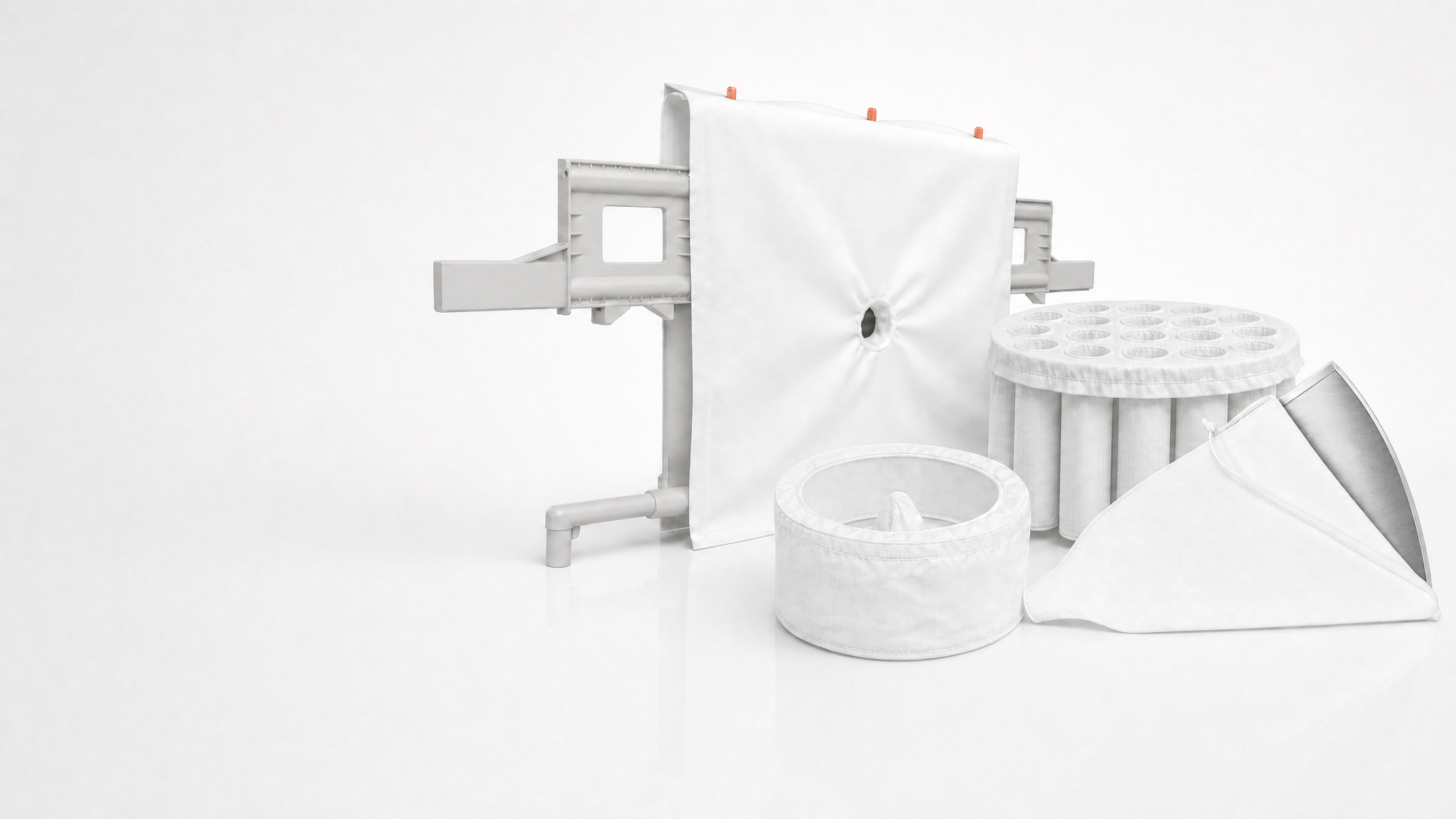
In centrifuge solid-liquid separation, the seam is often the first place where purity is won or lost. If you run pharma or food processes, the difference between a stitched and an ultrasonic welded filter bag can show up in contamination risk, cleaning effort, and batch consistency.
For operators, this is not just a manufacturing detail — it affects how reliably your centrifuge performs on every batch. That is why many plants move to RF-CF Series centrifuge filter bags with welded construction when product purity matters most.
🔑 Key Takeaways
- Stitched seams create needle holes and thread paths that can trap fines and residues.
- Ultrasonic welding creates a sealed seam without stitching holes, reducing contamination risk.
- In pharma and food, welded seams support cleaner changeovers and easier validation.
- Choosing the right bag starts with your slurry, cleaning regime, and purity target.
⚙️ Why seam design matters in centrifuge bags
On a centrifuge, the bag is exposed to mechanical load, high rotational forces, and repeated product contact. The seam is not just holding the bag together; it is part of the filtration boundary. If that boundary contains stitch holes, loose thread ends, or tiny channels, product can migrate into the seam and stay there between cycles.
That becomes a real issue in pharmaceutical filtration and sensitive food production, where you need predictable cleaning and minimal particle shedding. If you have ever dealt with contamination from stitching, you know how quickly a minor seam detail can become a batch quality issue.
💡 Tip: Think of the seam as part of your product-contact surface. If you would not accept a rough, hard-to-clean area inside the bag, do not accept it in the seam either.
🔬 Stitched vs. ultrasonic welded seams: what changes on the floor?
Both seam types can hold a bag together, but they behave very differently in service. Stitched seams are familiar and flexible, while ultrasonic welded seams are built to seal the material edges and eliminate needle perforations.
| Feature | Stitched seam | Ultrasonic welded seam |
|---|---|---|
| Contamination risk | Higher, due to needle holes and thread channels | Lower, because there are no stitch perforations |
| Residue retention | Can trap fines and product in the seam | Smoother seam profile, easier to clean |
| Edge stability | Thread can wear or fray over time | Sealed edge is more resistant to fraying |
| Best fit | General industrial duty, less critical purity | Pharma, food, and hygiene-sensitive processes |
🧪 Why welded seams help prevent contamination
Ultrasonic welding uses energy to fuse the fabric layers together. The result is a continuous bond that removes the classic weak points of stitching: needle holes, thread ends, and seam channels. In practice, that means fewer places for fines, moisture, or product crystals to lodge.
For operators, the real benefit is not just “cleaner looking seams.” It is reduced risk of cross-contamination, less chance of residual build-up after washout, and fewer hidden retention zones during batch changeover. If your plant is audited, this also supports a more defensible cleaning strategy.
⚠️ Caution: In validated pharma or allergen-sensitive food production, a stitched seam can be a hidden contamination source even when the visible fabric looks clean. Do not assume surface cleaning removes trapped residues inside the seam.
For many plants, the upgrade from stitched to welded construction is part of a broader contamination-control strategy alongside correct gasket fit, bag sizing, and machine setup on the centrifuge.
🛠️ How to specify the right centrifuge bag
If you are sourcing a new bag or replacing an older one, define the process first. The best seam type depends on what the bag sees every shift, not just on purchase price.
Check whether your slurry contains fine crystals, active ingredients, allergens, or sticky residues that can collect in seam areas.
For high-purity service, specify welded seams on RF-CF Series centrifuge filter bags rather than stitched construction.
Make sure the bag design supports your wash cycle, drying time, and batch-release expectations.
Rule of thumb: If a product must be clean enough to pass strict QA review after every batch, start with welded seams — not stitched seams — and work backward from there.
📋 Pre-order checklist for centrifuge bags
- Machine model and basket dimensions
- Product type, solids load, and particle size
- Required cleanliness level or validation standard
- Cleaning method: wet wash, CIP, or manual
- Any allergen, ATEX, or cross-contamination concerns
✅ What operators should watch during service
Even the best seam construction needs correct handling. During changeover, inspect the seam line, bag edge, and contact surfaces for trapped residues or wear. If you see fraying, discoloration, or product buildup, treat it as a process warning — not just a cosmetic defect.
- Check for seam damage after every major cleaning cycle.
- Look for residue pockets near the weld or stitch line.
- Document any carryover findings before the next batch.
- Replace bags before seam wear becomes a contamination risk.
💡 Tip: If you are evaluating a change from stitched to welded construction, run one side-by-side batch comparison and inspect the seam residue after cleaning. Operators often see the difference immediately.
For similar purity-driven filtration choices beyond centrifuges, the same logic applies to other high-demand systems such as RF-ANF Series pharma filter fabrics and other hygienic process applications.
📩 Need Help Choosing the Right Fabric?
Our technical team at R+F FilterElements can help you find the perfect filter fabric for your specific application. Get in touch for a free consultation — we will recommend the right solution based on your machine, process, and operating conditions.