
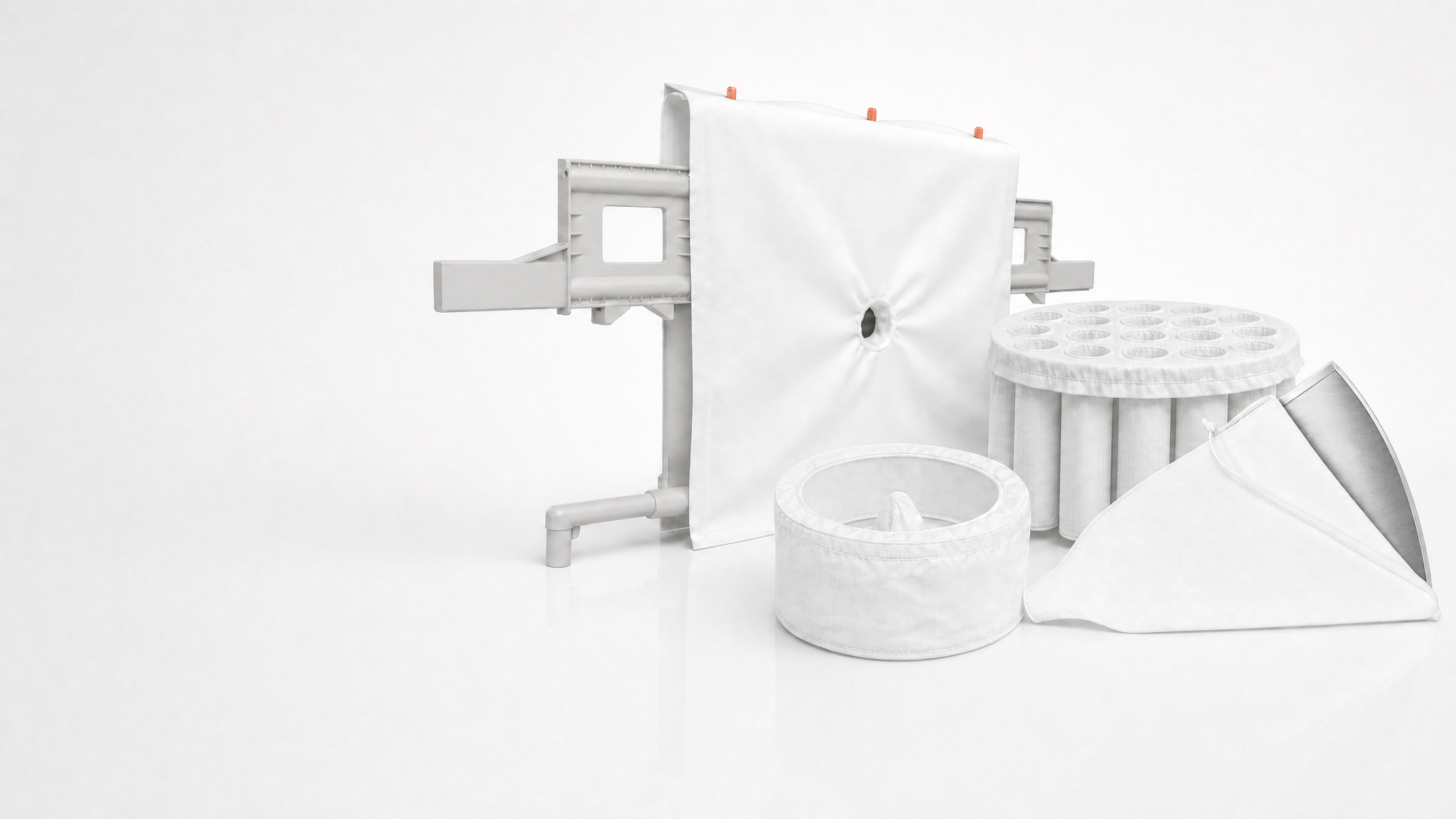
When a centrifuge filter bag starts to wear, the signs usually show up in the process before they show up on the spare parts shelf: slower discharge, wetter solids, leakage, or bags that no longer fit cleanly. For operators, the goal is simple — replace the bag before it creates downtime, contamination, or a bad batch.
This guide explains when to replace, how to measure correctly, and what to specify for peeler, pusher, and inverting machines. If you need a direct replacement for your unit, start with the RF-CF Series centrifuge filter bags and make sure the dimensions match your centrifuge exactly.
🔑 Key Takeaways
- Replace the bag when fit, discharge, or sealing performance starts to drift — not after it tears.
- Measure the basket, neck, seam, and closure details; “almost right” is usually wrong in a centrifuge.
- Peeler, pusher, and inverting centrifuges need different fit priorities and wear resistance.
- For most replacement jobs, RF-CF Series centrifuge filter bags are the safest starting point for a like-for-like match.
⚙️ When Is It Time to Replace a Centrifuge Filter Bag?
In the plant, a filter bag rarely fails all at once. More often, you’ll see progressive symptoms: longer cycle times, solids sticking in the basket, seams opening, or filtrate becoming cloudy. If you run a high-duty process in chemical, mining, or wastewater service, those small changes can quickly turn into a rejected batch. See also short filter lifespan and cake release issues.
💡 Tip: Keep one worn bag and one new bag side by side during inspection. If the old bag has stretched, glazed, or changed shape, copy the as-installed geometry — not the “after months of use” shape.
⚠️ Caution: Do not run a bag to failure. A torn bag can contaminate product, damage the basket, and create unplanned cleanup time — especially in pharmaceutical or fine-chemical service.
🔬 How to Measure a Replacement Bag Correctly
Take measurements with the old bag removed, cleaned, and laid flat. If the bag was forced into position, distorted by heat, or stretched over time, check the basket and the clamp points as well — the wear pattern can tell you more than the fabric itself.
Confirm whether you are working with a peeler, pusher, or inverting centrifuge. The machine design affects seam stress, opening geometry, and discharge behavior.
Record basket diameter, usable length, neck/hem dimensions, and any overlap or clamping allowance. Measure the bag in the same orientation it is installed.
Specify drawstring, band, welded edge, stitched seam, or special reinforcement. These details often determine whether the bag seals cleanly or leaks at the edge.
Document product chemistry, temperature, solids load, wash cycle, and any ATEX requirement. If the bag sees solvents or dry dust, note that early.
📋 Measurement Checklist
- Basket diameter and usable basket length
- Bag overall length, neck size, and opening type
- Seam style, reinforcement, and closure method
- Operating temperature and chemical exposure
- Dust or ATEX risk, if applicable
| Centrifuge type | What the operator usually sees | What to specify first | Typical mistake |
|---|---|---|---|
| Peeler | Repeated abrasion at discharge points | Wear resistance and stable seam construction | Ignoring edge wear and assuming only the fabric matters |
| Pusher | Mechanical loading from frequent movement | Dimensional accuracy and tear resistance | Using a bag that is too loose or too stiff |
| Inverting | Very clean discharge but sensitive fit | Exact geometry and reliable closure sealing | Missing neck or clamping details |
📊 What Should You Specify When Ordering?
For most centrifuge changeouts, the best starting point is the RF-CF Series. It is the product line built for centrifuge bag replacement, so you can specify fit, fabric, and finish with the machine in mind rather than trying to adapt a generic fabric later.
When you order, specify:
- Machine model and centrifuge type
- Bag dimensions and installation method
- Filtration media or fabric preference
- Temperature, chemical, and wash exposure
- Any hygiene, antistatic, or traceability requirement
If your process is in chemical industry service, material compatibility is critical. If you are in pharmaceutical production, consistency, cleanliness, and documentation matter just as much as fit. For lighter or more general filtration media, some plants also review RF-NF Series needle felt fabrics as part of a broader spec check — but for a true centrifuge replacement, start with RF-CF.
Rule of thumb: If the bag needs to be stretched, trimmed, or “made to work” during installation, the specification is wrong. A proper replacement should fit without forcing the basket or stressing the seam.
✅ Changeover, Startup, and Type-Specific Checks
Before restart, isolate the machine, inspect the basket for sharp edges, and confirm that all clamp points are clean. A small burr or residue line can damage a new bag on the first run. Operators in wastewater and mining often see this after long maintenance intervals, so a quick basket check pays off immediately.
📋 Startup Checklist
- Basket clean and free of sharp edges
- Bag seated evenly around the full circumference
- Closure tightened or locked correctly
- First cycle monitored for leakage or vibration
- Discharge checked for hang-up or cloth pull-in
⚠️ Caution: If your centrifuge runs solvents, dust, or dry fine solids, check whether antistatic protection is required. For ATEX-related concerns, review antistatic and ATEX risks before putting the machine back in service.
Finally, remember that the right bag is only part of the result. If the process is already showing drip lines, poor discharge, or repeated shutdowns, check the root cause early with drip leakage guidance and a full machine inspection on your centrifuge.
📩 Need Help Choosing the Right Fabric?
Our technical team at R+F FilterElements can help you find the perfect filter fabric for your specific application. Get in touch for a free consultation — we will recommend the right solution based on your machine, process, and operating conditions.