
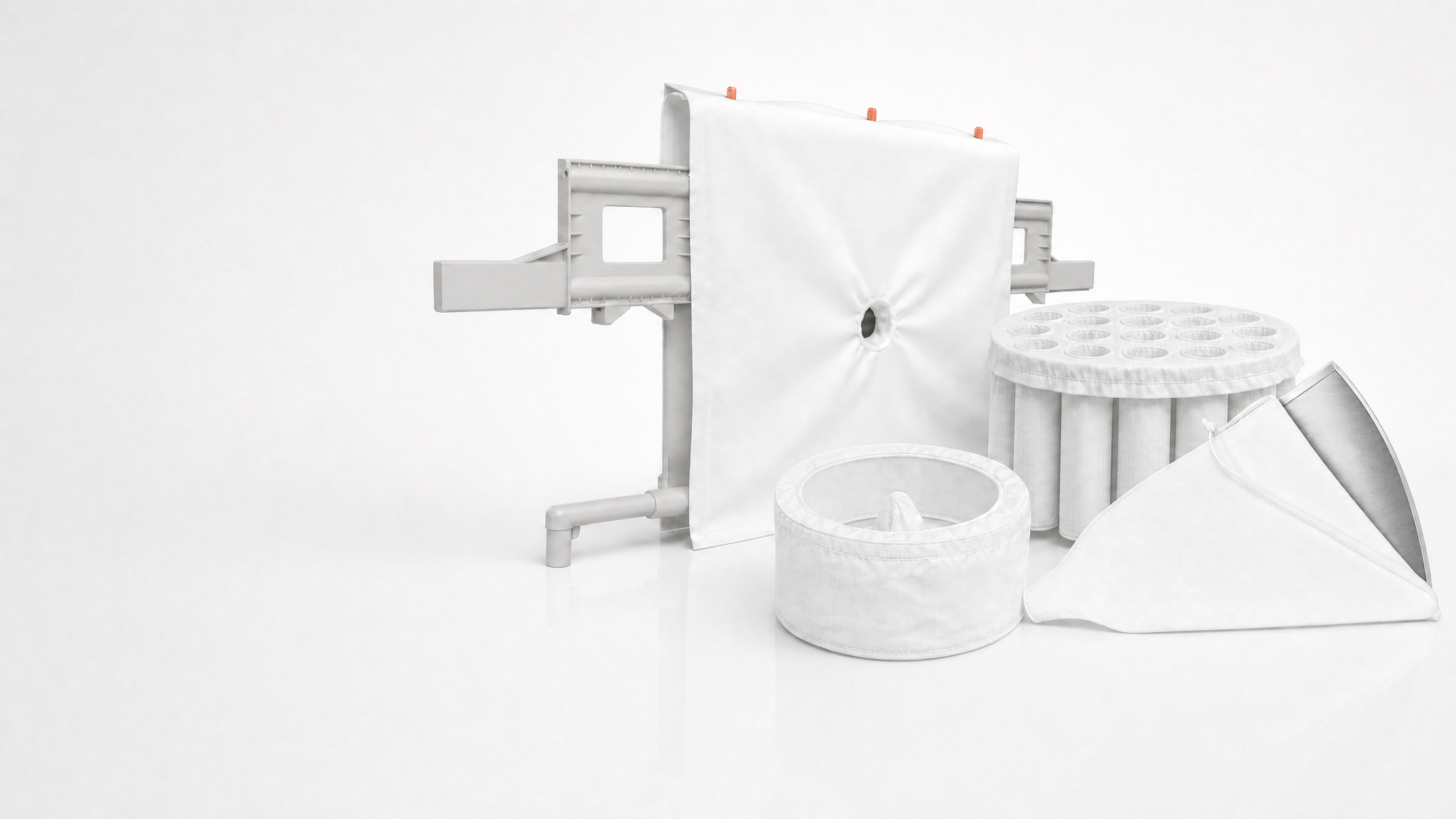
Tailings dewatering puts constant pressure on your rotary disc filter: if the fabric drains too slowly, the cake stays wet; if it drains too fast or blinds too early, solids recovery drops. The right fabric design helps you stabilise cake formation, reduce moisture, and keep throughput consistent in demanding mining service.
🔑 Key Takeaways
- Disc filter fabric must balance drainage rate and solid retention for stable tailings recovery.
- Cake thickness and moisture are strongly influenced by weave, pore structure, and fabric conditioning.
- Regular cleaning and correct tensioning can significantly reduce blinding and extend service life.
- For faster specification, use our configure your rotary disc filter filter fabric online tool to generate a non-binding request.
🏭 Why Fabric Performance Matters in Tailings Dewatering
In mining plants, disc filters often run around the clock on variable feed slurries. That means the fabric is not just a support layer — it is a process component that directly affects drainage, cake thickness, and solids recovery. If the fabric becomes blinded, the vacuum profile changes, the cake builds unevenly, and you lose both yield and stability.
For operators, the goal is simple: keep the cake forming evenly, let the filtrate pass quickly, and discharge a reasonably dry cake without excessive wear. On mining applications, that balance is especially important because tailings can contain very fine particles, clay fractions, and abrasive solids.
🔬 What to Optimise in a Disc Filter Fabric
Drainage behaviour
Drainage is the first thing you notice on the floor: if vacuum drawdown is slow, cycle time rises; if the fabric drains too aggressively, you may lose fines and create a fragile cake. The fabric structure must therefore support fast permeation while keeping fine tailings in the cake zone.
Cake thickness and build-up
Cake thickness is influenced by solids loading, vacuum level, and fabric surface properties. In practice, a fabric with the right pore structure helps you achieve a more uniform cake layer across the disc segment. That improves discharge consistency and makes downstream handling easier.
Rule of thumb: If cake thickness varies from segment to segment, check fabric tension, vacuum distribution, and early-stage drainage before changing process setpoints.
Solids recovery
When tailings are very fine, the best drainage fabric is not always the most open one. You want enough retention to prevent solids loss into the filtrate, especially when feed chemistry or particle size distribution changes. If you are also comparing options for other separation machines, the same retention-versus-drainage logic applies to RF-FF Series filter press fabrics and RF-BF Series belt filter fabrics.
| Fabric attribute | Process effect | Operator impact |
|---|---|---|
| Open drainage structure | Speeds liquid passage | Shorter cycle time, but higher risk of fines carry-over |
| Fine retention layer | Improves solids capture | Cleaner filtrate, but possible blinding if feed is sticky |
| Stable dimensional construction | Maintains belt and disc geometry | More uniform cake thickness and predictable discharge |
🛠️ Practical Ways to Improve Fabric Life
Watch for changes in particle size, flocculant dose, and percent solids. Unstable feed conditions can overload the fabric and accelerate clogging.
Uneven tension causes uneven cake build-up, edge wear, and poor sealing at the disc segment.
Backwashing or spray cleaning must remove fine particles before they harden inside the pore structure.
Monitor filtrate clarity, cake moisture, and vacuum draw. These are early indicators of fabric decline.
⚠️ Caution: Do not overcompensate for poor drainage by increasing vacuum too aggressively. Excess vacuum can force fines deeper into the fabric, shorten service life, and worsen blinding.
📋 Selecting the Right Fabric for Tailings Service
When you specify disc filter fabric, the best choice depends on the slurry characteristics and what your plant values most: moisture reduction, recovery, or longer uptime. In many tailings applications, a balanced fabric design works better than an extremely open or extremely tight structure.
📋 Pre-Selection Checklist for Disc Filter Fabrics
- Particle size distribution and fines content
- Target cake moisture after filtration
- Vacuum level and cycle time
- Abrasion risk from mineral solids
- Cleaning method and available wash water
- Required solids recovery from the tailings stream
💡 When to Review the Fabric Specification
If you notice rising filtrate solids, longer drying time, or repeated cloth blinding, the fabric specification may no longer match the process. That is often the moment to review pore structure, surface finish, seam details, and segment fit. If you are troubleshooting symptoms like rapid clogging or poor discharge, related guidance on filter cloth clogging and cake release issues can help you narrow down the cause.
💡 Tip: If your tailings are highly variable, choose a fabric specification that is robust across operating swings rather than one that only performs well at design-point conditions.
For disc filter operators who want a faster specification process, you can configure your rotary disc filter filter fabric online. The configurator helps you define the key operating parameters and sends back a pre-filled, non-binding inquiry that speeds up technical review.
If you are comparing fabric concepts across equipment types, it can also be useful to review the construction principles used in RF-RD Series disc filter fabrics alongside solutions for rotary disc filters. The right choice is rarely the most extreme one; it is the one that keeps drainage stable, cake thickness uniform, and solids recovery high over many operating hours.
📩 Need Help Choosing the Right Fabric?
Our technical team at R+F FilterElements can help you find the perfect filter fabric for your specific application. Get in touch for a free consultation — we will recommend the right solution based on your machine, process, and operating conditions.
Ready to move forward? You can also configure your rotary disc filter filter fabric online today and receive a pre-filled, non-binding specification request for quick evaluation.