
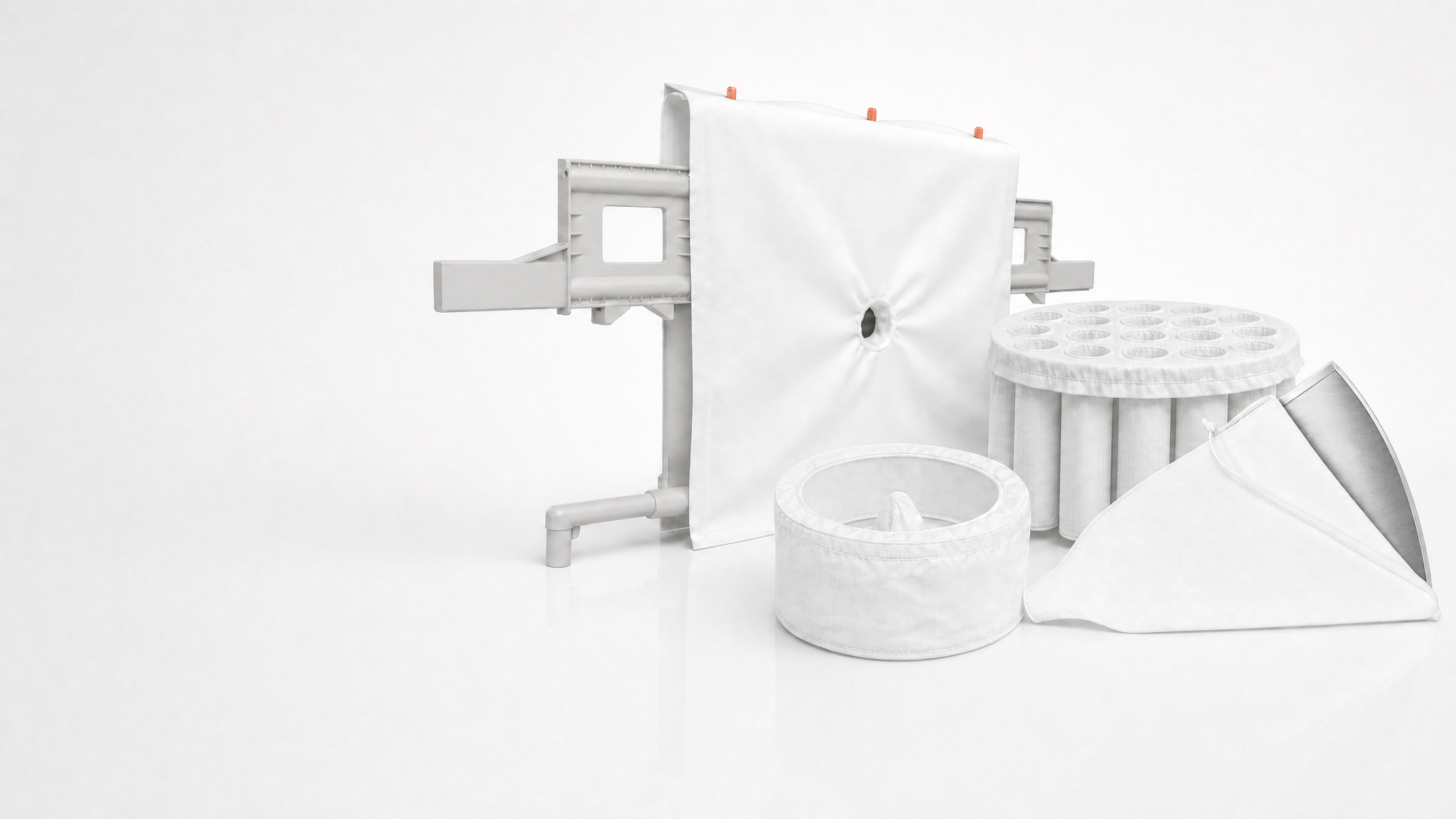
FLSmidth horizontal belt filters are workhorses in mineral, concentrate, and tailings dewatering, but the belt itself is a wear part that must match the process exactly. At R+F FilterElements, we supply made-to-measure replacement / compatible filter belts for operators who need reliable fit, predictable drainage, and stable vacuum performance.
🔑 Key Takeaways
- Replacement belts for FLSmidth horizontal belt filters must match width, length, seam type, weave, material, and air permeability.
- Mining applications often require abrasion-resistant belts and stable vacuum belt performance under harsh conditions.
- Plants switch to independent aftermarket belts for lead time, cost control, and tailored specifications.
- R+F can reverse-engineer a belt from a sample, drawing, or old belt spec and supply a compatible replacement.
🏭 What Operators Need from a Replacement Belt
In a horizontal belt filter, the belt is not just a support medium. It controls drainage, cake formation, wash efficiency, vacuum stability, and ultimately the consistency of the dewatering step. In mining service, the belt must also survive abrasion from sharp particles, cyclic loading, and high volumes of slurry.
That is why the right replacement belt is defined by more than a model name. For FLSmidth horizontal belt filters, we typically verify the exact operating conditions first, then match the belt construction to the process. If you are evaluating options across our filter belt portfolio, the most relevant families for this type of equipment are vacuum belts, mining belts, and in some cases belts designed for drainage-intensive duty.
🔬 How to Identify the Correct Belt Specification
When operators request a quote, the fastest route is to provide the old belt specification or a usable sample. If that is not available, we can work from machine data and process details. The goal is to define a compatible belt that fits properly, tracks reliably, and delivers the required drainage and vacuum behavior.
📋 Belt identification checklist
- Belt width and total length
- Seam type and seam position
- Mesh structure / weave pattern
- Air permeability or drainage requirement
- Material and chemical resistance needs
- Edge construction and reinforcement details
| Specification Item | Why It Matters | Typical Operator Impact |
|---|---|---|
| Belt width / length | Ensures fit on the horizontal belt filter | Prevents tracking issues and installation delays |
| Seam type | Influences strength, joint behavior, and serviceability | Impacts uptime and maintenance planning |
| Weave / mesh | Controls drainage and cake support | Shapes dewatering efficiency and cake release |
| Air permeability | Affects vacuum response and filtrate flow | Helps maintain stable throughput |
| Material | Determines abrasion and chemical resistance | Extends service life in mining duty |
💡 Tip: If the belt label is gone, send a photo of the seam, edge, and any stamped dimensions. Even partial information often lets us reconstruct the specification accurately.
For operators working on related equipment, the same approach applies on the belt filter, vacuum filter, and drum filter platforms, where belt behavior is critical to filtration performance.
⚙️ Why Plants Switch to Independent Replacement Belts
Many plants choose aftermarket-compatible belts to reduce dependency on a single supply channel and to gain more control over lead time and specification. In mining, a belt outage can quickly affect production, so having a dependable alternative source matters.
Operators also value the ability to fine-tune the fabric to the actual plant process. That can mean a different weave for better drainage, a reinforced edge for tracking stability, or a seam design that supports maintenance routines. If your line is part of a wider solids separation system, you may also want to review our machine-specific pages for belt press installations and mining applications.
Rule of thumb: If the belt is exposed to sharp solids, fluctuating vacuum, or frequent wash cycles, prioritize abrasion resistance and seam durability over the lowest initial price.
🛠️ R+F Reverse-Engineering and Manufacturing Approach
R+F FilterElements can reproduce a usable belt specification from an old belt sample, a dimensioned drawing, or a worn belt that still shows construction details. We inspect the geometry, seam execution, edge build, and fabric structure, then translate that into a compatible manufacturing specification.
Send us the old belt, a photo set, or a drawing with key dimensions and operating data.
We confirm width, length, seam type, weave, permeability, and material requirements.
The belt is made to measure for your horizontal belt filter and process conditions.
Depending on the duty, we can offer different seam solutions and fabric constructions for mining service, including options suited for abrasive slurries and vacuum-assisted dewatering. For operators planning a wider upgrade, our belt-press belt family and spiral belt family show the range of construction methods available across industrial filtration.
⚠️ Caution: A belt that is too open may improve drainage but can reduce cake support or solids capture. A belt that is too tight can slow filtrate flow and reduce throughput. Always match the fabric to the process, not only to the dimensions.
✅ Quality, Seam, and Material Options for Mining Duty
For FLSmidth horizontal belt filters in mining, the belt must hold up under continuous loading and aggressive solids. Material choice, seam design, and reinforcement details directly affect uptime. We focus on practical options that help operators balance service life, drainage, and handling.
Seam and edge options
- Mechanical seam concepts for serviceability and stable operation
- Reinforced edge structures for tracking and durability
- Custom joint geometry to match existing installation requirements
Fabric performance considerations
- Abrasion resistance for sharp mineral particles
- Controlled air permeability for reliable vacuum filtration
- Chemical resistance where process chemistry demands it
- Consistent weave for reproducible cake formation and release
If your operating focus includes tailings handling or wet concentrate dewatering, see also our wastewater applications and chemical industry applications for related belt selection principles. In many cases, a replacement belt for a horizontal belt filter is also best selected together with the machine type and vacuum conditions, which is why the configure your belt filter filter fabric online tool is a useful starting point for fast, pre-filled, non-binding inquiries.
💡 Tip: When replacing a worn belt, record the old belt’s behavior before removal: tracking stability, filtrate clarity, cake release, and washing performance. These notes help us match the next belt more precisely.
📩 Need Help Choosing the Right Fabric?
Our technical team at R+F FilterElements can help you find the perfect filter fabric for your specific application. Get in touch for a free consultation — we will recommend the right solution based on your machine, process, and operating conditions.
If you already have the old belt specification or a sample, send it to us for review and quotation. You can also configure your belt filter filter fabric online to generate a pre-filled, non-binding inquiry for your replacement belt project.