
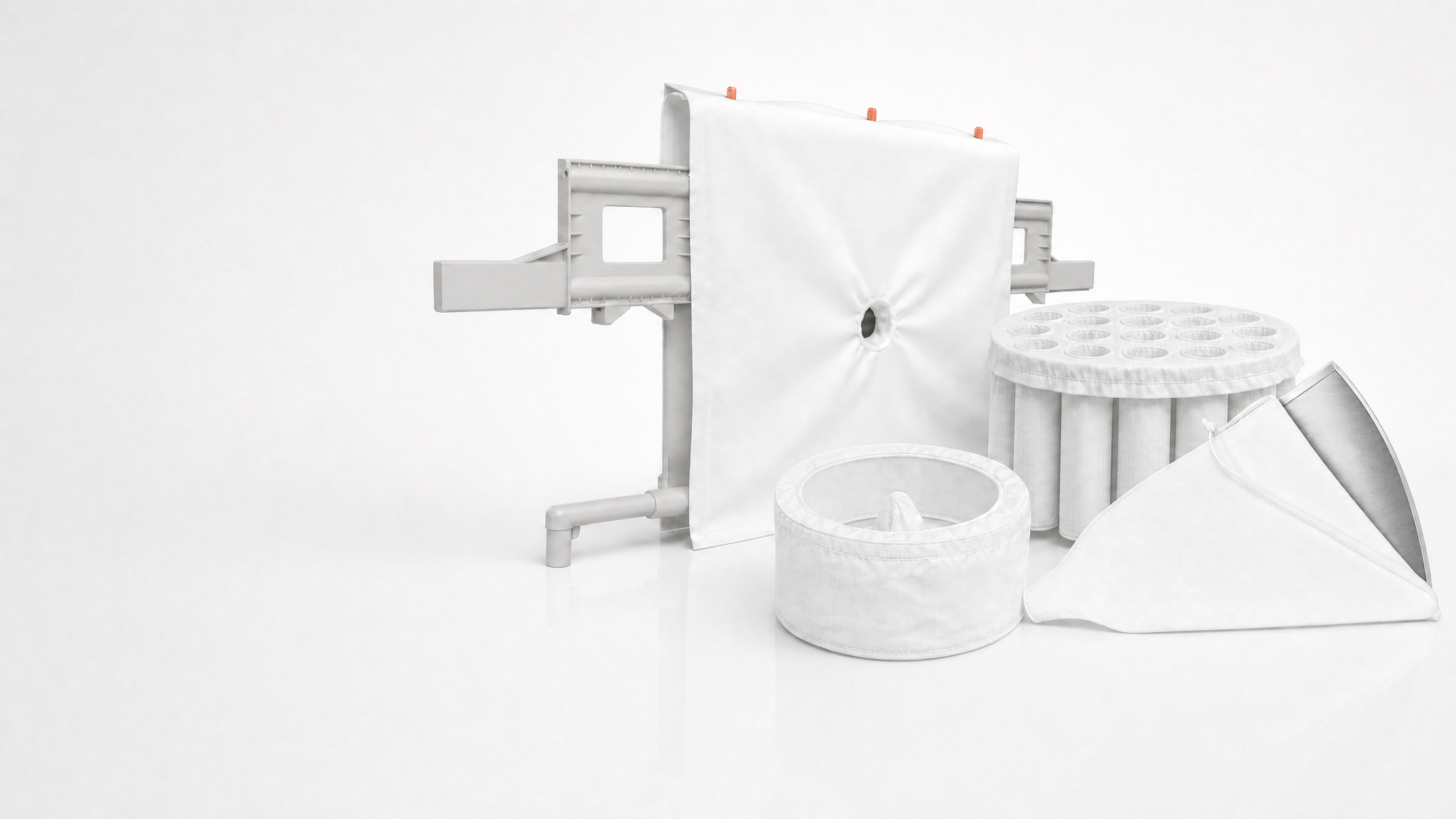
In a fluid bed dryer, the bag design is not just a detail — it directly affects airflow, fines capture, and how much product you lose during each cycle. For operators, the real question is whether a multi-finger or single-bag design delivers better fluidization, cleaner discharge, and longer stable running between shutdowns.
🔑 Key Takeaways
- Bag geometry controls airflow and therefore drying efficiency, pressure drop, and product movement.
- Multi-finger designs usually offer more open area and better flexing, which can help with release and uniform gas distribution.
- Single-bag designs are simpler and can be easier to install, but may create different retention and loading behavior.
- The right fabric choice for your fluid bed dryer depends on product properties, dust load, temperature, and cleaning strategy.
⚙️ Why Bag Geometry Matters in the Dryer
Inside a fluid bed dryer, the filter bag is doing two jobs at once: it has to let air through freely, and it has to retain fine particles that would otherwise leave the system. That balance changes depending on whether the dryer uses a multi-finger layout or a single-bag configuration.
From an operator’s perspective, the most important effects are airflow resistance, product retention, and how easily the bag releases accumulated dust during pulse cleaning. A bag that is too restrictive can raise pressure drop and disturb fluidization. A bag that releases poorly can increase carryover, blinding, and cleaning frequency.
⚠️ Caution: If bag geometry changes the airflow pattern too much, you may see channeling, poor bed movement, or inconsistent outlet dust loading. Recheck process settings after any fabric change.
🔬 Multi-Finger vs. Single-Bag: Practical Differences
Both concepts can work well, but they behave differently in the plant. Multi-finger bags typically divide the active surface into several narrower sections, which can improve movement, reduce local loading, and help maintain more even gas distribution. Single-bag designs are mechanically simpler and may be preferred where installation speed and straightforward handling matter most.
In practice, the better choice often depends on the product behavior more than the dryer itself. For sticky or very fine powders, the geometry that supports more effective release can be a major advantage. For robust bulk solids, a simpler layout may be enough.
Rule of thumb: If you are fighting repeated buildup or uneven cleaning, look at the bag shape before you blame the pulse settings.
📊 Fabric Selection: What Operators Should Watch
Bag geometry and fabric construction have to work together. Even a good layout will not perform well if the fabric is too tight, too rough, or unsuitable for the process temperature. For this reason, R+F offers engineered solutions for the RF-FBD Series fluid bed dryer fabrics that can be matched to the dryer concept and operating conditions.
When selecting a fabric, check the following:
- Air permeability for stable bed behavior and acceptable pressure drop
- Surface finish for improved release and reduced product hold-up
- Temperature resistance for continuous operating conditions
- Mechanical stability to withstand flexing, pulse cleaning, and installation stress
- Cleanability if product changeovers are frequent
| Aspect | Multi-Finger Design | Single-Bag Design |
|---|---|---|
| Airflow distribution | Often more even across smaller sections | Can be more concentrated over larger surface areas |
| Product retention | Typically lower if release is improved by geometry | May retain more product in folds or less active zones |
| Maintenance handling | More complex, but may run cleaner | Simpler and often faster to replace |
| Best fit | Fine, sticky, or release-sensitive products | Stable products with straightforward drying behavior |
💡 Tip: If your dryer handles changing product grades, a fabric with predictable release and stable permeability is often more valuable than the lowest initial price.
🛠️ How to Evaluate Retention and Airflow on the Plant Floor
If you are deciding between designs, start with what you already see in operation. Look for signs that the bag is affecting performance, not just collecting dust.
A rising or unstable differential pressure often points to restricted airflow or surface loading.
Excess fines in the exhaust can indicate poor retention or insufficient active filtration area.
Look for residue after pulse cleaning, especially in folds, corners, and low-motion areas.
Stable drying times and repeatable outlet quality are strong signs that the fabric and geometry are well matched.
📋 Pre-selection checklist for FBD bags
- Process temperature and moisture profile
- Particle size, adhesion, and fines content
- Expected cleaning intensity and frequency
- Available installation space and bag support design
- Need for ATEX-safe material handling in dusty zones
✅ Choosing the Right Fabric for Your Dryer
The fabric is where geometry becomes performance. For an operator, the best result is usually the one that keeps the bed stable, minimizes product retention, and remains easy to clean over time. If you are also comparing dryer setups with other filtration systems, it can help to review how fabric behavior differs in a needle felt filter fabric compared with an engineered dryer bag construction.
For plants dealing with dust-sensitive or high-value products, the pharmaceutical application and chemical industry application pages are useful starting points to understand how material behavior influences fabric design. If your process involves explosive dusts, also review the guidance on ATEX-related antistatic requirements.
For a faster selection process, you can configure your fluid bed dryer filter fabric online and receive a pre-filled, non-binding specification and inquiry. This is especially useful if you already know your dryer type, temperature range, and product characteristics, but want a practical recommendation before requesting samples.
Rule of thumb: The best FBD fabric is the one that keeps the product moving, the air flowing, and the cleaning cycles predictable.
📩 Need Help Choosing the Right Fabric?
Our technical team at R+F FilterElements can help you find the perfect filter fabric for your specific application. Get in touch for a free consultation — we will recommend the right solution based on your machine, process, and operating conditions.
If you want to move quickly from theory to specification, configure your fluid bed dryer filter fabric online and send us your requirements in just a few steps.