
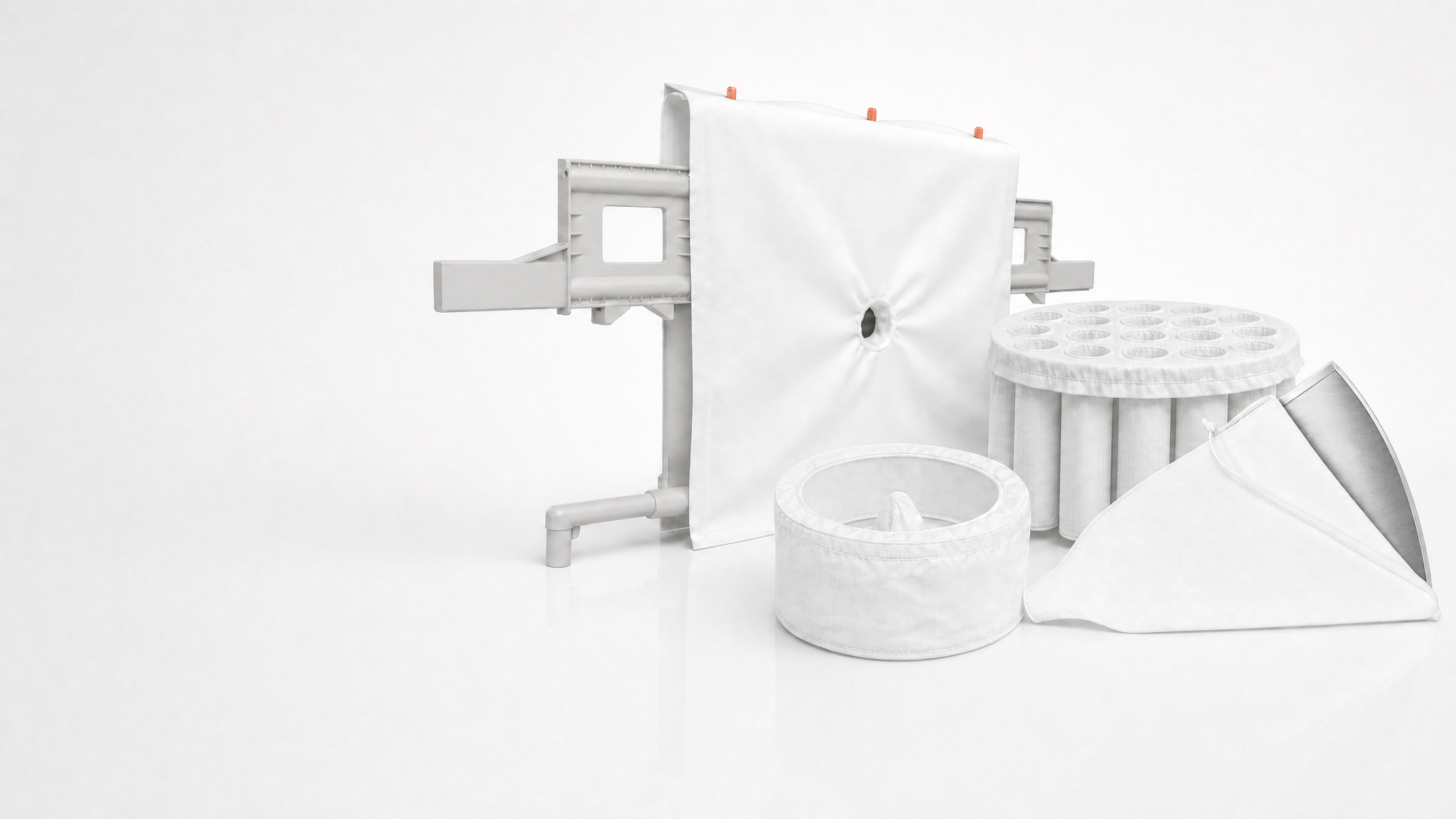
In a fluid bed dryer, the filter bags do more than hold back dust — they are part of the plant’s safety concept. If your process handles fine powders, solvent residues, or electrostatically sensitive materials, antistatic fabrics are often mandatory to reduce ignition risk and support ATEX compliance.
For operators, the key questions are practical: which conductive fabric structure fits the dryer, how do ATEX zones affect the choice, and what testing or documentation should you request before installation? This guide explains the essentials and points you to the right RF-FBD Series fluid bed dryer fabrics and related fluid bed dryer machine guidance.
🔑 Key Takeaways
- Antistatic filter bags help prevent dangerous charge buildup in fluid bed dryers.
- Conductive grid weaves and carbon-based yarns are common ways to dissipate electrostatic energy.
- ATEX zoning and dust characteristics determine the required fabric design and documentation.
- Testing, traceability, and correct grounding are just as important as the fabric itself.
⚙️ Why Antistatic Fabrics Are Mandatory in FBD
Fluid bed dryers create ideal conditions for static charging: dry particles rub against fabric surfaces, air velocity is high, and product movement is continuous. In many plants, that means the filter bag can become an ignition source unless it is designed to dissipate charge safely.
From the operator’s point of view, the risk increases when you run fine, low-conductivity powders, process solvent-containing products, or work in classified areas. If you are already investigating a recurring ATEX and antistatic problem, the filter cloth is often one of the first components to check.
⚠️ Caution: A standard non-conductive filter bag in an ATEX-relevant fluid bed dryer can create an unacceptable ignition risk. Do not assume that “dust-tight” automatically means “safe against static discharge.”
🔬 How Conductive Grid Weave Fabrics Work
The most common solution is a conductive grid weave, where conductive yarns are integrated into the fabric structure to create a controlled path for charge dissipation. In practice, this reduces the chance that the fabric surface stores enough energy for a spark discharge.
What operators should check
- Conductive path continuity across the full bag surface.
- Grounding concept for the cage, housing, and bag connection.
- Temperature resistance under the actual drying profile.
- Mechanical stability during bag expansion, pulsation, and cleaning cycles.
Rule of thumb: If the dust is fine enough to stay airborne easily, treat static control as a core process requirement — not an optional upgrade.
If you need a fabric designed specifically for fluid bed dryer duty, the RF-FBD Series fluid bed dryer fabrics are built for these operating conditions. For pharmaceutical and high-purity plants, the RF-ANF Series Nutsche Pharma fabrics can be a useful reference point when you need controlled construction and traceable specifications.
📊 ATEX Zones, Dust Classes, and Fabric Selection
ATEX compliance is not only about the machine nameplate. You need to match the fabric specification to the actual zone classification, the dust properties, and the operating temperature. A fluid bed dryer in Zone 21 or Zone 22 may require different construction details than a non-classified unit.
| Selection factor | What it means in operation | Why it matters for the bag |
|---|---|---|
| ATEX zone | Area classification for explosive dust atmospheres | Determines the required safety level and documentation |
| Dust resistivity | How easily the product retains charge | Higher resistivity usually means stricter antistatic design |
| Process temperature | Real dryer temperature, not just setpoint | Affects material choice and long-term durability |
| Cleaning method | Shake, pulse, or mechanical agitation | Impacts fabric wear and conductive performance over time |
🧪 Testing Standards and Documentation You Should Request
As an operator, you do not need to become the certification body — but you do need the right paperwork. Ask for the fabric’s antistatic specification, the basis of testing, and any traceability data that supports installation in the intended ATEX zone.
📋 Pre-installation checklist
- Confirm the ATEX zone classification for the dryer area.
- Verify whether the dust is combustible and how it behaves when dry.
- Request antistatic test data or conductivity documentation.
- Check temperature and chemical resistance against your process media.
- Ensure grounding and mechanical fit are part of the specification.
💡 Tip: If you are replacing old bags after a trip, ignition event, or repeated electrostatic alarms, document the failure mode before ordering new fabric. That makes troubleshooting far faster.
For plants that need a fast specification workflow, you can configure your fluid bed dryer filter fabric online and receive a pre-filled, non-binding inquiry. It is a practical way to align fabric construction, dimensions, and antistatic requirements before you contact engineering.
🛠️ Installation and Operating Checks on the Plant Floor
Even the right antistatic fabric will underperform if installation is sloppy. Bag twist, poor sealing, damaged conductive yarns, or incorrect cage contact can compromise the intended dissipation path. When you commission a new set, treat it like a safety-critical component.
Check for stitching damage, deformation, and any points where conductive elements could be interrupted.
Make sure the cage, housing, and bag system are connected as intended by your machine design.
Monitor pressure drop, bag movement, and any abnormal dust escape during initial operation.
Log cleaning intervals, temperature, and any static-related incidents for future maintenance decisions.
Common operator mistakes
- Mixing conductive and non-conductive spare parts in the same dryer.
- Ignoring wear at seams, seams, and clamping points.
- Assuming a lower dust load means lower static risk.
- Skipping documentation after a bag change.
💡 Tip: If your dryer also processes nearby dust-handling equipment, compare the fabric concept with other systems such as air slides and nutsche filters so your plant uses a consistent safety standard.
✅ Practical Takeaway for Operators
In a fluid bed dryer, antistatic filter bags are not just a material preference — they are a protective measure against electrostatic ignition. The right solution combines conductive design, proper grounding, validated documentation, and a fabric specification that matches your ATEX environment.
If you are standardizing parts across the plant, it can also help to review other high-demand fabrics like the RF-BF Series belt filter fabrics or the RF-CF Series centrifuge fabrics to build a consistent maintenance strategy for demanding separation equipment.
📩 Need Help Choosing the Right Fabric?
Our technical team at R+F FilterElements can help you find the perfect filter fabric for your specific application. Get in touch for a free consultation — we will recommend the right solution based on your machine, process, and operating conditions.
Prefer to start online? configure your fluid bed dryer filter fabric online to receive a pre-filled, non-binding specification and inquiry for your next project.