
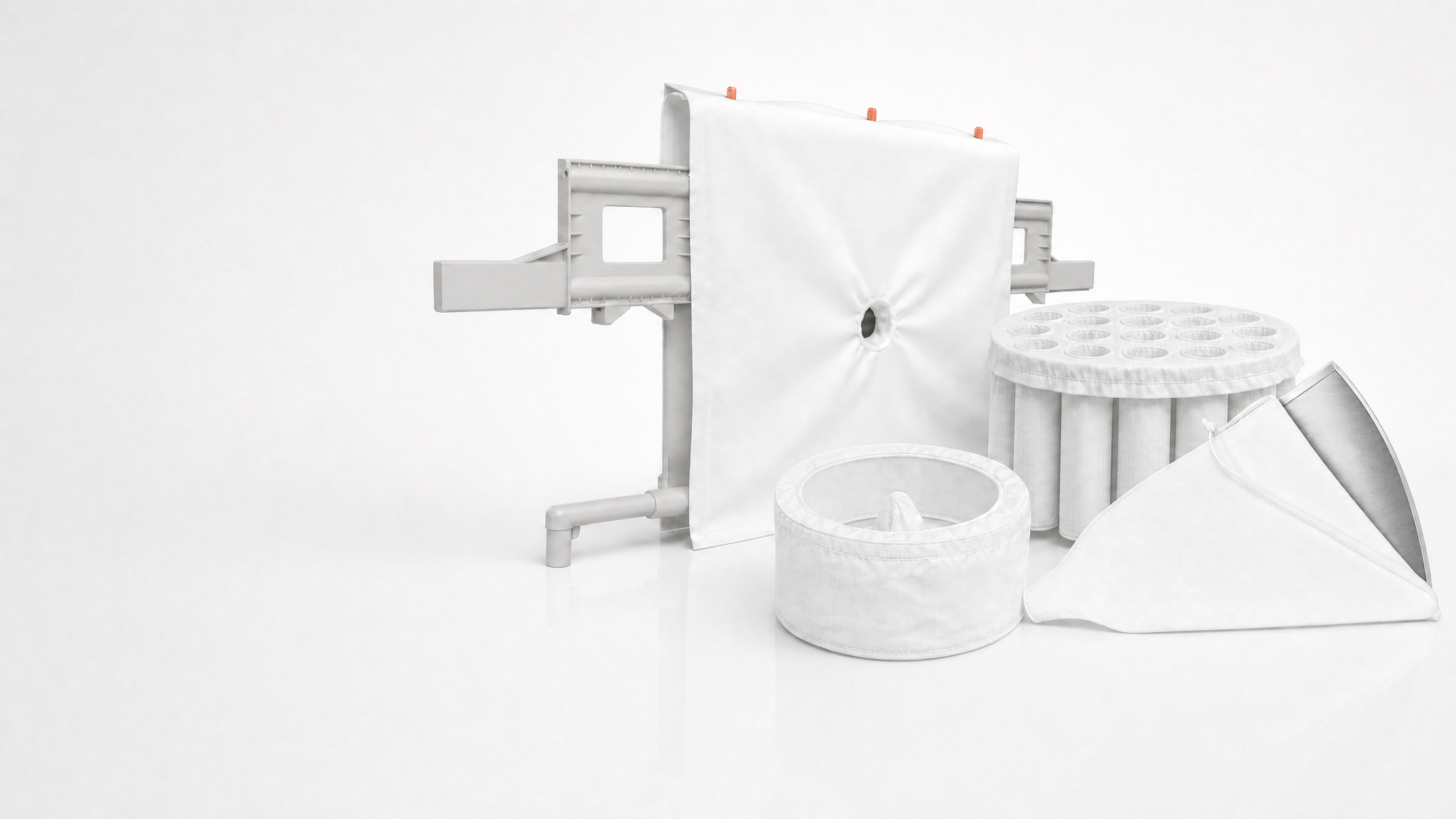
If you run a Heinkel inverting centrifuge, you already know that bag fit is not a cosmetic detail — it directly affects drainage, cake release, and whether filtrate stays where it belongs. The right compatible bag must match your basket geometry, seam layout, and process conditions so you can keep the machine stable and the discharge cycle predictable.
For operators looking for a replacement solution, R+F’s RF-CF Series centrifuge fabrics are designed as compatible alternatives for industrial separation duty, with material and construction choices that can be matched to your product, washing cycle, and temperature window.
🔑 Key Takeaways
- Heinkel-compatible centrifuge bags must match the basket, fastening, and seam layout — not just the nominal diameter.
- Material choice affects cake release, chemical resistance, temperature stability, and bag life.
- Most bag problems come from fit, seam stress, or process mismatch before they come from the centrifuge itself.
- Send drawings, a sample, or a dimensioned sketch early to avoid costly rework and downtime.
⚙️ What “compatible” really means for a Heinkel inverting centrifuge
A compatible bag must do more than “fit into the basket.” On an inverting centrifuge, the bag is exposed to strong mechanical movement during filling, spinning, washing, and inversion. If the dimensions are off by even a small amount, the result is often drip leakage, uneven cake build-up, or premature seam failure.
📋 What we need to match before production
- Basket diameter and working depth
- Top fixing method and clamping details
- Outlet geometry, if applicable
- Seam orientation and reinforcement areas
- Process media, temperature, and wash chemicals
💡 Tip: If you are replacing a worn bag, send the old one as a reference only if it still reflects the original shape. A stretched or shrunk bag can mislead the new specification.
Fit errors operators notice first
- Bag rides up or twists during the cycle
- Liquor bypasses at the rim or seam line
- Cake stays too wet because drainage is restricted
- Removal becomes harder after only a few runs
🔬 Material options: pick the fabric for the process, not just the machine
For centrifuge duty, the “best” media depends on what you are separating. In wastewater and mineral applications, a more robust fabric may be the right choice, while fine chemical or pharmaceutical duty may call for cleaner release and tighter process control. If your line is running in the chemical industry or wastewater treatment, the balance between resistance, drainage, and cleaning behavior matters as much as pore size.
For more demanding wear or process-specific requirements, we can also evaluate reinforced constructions, finer filtration media, or special finishing concepts. If your site has recurring short filter lifespan or visible filter cloth clogging, the issue may be less about “stronger fabric” and more about choosing the right structure for your solids loading and wash sequence.
⚠️ Caution: If your centrifuge operates in a solvent area or ATEX-controlled zone, do not assume a standard replacement bag is suitable. Check grounding, electrostatic behavior, and the full machine duty against antistatic and ATEX requirements.
Material comparison at a glance
| Material | Typical strengths | Watch-outs | Best fit for |
|---|---|---|---|
| Polypropylene | Good chemical resistance, light weight, reliable drainage | Lower temperature tolerance than some other polymers | Aqueous chemicals, many wastewater duties |
| Polyester | Balanced strength, stable handling, widely used in industry | Not ideal for every aggressive chemical stream | General-purpose separation, mixed industrial processes |
| Polyamide | Good abrasion resistance and mechanical robustness | Process compatibility must be checked carefully | More abrasive solids and demanding basket handling |
| Special finishes / reinforced builds | Can improve release, reduce seam stress, or improve handling | Must be specified to suit the exact centrifuge and product | Fine solids, difficult cake release, repeated washing |
🛠️ How to get RF-CF compatible bags for your centrifuge
Ordering a compatible replacement is easiest when you treat it like a process data review, not a spare-parts request. The goal is to recreate the working geometry and improve any known weak points at the same time.
Confirm the Heinkel model, basket size, inversion style, and how the current bag is fixed to the machine.
Check diameter, depth, top edge, outlet, seam positions, and any reinforcement areas that carry load.
Choose the media based on solids, wash chemistry, temperature, and whether you need faster release or tighter retention.
Approve the fit, then monitor first runs for leakage, bag movement, and cake discharge quality.
Rule of thumb: If cake release gets worse after a fabric change, do not blame the centrifuge first — verify bag tension, seam placement, and discharge timing before changing the process.
📊 Performance: what operators should watch in daily use
In practice, the right bag helps you stabilize cycle time, reduce rework, and keep the machine cleaner between stops. You may not need a radically different fabric — just a bag that seals correctly, drains consistently, and survives the real duty cycle.
- Cake release: A smoother surface or better-matched structure can help the cake detach more cleanly during inversion.
- Leak control: Proper seam design and rim fit reduce bypass and drips around the basket edge.
- Service life: A better match to the slurry and wash regime reduces premature wear and seam fatigue.
- Cleaning behavior: If the fabric is too prone to blinding, your cycle times and pressure profile usually suffer.
When you want to compare the centrifuge family with other machine-specific solutions, our broader centrifuge fabric overview and the engineered options in the RF-CF Series are a good starting point. If your plant also runs other solid-liquid separation equipment, you may find the same design logic useful on filter presses or pharmaceutical processing lines where hygiene and consistency are equally important.
✅ Commissioning checklist for a new replacement bag
📋 Before first start-up
- Confirm basket fit without forced stretching
- Inspect all seams, hems, and reinforcements
- Verify the clamping line and sealing surfaces
- Check that the bag can invert and discharge freely
- Review chemical and temperature compatibility
- Test the first cycles for leakage and cake release
💡 Tip: If you need to reduce downtime, keep a second approved bag specification on file. That way you can reorder from the same dimensions and material setup the next time wear becomes visible.
For operators in mixed plants, it often helps to standardize naming, keep a dimensional sketch, and note the working media on the order record. That small discipline can prevent repeated issues with cake release and unnecessary fabric changes.
📩 Need Help Choosing the Right Fabric?
Our technical team at R+F FilterElements can help you find the perfect filter fabric for your specific application. Get in touch for a free consultation — we will recommend the right solution based on your machine, process, and operating conditions.