
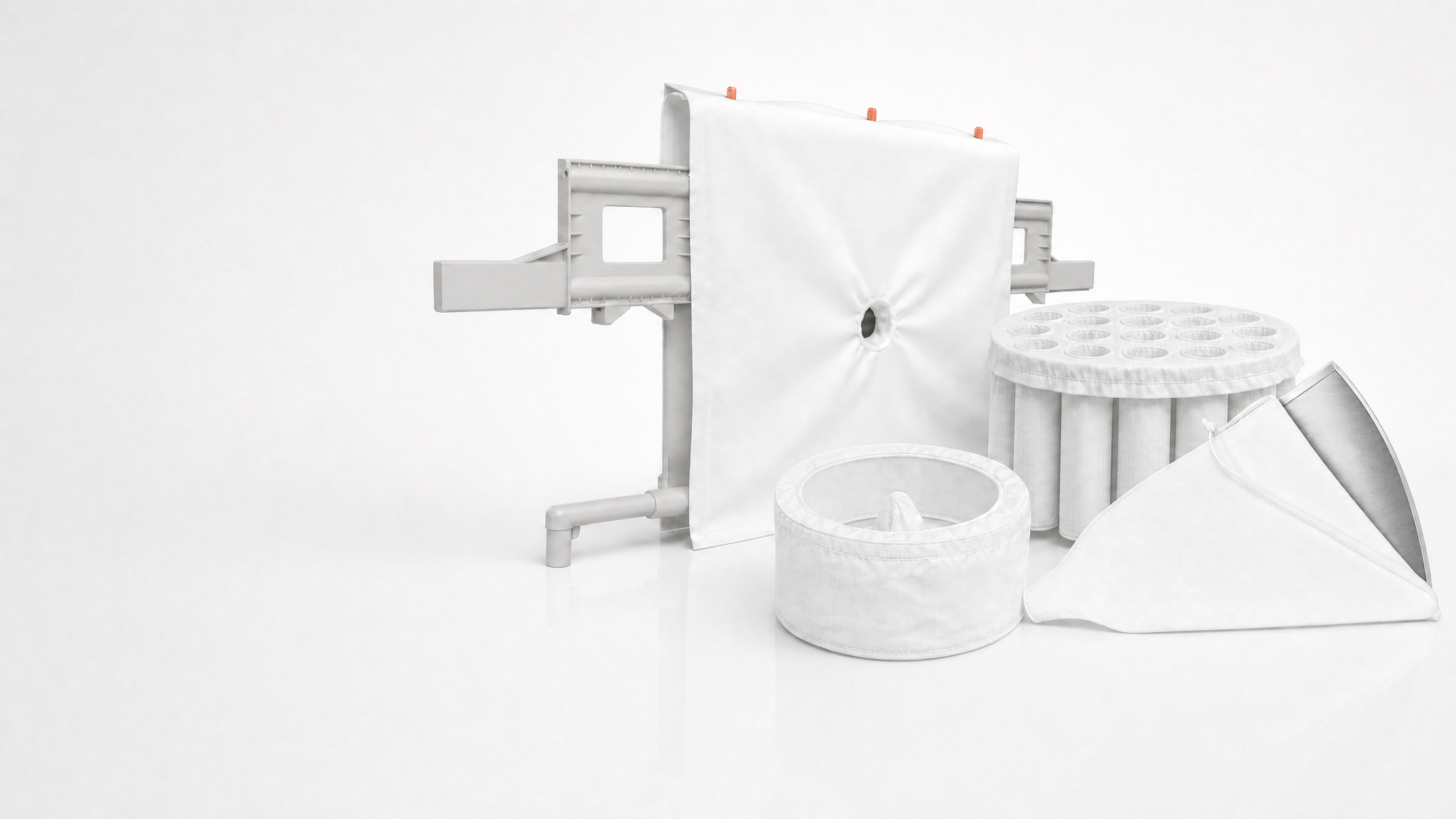
In solvent-based centrifugation, static charge is not a theoretical hazard — it is a real ignition source that can interrupt production, damage equipment, and put your team at risk. If you run ATEX zone operations, the centrifuge bag is part of your safety chain, so the fabric choice matters as much as basket speed, grounding, and process control.
🔑 Key Takeaways
- Antistatic fabrics reduce ignition risk by dissipating charge during high-speed centrifugal separation.
- Conductive fibres are essential in solvent-based and ATEX-classified zones, but they only work when the full system is grounded.
- Fabric choice affects discharge, cake release, and bag life — not just compliance paperwork.
- Verification is operator work: continuity checks, correct mounting, and routine inspections should be part of every start-up.
⚙️ Why Antistatic Fabrics Matter in Solvent Centrifugation
When a centrifuge spins wet solids at high speed, the process creates friction, turbulence, and often dry zones near the cake surface. In solvent service, those conditions can build electrostatic charge fast enough to become a genuine hazard — especially if vapors are present around the basket opening, discharge area, or filter bag surface.
That is why operators in chemical and fine-process plants often specify the centrifuge machine application together with an antistatic fabric, not as an upgrade but as a basic operating requirement. The right bag helps reduce charge accumulation while still supporting filtration, solids retention, and efficient discharge.
🔬 How Conductive Fibres Work in a Centrifuge Bag
Antistatic centrifuge bags use conductive fibres integrated into the textile structure so electrical charge can travel away from the active surface instead of building up in the cloth. In practice, that means the fabric can help move charge from the cake-facing side into the grounded basket or support system.
For operators, the important detail is that conductive fibres are not a substitute for grounding. The bag, clamps, basket, and machine earth all need to work together. If any part of that chain is insulated, damaged, or assembled incorrectly, the antistatic effect can be reduced or lost.
💡 Tip: Test the fabric-and-basket assembly as part of commissioning. A simple continuity check can reveal a bad clamp, an insulated contact point, or wear that may not be visible during a quick visual inspection.
| Feature | Standard centrifuge fabric | Antistatic fabric with conductive fibres | Operator impact |
|---|---|---|---|
| Charge dissipation | Limited or none | Designed to dissipate electrostatic charge | Lower ignition risk during solvent processing |
| ATEX suitability | Usually not appropriate for hazardous zones | Better suited for ATEX-oriented operation | Helps support site safety strategy |
| Maintenance focus | Mostly wear and filtration performance | Wear, continuity, and grounding integrity | Requires more careful inspection routines |
| Best use case | Non-hazardous aqueous duties | Solvent-based or flammable atmospheres | Essential for controlled risk environments |
🏭 ATEX Compliance Starts with the Whole System
ATEX compliance is not just a label on the bag. It is a system-level approach that includes the zone classification, the solvent used, the machine grounding, the installation method, and the maintenance condition of the fabric. A bag that looks “antistatic” on paper can still be unsafe if the basket is not properly bonded or if conductive fibres are damaged by wrong cleaning practices.
If your plant has already experienced discharge problems, review our guidance on antistatic and ATEX-related issues. In many cases, the root cause is not one single defect but a combination of wrong fabric selection, poor grounding, and operational drift over time.
⚠️ Caution: Do not assume that antistatic fabric alone makes a centrifuge safe in a hazardous area. Follow your site ATEX assessment, solvent handling rules, and any required inerting, ventilation, or permit-to-work procedures.
🛠️ How to Install and Verify an Antistatic Centrifuge Bag
Good antistatic performance depends on good installation. Even the best conductive fabric will underperform if it is mounted loosely, clipped through an insulating layer, or allowed to rub against damaged metal surfaces.
Check that the basket, frame, and grounding connection are clean, intact, and free of insulating deposits.
Fit the bag so conductive contact points are positioned as intended and not blocked by seals, liners, or debris.
Measure the electrical path from the fabric to the grounded machine before production starts.
Watch for abnormal vibration, poor discharge, cloth rubbing, or solvent misting during the first cycle.
Rule of thumb: If the fabric, clamp, or basket contact point cannot be trusted, the antistatic function cannot be trusted either.
📋 What Operators Should Check Before Every Shift
In daily operation, the most reliable centrifuge bag is the one that is inspected before it fails. That matters even more in solvent service, where a small tear, worn seam, or contaminated contact point can turn into a much bigger safety concern.
📋 Pre-Start ATEX Centrifuge Checklist
- Confirm the process medium, solvent, and zone classification match the selected fabric.
- Inspect conductive fibres, seams, and edges for wear, snagging, or contamination.
- Check basket grounding and all bonding connections.
- Make sure no insulating build-up is present on contact surfaces.
- Verify the bag is correctly seated and cannot rub excessively during spin-up.
- Review whether discharge behavior has changed since the last batch.
For solvent-heavy services in the chemical industry, the selection usually starts with the fabric’s antistatic behavior and ends with process fit: discharge speed, cake release, cleaning frequency, and service life. If you need a centrifuge-focused solution, the RF-CF Series centrifuge bags are the most direct place to start.
💡 Tip: If the bag life is short or the discharge surface looks polished and stiff, ask whether the cleaning method, solvent exposure, or installation tension is damaging the conductive structure over time.
📩 Need Help Choosing the Right Fabric?
Our technical team at R+F FilterElements can help you find the perfect filter fabric for your specific application. Get in touch for a free consultation — we will recommend the right solution based on your machine, process, and operating conditions.