
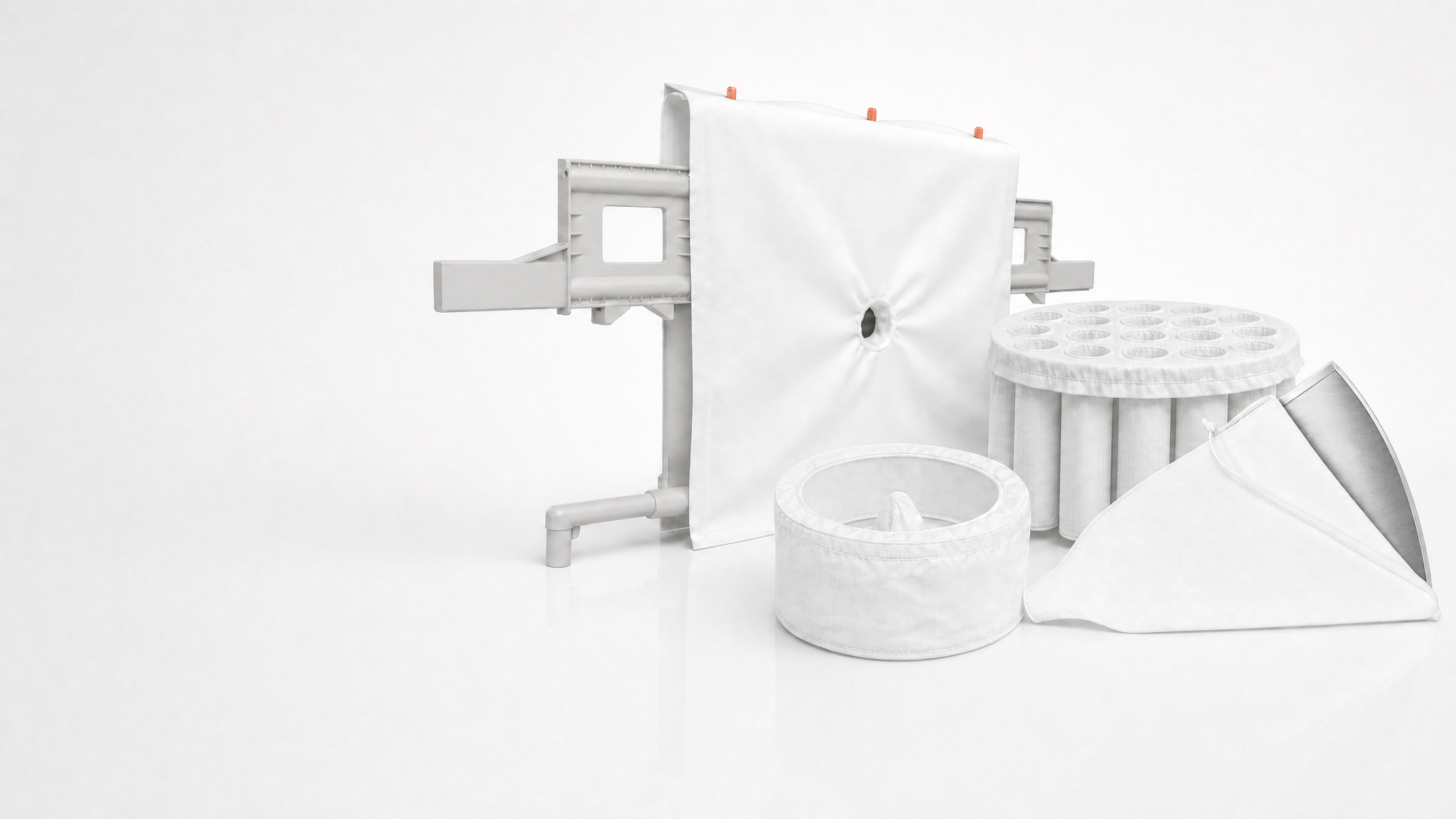
If you run a Bellmer belt press, the fastest path to stable dewatering is a replacement belt that matches the machine geometry, drainage behavior, and seam construction — not just the nominal width. In day-to-day operation, the right compatible fabric can improve cake release, reduce edge wear, and help you avoid unnecessary downtime during changeouts.
🔑 Key Takeaways
- Start with the machine data: width, belt path, seam style, edge reinforcement, and support layout.
- RF-BF is the primary option for most belt press replacement needs where stable tracking and dewatering performance matter most.
- RF-SB can be the better fit when your installation needs a more open spiral construction or a special transfer/drainage zone.
- Measure before you order: a belt that is “close enough” on paper can still cause tracking issues, poor cake release, or short service life.
⚙️ What “compatible” really means on a Bellmer belt press
From an operator’s point of view, compatibility is about more than “same width, same length.” The belt must run correctly on your rollers, handle your feed solids, tolerate wash-water loading, and release the cake cleanly at discharge. If any of those details are off, you will usually see it first as tracking drift, wetter cakes, edge damage, or more frequent shutdowns.
For many replacement jobs, RF-BF Series belt filter fabrics are the first place to start because they are built for belt-filter duty and stable operation. If your line includes a zone where a more open or spiral structure makes sense, RF-SB Series spiral belts may be the better option. That choice depends on the machine design and how the belt is actually used in the process.
💡 Tip: Always document the old belt before removal. Take photos of the seam, edge reinforcement, belt run direction, and any wear marks on the drive and return side. Those details often tell you more than the nameplate alone.
Bellmer belt press users in wastewater, mining, and chemical industry service tend to notice compatibility problems quickly because slurry behavior changes with solids load, pH, particle shape, and wash intensity. A “near match” may run, but it may not run well.
🔬 RF-BF vs RF-SB: which fabric should you specify?
| Selection Factor | RF-BF Series | RF-SB Series | Operator Note |
|---|---|---|---|
| Main duty | Belt filter / belt press dewatering | Spiral belt / open-construction use | Match the fabric to the actual belt path, not just the machine brand. |
| Best fit | Stable, general-purpose replacement | Special drainage or transfer requirement | Ask where the belt is carrying load and where it is only transporting or draining. |
| Key benefit | Predictable run behavior | Open structure and process flexibility | Choose the construction that supports your process goal. |
| Typical concern | Tracking, seam wear, drainage balance | Fit in the belt path and correct application | Compatibility failures usually show up during the first days of operation. |
📏 How to verify the belt before you place an order
To source a compatible replacement for a Bellmer belt press, record the dimensions and operating details while the old belt is still installed. The most useful job file includes width, endless length or circumference, seam type, edge style, weave pattern, and any special coating or surface treatment.
Confirm the exact machine type on your belt press equipment page or related belt filter systems page, then map the full belt route over rollers, boxes, and discharge points.
Record width, length, seam style, belt thickness, and any edge reinforcement. If the old belt shows repeated wear in one zone, note that location and the cause.
Share your feed solids, temperature, wash-water chemistry, and discharge target. This is especially important in chemical industry service and variable-load wastewater lines.
Have the replacement checked against your operating data so the belt arrives ready for installation, not for guesswork at the machine.
📋 Pre-order checklist for compatible replacement belts
- Machine model and belt press layout
- Exact belt width and length
- Seam style and seam location
- Edge reinforcement and wear pattern
- Target cake dryness and release behavior
- Wash-water pressure, temperature, and chemical exposure
- Any special requirements for ATEX or conductive service
⚠️ Caution: Do not install a replacement belt without checking tension, tracking, and lockout procedures first. Over-tensioning can damage bearings and rollers, while poor tracking can lead to edge fraying and sudden downtime. If your installation has dust or solvent-related hazards, review the risk of static build-up and the requirements described on our antistatic and ATEX guidance page.
🛠️ Start-up, tuning, and practical operator rules
Once the new belt is fitted, the first hours of operation matter most. Run at a conservative load, watch the belt edges, and verify that the cake releases evenly across the width. If you see carry-over on one side, the issue is often tracking, tension balance, or an incorrect belt construction rather than the feed alone.
Rule of thumb: If the old belt tracked well but wore out early, focus first on material and edge construction. If the old belt released poorly, focus first on surface behavior and drainage structure.
For Bellmer users who run demanding solids or sticky slurries, it is worth checking related trouble spots early. Poor discharge can show up as cake-release problems, while uneven wash performance can lead to clogging issues and a drop in throughput. If the belt seems to “work” but the filtrate or cake becomes wetter over time, compare your current setup with your previous wear pattern and review short service-life causes.
If you are seeing product drips at the edge or under the discharge point, also review drip leakage guidance. On many plants, a small leak becomes a housekeeping and safety issue long before it becomes a process failure.
✅ Choosing the right replacement strategy for your plant
If you want the safest sourcing path, start with RF-BF and only move to RF-SB when the process or machine geometry clearly benefits from a spiral/open construction. In other words, let the machine and slurry decide — not just the catalog description. That approach works well across wastewater, mining, and chemical industry installations where uptime and predictable dewatering matter more than a quick fit.
Before you approve production, confirm that the belt matches your operating goal: faster cake release, better drainage, longer life, or easier tracking. A compatible replacement should make the press easier to run, not more difficult.
📩 Need Help Choosing the Right Fabric?
Our technical team at R+F FilterElements can help you find the perfect filter fabric for your specific application. Get in touch for a free consultation — we will recommend the right solution based on your machine, process, and operating conditions.