
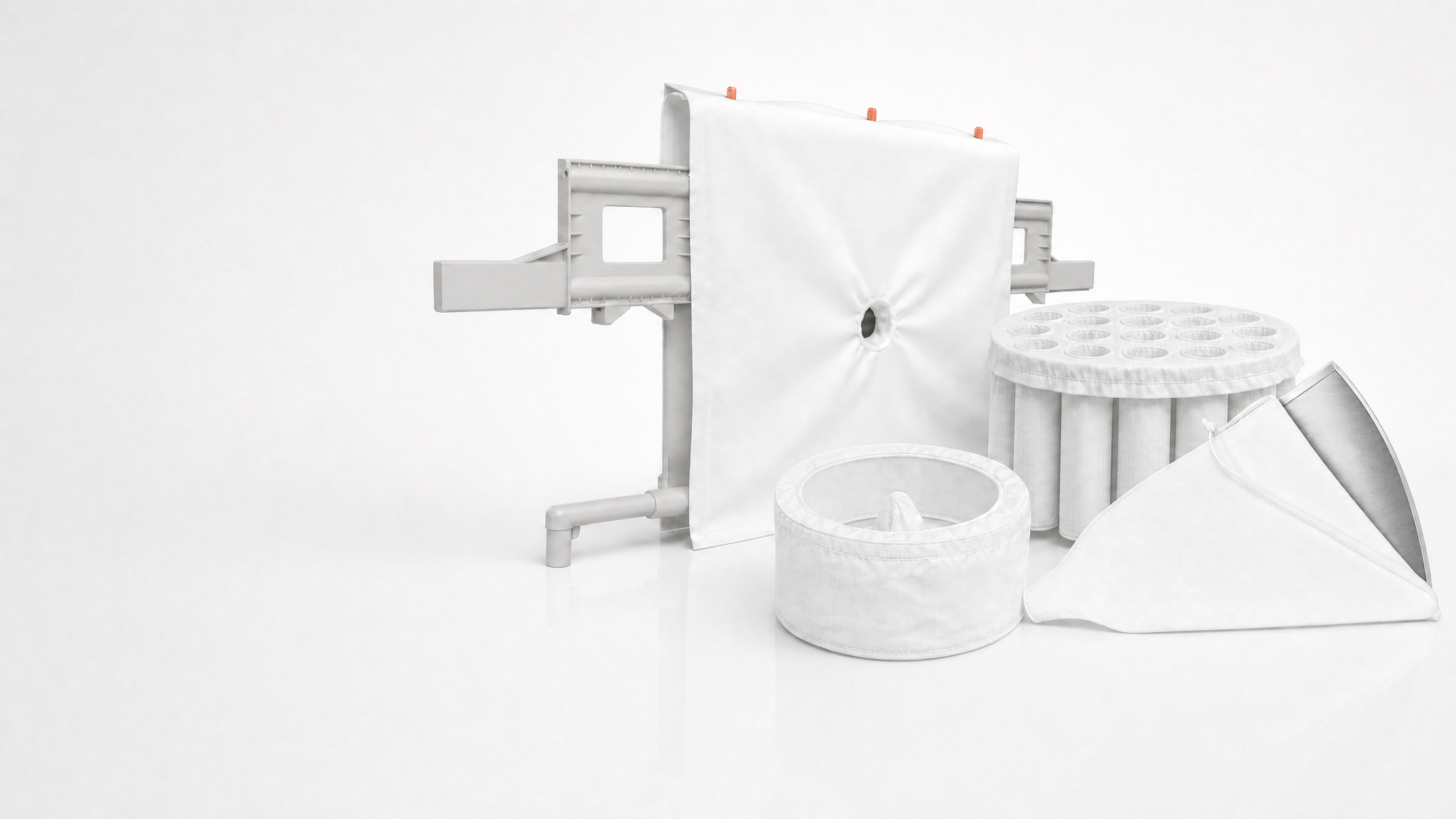
Correct belt tension is one of the most important settings on a belt filter because it directly influences dewatering, cake release, belt tracking, and fabric life. If you run a belt filter in wastewater, mining, or chemical service, small tension errors can show up quickly as wetter cake, edge wear, or unstable tracking.
In day-to-day operation, the goal is simple: keep the belt tight enough to transfer force and drain water efficiently, but not so tight that you stretch the fabric, overload bearings, or force the belt into edge damage. The right setting also helps you avoid premature replacement of RF-BF Series belt filter fabrics and reduces issues that often appear alongside poor cake release or short filter lifespan.
🔑 Key Takeaways
- Too little tension lets the belt slip, wander, and drain unevenly, which usually means wetter cake.
- Too much tension stretches the fabric, increases edge wear, and can overload rollers, bearings, and drive components.
- Stable tracking depends on even tension across the width, clean rollers, and regular operator checks.
- Small adjustments are better than large corrections; log every change so you can spot patterns before failures develop.
⚙️ Why Belt Tension Matters on a Belt Filter
On a belt filter, tension affects how well the slurry cake is compressed, how water moves through the fabric, and whether the belt stays centered on the rollers. If the fabric is slack, the belt can flutter or slip, especially under load. If it is over-tensioned, the belt may track well for a while, but you pay for it later with stretching, seam stress, and edge damage.
For operators, the practical message is clear: tension is not just a mechanical setting, it is a process variable. If your plant also runs a filter press or a centrifuge, the fabric behavior is different, but the same principle applies: stable support gives you stable separation.
💡 Tip: Check belt tension after startup and again after the machine has reached operating temperature. A setting that looks fine cold can shift once the system is loaded and the frame warms up.
🔬 How Over- and Under-Tension Affect Cake Moisture
When cake moisture rises, operators often look first at feed consistency or polymer dosing. That matters, but belt tension is just as important because it changes drainage contact and the pressure profile through the belt path. The wrong setting can hide in the background until the product starts leaving the machine visibly wetter.
| Tension State | Typical Operator Symptoms | Effect on Cake Moisture | Effect on Belt Life |
|---|---|---|---|
| Under-tensioned | Slip, wandering, uneven edge wear, unstable discharge | Usually wetter cake due to poor drainage contact | Can reduce life through rubbing, mis-tracking, and seam stress |
| Correctly tensioned | Stable tracking, even loading, predictable discharge | Best balance of drainage and compression | Longer service life, lower edge damage, fewer emergency stops |
| Over-tensioned | Hard running, stretched fabric, hot bearings, forced alignment | May look better briefly, then become inconsistent as fabric deforms | Shortened life from stretch, seam loading, and roller wear |
If you operate in demanding service, such as wastewater dewatering or mining, tension errors can also amplify the symptoms of filter cloth clogging. A clogged surface already drains poorly; if tension is wrong on top of that, your cake moisture can move out of spec very quickly.
⚠️ Caution: Do not “solve” tracking problems by simply tightening the belt more and more. Over-tension can mask the symptom for a short time, but it usually creates faster wear, higher energy demand, and more expensive downtime later.
🛠️ What to Watch During a Shift
Good operators spot tension issues before maintenance does. Look for patterns, not just one-off events. A single brief wander may be normal during start-up, but repeated edge rubbing or rising discharge moisture usually means the belt setting needs attention.
📋 Shift Checklist for Belt Tension
- Check belt tracking at start-up, mid-shift, and before shutdown.
- Inspect both edges for shiny wear marks, fraying, or heat damage.
- Watch the cake discharge: is it clean, consistent, and easy to release?
- Listen for unusual drive noise, roller squeal, or bearing load changes.
- Compare moisture readings with previous shifts after any tension adjustment.
Many plants run belt filtration in changing conditions, such as chemical processing where feed solids vary from batch to batch. In those cases, the safest approach is to treat tension as a controlled setting, not a one-time installation value. That is especially important if you are also evaluating a new fabric construction like RF-BF Series belt filter fabrics for a more stable run.
📊 A Practical Adjustment Routine for Operators
If you need to correct belt tension, move in small steps and measure the result. The aim is to reach stable tracking and dry cake without forcing the machine. If the belt is already close to correct, a minor adjustment can be enough to recover performance.
Note current tension, belt position, cake moisture, and any wear marks before making a change.
Keep the change balanced so you do not create new tracking issues while trying to fix moisture.
Let the belt run under normal load before judging the effect. Short trials can be misleading.
Check tracking, cake dryness, discharge quality, and fabric edges. Then log the final setting.
Rule of thumb: If you need frequent large tension corrections, the real problem is often worn rollers, contamination on the belt path, or a fabric that no longer matches the duty.
🏭 Choosing the Right Fabric and Support Setup
Correct tension works best when the fabric construction is suitable for the machine and product. If your belt filter handles fine solids and you need predictable drainage, the fabric must be stable enough to hold tension without excessive elongation. For that reason, many operators pair their maintenance routine with a fabric review on the machine side, especially when changing slurry conditions or increasing throughput.
For belt-filter duty, start with the machine page for your unit and compare the belt fabric options with the process duty. If you are standardizing across several separation stages, it can also help to review related media such as RF-FF Series filter press fabrics for press applications or RF-SB Series spiral belt fabrics for supporting continuous filtration lines. The same disciplined approach helps when you work across multiple machines, from belt presses to pressure leaf filters.
Ultimately, belt tension is not a “set and forget” adjustment. It is part of routine control, just like feed rate, polymer dosage, and wash water. When you keep it in range, you protect the fabric, stabilize tracking, and get drier cake with fewer surprises.
📩 Need Help Choosing the Right Fabric?
Our technical team at R+F FilterElements can help you find the perfect filter fabric for your specific application. Get in touch for a free consultation — we will recommend the right solution based on your machine, process, and operating conditions.