
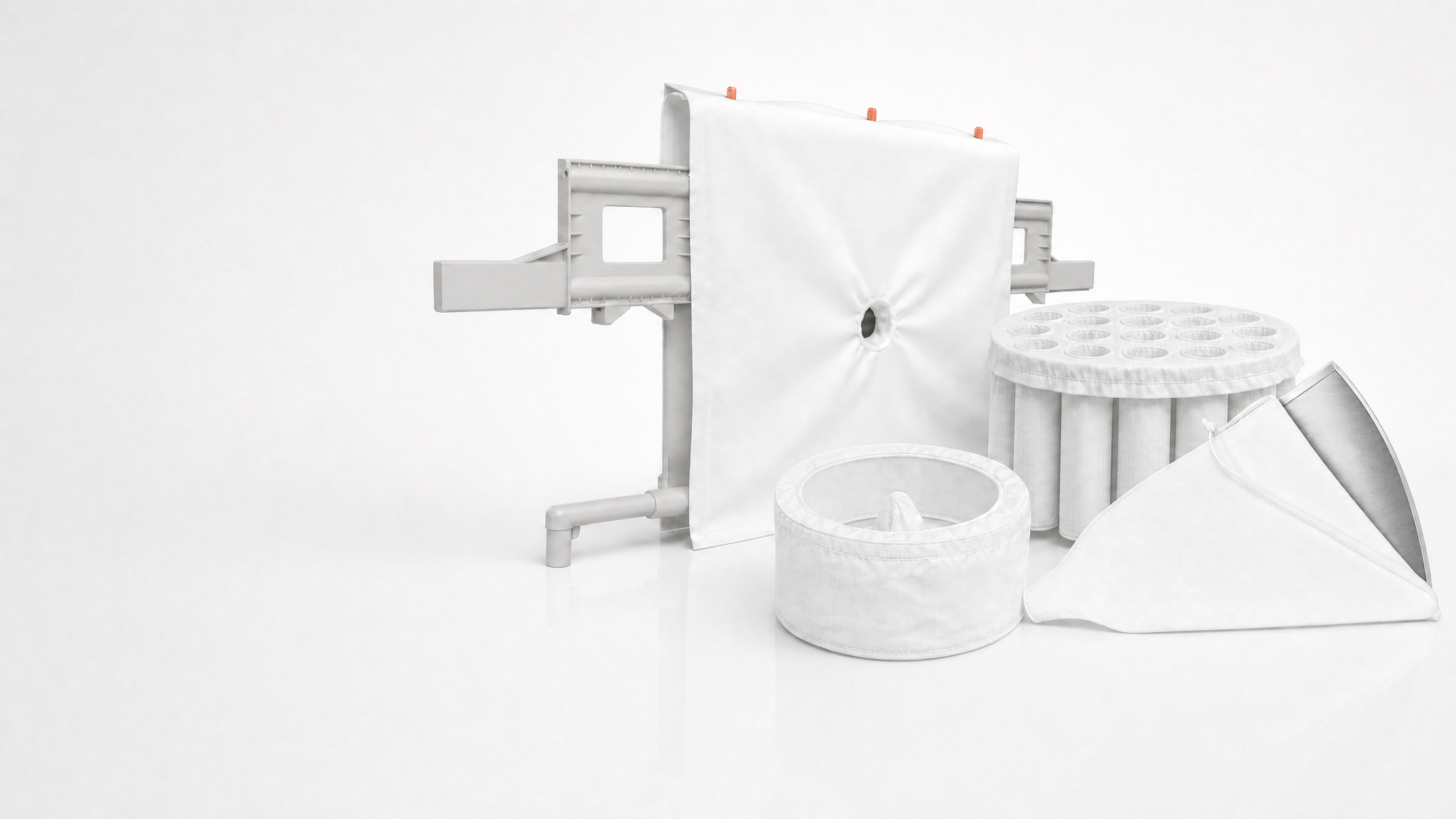
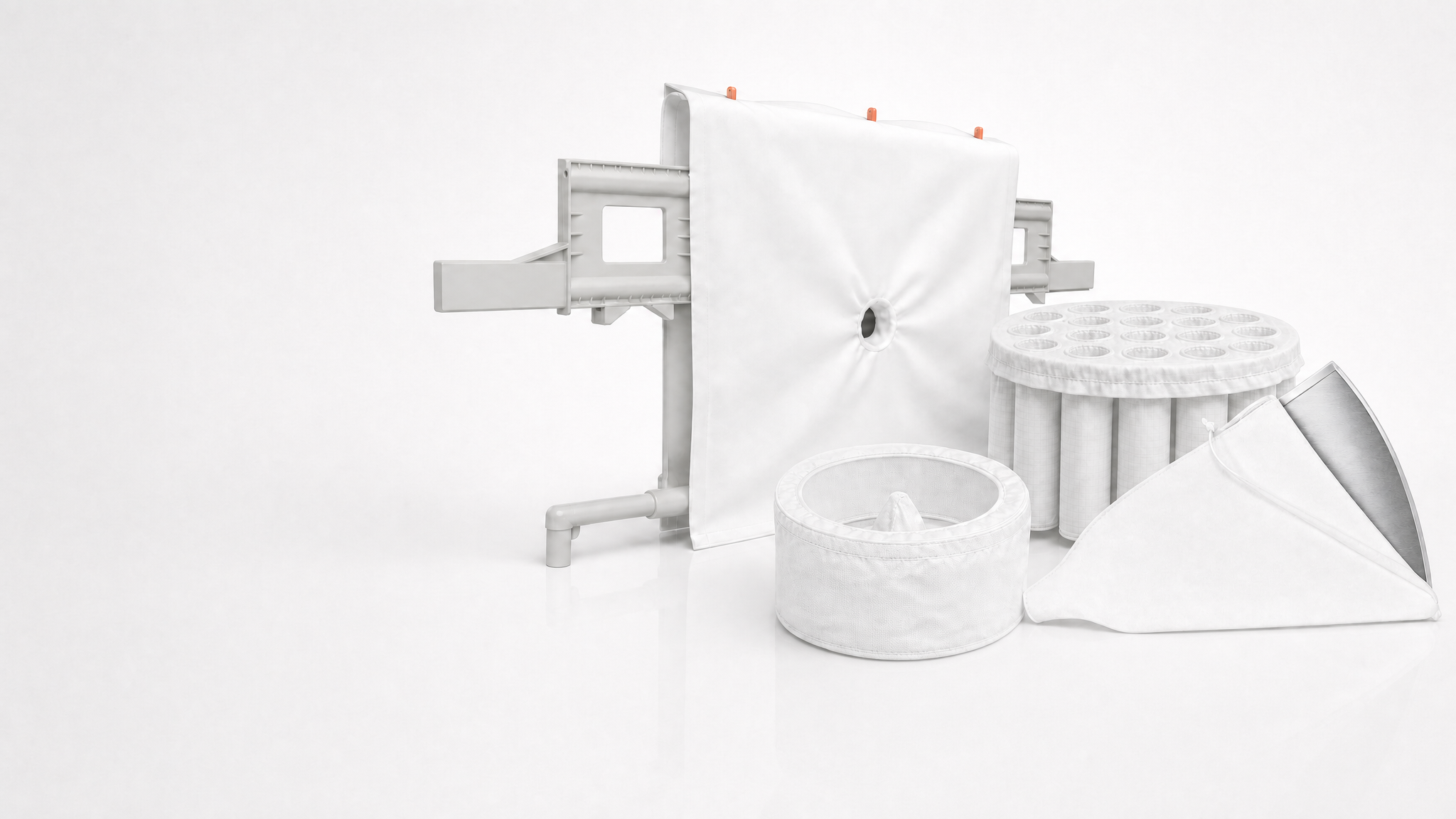
BHS Filtration equipment is built to work hard, but performance depends heavily on the condition and fit of the filter media. If you run peeler centrifuges or pressure filters, choosing a compatible replacement that matches the OEM design intent can help maintain cake release, throughput, and product purity.
R+F FilterElements supplies engineered filter fabrics for both centrifuge applications and pressure filter systems, including RF-CF Series centrifuge media, RF-FF Series filter press fabrics, and RF-PLF Series pressure leaf filter cloths. This guide shows how to select the right compatible alternative for your plant.
🔑 Key Takeaways
- Compatible filter media must match the machine type, process duty, and mechanical load.
- Centrifuge bags and pressure filter cloths behave differently under speed, pressure, and discharge cycles.
- Material choice affects cake release, filtration efficiency, wear life, and cleaning frequency.
- R+F offers engineered alternatives for BHS-style centrifuges and pressure filters with application-specific construction.
💡 Tip: If your current media is failing early, start by checking fit, permeability, seam construction, and cake discharge behavior before changing process settings.
⚙️ Where Compatible Media Matters Most
In plants running BHS Filtration equipment, filter media is not a generic consumable. A peeler centrifuge needs media that can withstand repeated acceleration, discharge stress, and cleaning cycles. A pressure filter needs cloths or bags that seal reliably and keep solids where they belong.
For operators, the key is simple: select media based on the machine’s mechanical duty, not just on the slurry name. That is why R+F offers dedicated alternatives for centrifuges, filter presses, and pressure leaf filters.
🔬 Centrifuge Bags vs. Pressure Filter Cloths
Although both are filter media, they solve different process problems. Centrifuge bags must survive rotation and rapid discharge. Pressure filter cloths must handle differential pressure, cake formation, and sealing at the filter plate or leaf.
| Feature | Centrifuge Bags | Pressure Filter Cloths |
|---|---|---|
| Primary load | Mechanical stress and centrifugal force | Differential pressure and cake load |
| Key performance target | Stable retention and clean discharge | Reliable sealing and consistent filtrate clarity |
| Typical failure mode | Seam wear, deformation, poor release | Leakage, blinding, shortened life |
| Common R+F solution | RF-CF Series centrifuge fabrics | RF-PLF Series pressure leaf cloths and RF-FF Series filter press fabrics |
🛠️ How to Select the Right Compatible Alternative
Material selection should always begin with operating conditions. The same process chemistry can behave very differently if temperature, solids load, or cleaning method changes.
Rule of thumb: If cake release is weak, look first at weave structure and surface finish; if wear life is poor, look first at seam design, fiber strength, and cleaning intensity.
Confirm whether you are running a centrifuge, filter press, or pressure leaf filter. Each platform needs a different fabric construction.
Note temperature, pressure, rotational speed, cleaning method, and expected cake behavior.
Choose fiber and weave based on chemical exposure, solids fineness, and required permeability.
Check dimensions, stitching, edge finishing, and installation details before release to production.
⚠️ Caution: Do not assume that a visually similar cloth will perform the same. Small differences in permeability, seam design, or edge finishing can cause leakage, blinding, or premature failure.
🏭 R+F Product Range for BHS-Compatible Systems
R+F FilterElements provides a complete range of compatible media for operators who want dependable replacement options without changing the process setup. For centrifuge users, the RF-CF Series is designed for demanding discharge and rotation conditions. For pressure filter operators, RF-FF Series filter press fabrics and RF-PLF Series pressure leaf filter cloths cover common industrial duties.
For plants that want a faster selection process, you can find and configure the right filter fabric with our Solution Finder and receive a pre-filled, non-binding specification request. It is a practical way to translate machine type and process details into an actionable inquiry.
📋 Ordering Checklist
- Machine type and OEM model designation
- Current media dimensions, photos, and installation sketch
- Process medium, temperature, and chemistry
- Target performance: clarity, throughput, or cake release
- Seam, edge, and fastening requirements
- Cleaning method and expected service interval
✅ Practical Troubleshooting Before You Replace
If your current media is underperforming, the fabric may not be the only issue. Check for clogged cloths, altered cycle times, damaged seals, or changes in feed solids. These issues often show up as poor discharge, higher moisture, or visible leakage.
- Review whether the problem started after a process change.
- Inspect the media for wear patterns, stitching failure, and blinding.
- Compare actual dimensions against the original installation.
- Check whether cleaning chemicals are affecting the textile.
For common symptoms, it can help to review related guidance on filter cloth clogging, cake release problems, and short filter lifespan. If your plant runs in a hazardous area, also consider ATEX-related antistatic requirements.
📩 Need Help Choosing the Right Fabric?
Our technical team at R+F FilterElements can help you find the perfect filter fabric for your specific application. Get in touch for a free consultation — we will recommend the right solution based on your machine, process, and operating conditions.
To speed up the process, use our Solution Finder to find and configure the right filter fabric for your centrifuge or pressure filter and send a pre-filled, non-binding inquiry.