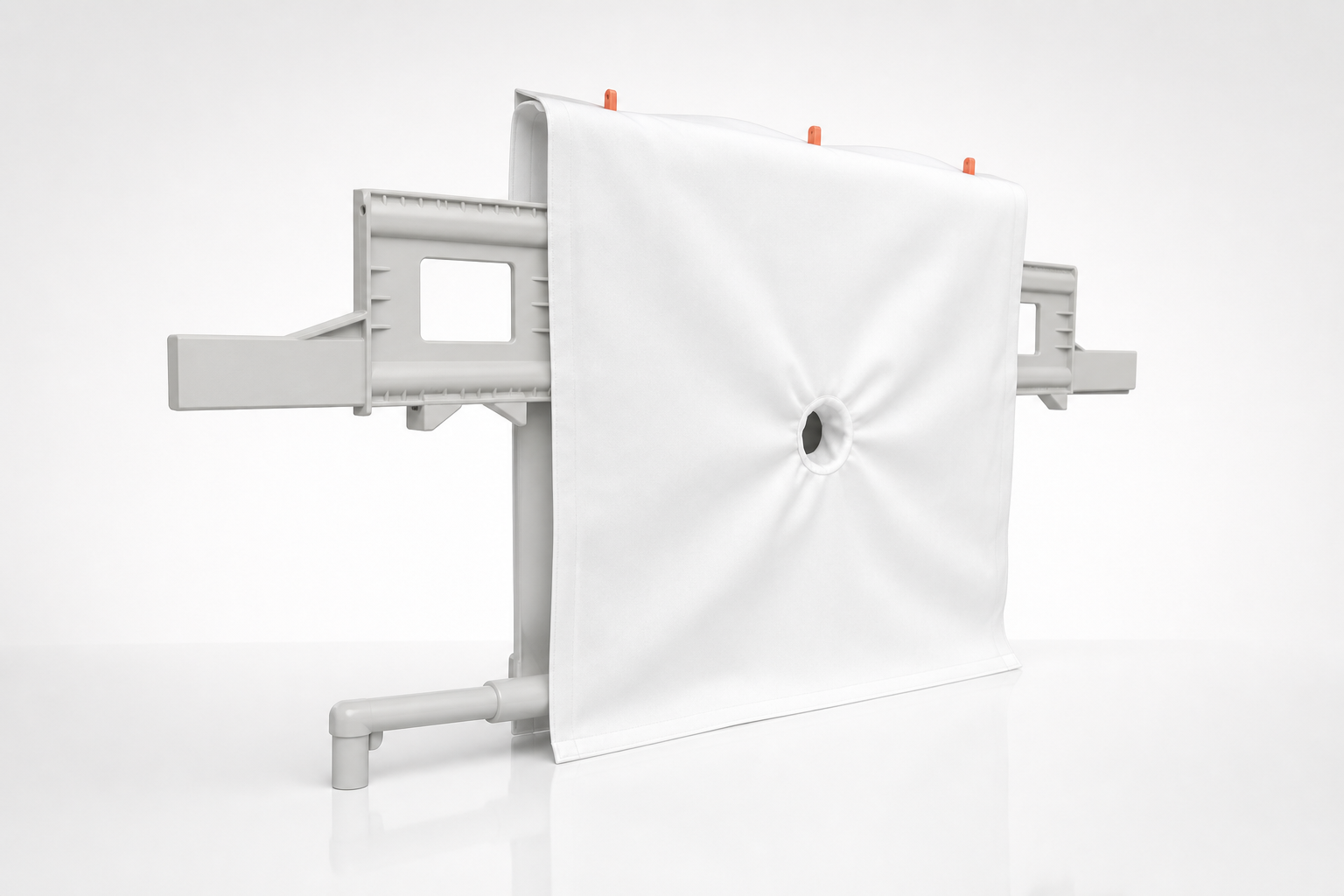
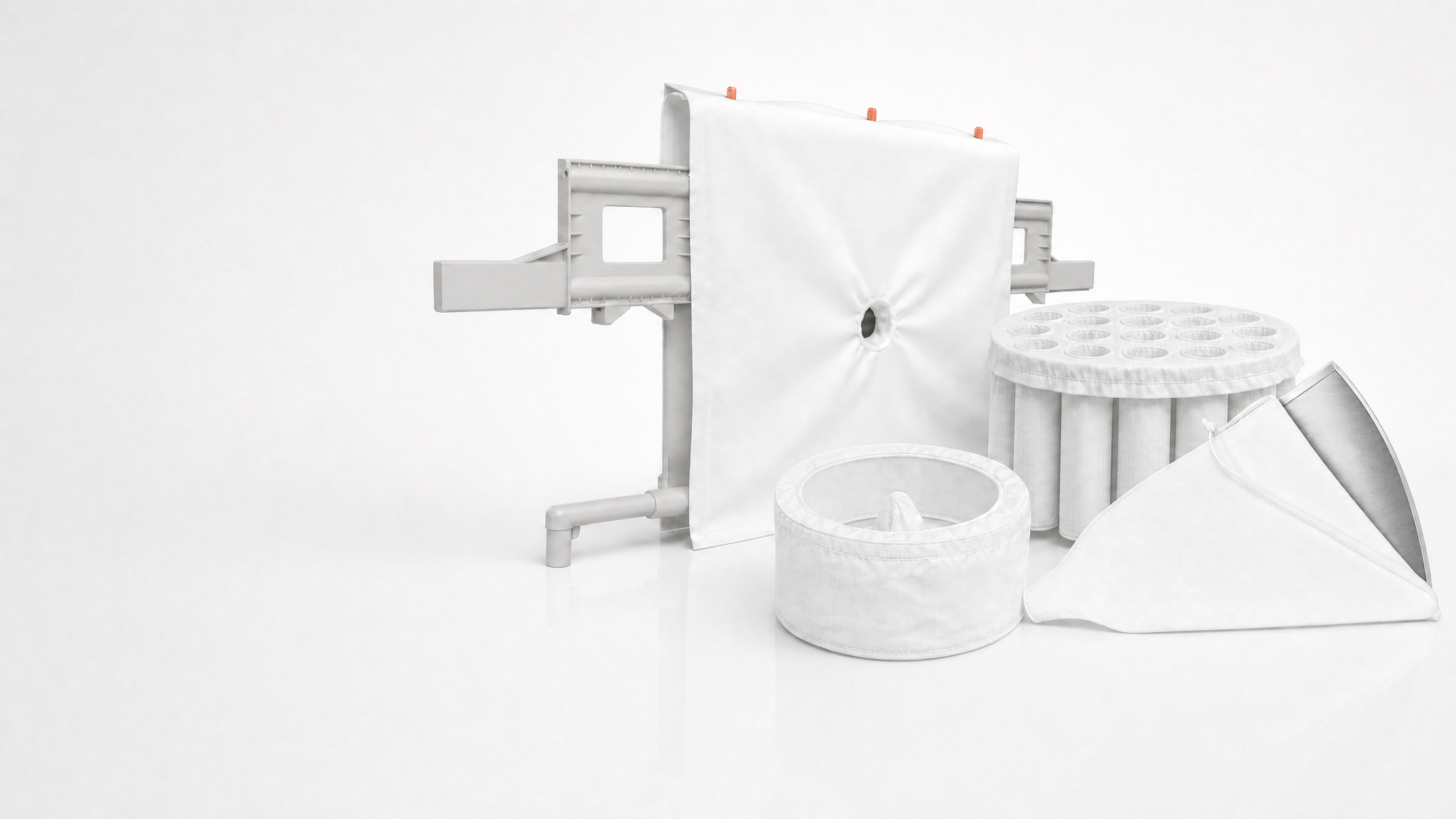
BHS Filtration pressure filters are common in demanding solid-liquid separation lines, especially where retention stability, cake release, and chemical resistance must stay reliable over long runs. If you operate a candle filter or another pressure filtration system, R+F FilterElements can supply compatible filter fabrics designed to match the process requirements of your equipment.
This guide explains how RF-FF Series filter press fabrics and RF-PLF Series pressure leaf filter fabrics support different filter designs, and how to choose the right media for your filtration challenge in the chemical industry and beyond.
🔑 Key Takeaways
- RF-FF Series is suited to plate-based pressure filtration systems with robust cake release and retention performance.
- RF-PLF Series is designed for pressure leaf filter elements where open drainage and cleanability are critical.
- Chemical resistance, seam design, and fabric structure all influence service life and uptime.
- Use the configurator to configure your filter press filter fabric online and receive a pre-filled, non-binding inquiry.
⚙️ What matters most in BHS-compatible pressure filtration
When you run a pressure filter, the fabric has to do more than separate solids from liquid. It must hold the target particle size, release the cake cleanly, and survive repeated exposure to slurry chemistry, temperature changes, and mechanical load.
In practice, operators usually start by asking three questions:
- Will the fabric retain fine particles without forcing excessive pressure drop?
- Will cake release stay consistent after many cycles?
- Can the textile tolerate the process chemistry without premature hardening, swelling, or fiber damage?
⚠️ Caution: If the fabric is selected only by nominal mesh or opening size, you may get good initial retention but poor discharge, higher blinding, or shorter service life.
🔬 RF-FF and RF-PLF: two compatible solutions for different filter designs
R+F offers two core product families for these applications. RF-FF Series filter fabrics are intended for plate-based systems, including filter press layouts where cloth stability, sealing, and consistent cake discharge are priorities. RF-PLF Series pressure leaf filter fabrics are made for leaf elements, where drainage paths and surface cleanability are especially important.
| Filter type | Typical operating focus | Best-fit R+F series | Operator priority |
|---|---|---|---|
| Plate-based pressure filter / filter press | Fine retention, cake formation, reliable sealing | RF-FF Series | Cake release and leak control |
| Pressure leaf filter / candle-style element | Open drainage, low blinding, easy washability | RF-PLF Series | Cleanability and stable throughput |
| Chemical process service | Resistance to acids, alkalis, solvents, and temperature | RF-FF or RF-PLF depending on design | Media compatibility and uptime |
For operators in demanding process plants, the right choice often depends on whether the equipment behaves more like a plate-and-frame pressure filter or a leaf-style vessel. If you are unsure, our filter press machine page and pressure leaf filter page are useful starting points for matching fabric design to machine layout.
🛠️ How to choose the right fabric in 4 steps
Check particle size distribution, target clarity, and whether you need maximum retention or faster throughput.
Plate-based systems typically favor RF-FF Series, while leaf elements point toward RF-PLF Series.
Review slurry pH, solvent exposure, temperature peaks, and cleaning agents before finalizing the fabric.
Confirm cake release, washing performance, and cleaning cycle efficiency during real operating conditions.
📋 Pre-selection checklist for operators
- Slurry composition and particle size range
- Operating pressure and temperature
- Chemical resistance requirements
- Required cake dryness and discharge behavior
- Cleaning method: water, caustic, acid, or solvent
- Machine type: plate-based or leaf-based
💡 Tip: For many chemical industry applications, a slightly more open fabric structure can improve cleanability without sacrificing usable retention—especially when the process benefits from stable washing and low blinding.
📊 Retention, cleanability, and chemical resistance compared
The best compatible fabric is not always the finest fabric. In real operation, the winning choice balances particle retention with low fouling and predictable discharge. That is why fabric construction and yarn selection matter as much as nominal pore size.
Cleanability in daily operation
Cleanability affects both throughput and labor. A fabric that sheds cake cleanly reduces downtime, while a fabric that traps fines can quickly raise differential pressure. If your process shows signs of filter cloth clogging or poor cake release, the textile structure should be reviewed before changing process settings.
Chemical resistance in aggressive media
In the chemical industry, exposure to acids, alkalis, and solvents can shorten fabric life if the wrong polymer or seam construction is used. A compatible textile should hold its shape, keep tension, and avoid early degradation so that you do not lose retention quality between changeouts.
Rule of thumb: If the cake is hard to discharge, first review fabric surface behavior and seam design before increasing air blow, pressure, or wash intensity.
🏭 Where these fabrics fit in real plants
Operators often need one compatible fabric solution across multiple units, especially when the same slurry stream is split between prefiltration, polishing, and cake recovery. That is why R+F supports not only pressure filters but also related equipment such as filter presses, pressure leaf filters, and other solid-liquid separation systems.
If you operate adjacent equipment, it can also help to compare product families across the broader range. For example, R+F’s filter fabric portfolio includes options for other machine types such as centrifuges and belt filters, making it easier to standardize sourcing and maintenance strategy across the plant.
When you are ready to specify a replacement or upgrade, you can also use our online tool to configure your filter press filter fabric online. It helps you define the key parameters and generates a pre-filled, non-binding specification request for faster review.
📩 Need Help Choosing the Right Fabric?
Our technical team at R+F FilterElements can help you find the perfect filter fabric for your specific application. Get in touch for a free consultation — we will recommend the right solution based on your machine, process, and operating conditions.
Prefer to move quickly? Use the configurator to configure your filter press filter fabric online and send us your requirements in just a few steps.