
Montan wax and Fischer-Tropsch wax are both high-value synthetic waxes, but their filtration challenges are very different in practice. If you run a press, centrifuge, or pressure filter, you know that crystal size, viscosity, and temperature control can make or break throughput, cake release, and product purity.
In this guide, we look at montan wax filtration and FT wax filter cloth selection from an operator’s point of view — with a focus on synthetic wax solid-liquid separation and lignite wax press filtration.
🔑 Key Takeaways
- Montan wax and FT wax require different cloth structures because their crystal behavior and viscosity profiles differ.
- Stable temperature control is essential to avoid premature solidification, blinding, and poor cake discharge.
- Filter media choice affects clarity, cycle time, moisture in cake, and how cleanly the wax releases.
- The right fabric depends on your machine type, solids load, and whether you prioritize clarity or maximum throughput.
⚙️ Why Wax Filtration Is So Sensitive
Wax filtration is not just a solids-removal step; it is a process balance between temperature, viscosity, crystal formation, and cloth permeability. In chemical industry applications, even a small change in feed temperature can change cake structure and filtrate quality.
Montan wax, often produced from lignite, typically contains more natural impurities and can form a more complex cake than highly refined synthetic waxes. Fischer-Tropsch wax is usually cleaner, but it can still cause rapid cloth blinding if crystals bridge too tightly or if the feed begins to set inside the filter system.
⚠️ Caution: If wax cools inside the feed line, filter chamber, or cloth pores, you can get irreversible blinding, poor discharge, and long cleaning downtime. Keep the full system within the target temperature window.
🔬 Montan Wax vs. Fischer-Tropsch Wax: Practical Differences
From the operator’s side, the biggest difference is how the solids behave during separation. Montan wax filtration often deals with more variable feed quality, while FT wax filtration tends to demand tighter control of clarity and product consistency.
| Parameter | Montan Wax | Fischer-Tropsch Wax |
|---|---|---|
| Feed consistency | More variable | Usually more uniform |
| Impurity load | Often higher | Usually lower |
| Cloth blinding risk | Medium to high | Medium, but can spike with cooling |
| Cake release | Can be sticky if underheated | Often clean when temperature is stable |
| Best focus | Robust cake handling | High clarity and stable throughput |
🛠️ Choosing the Right Filter Cloth for Wax Service
The best FT wax filter cloth is usually not the “finest” one available. It is the cloth that keeps permeability stable while still capturing fine solids and promoting clean cake release. For montan wax, a slightly more robust weave or engineered surface can help resist early blinding.
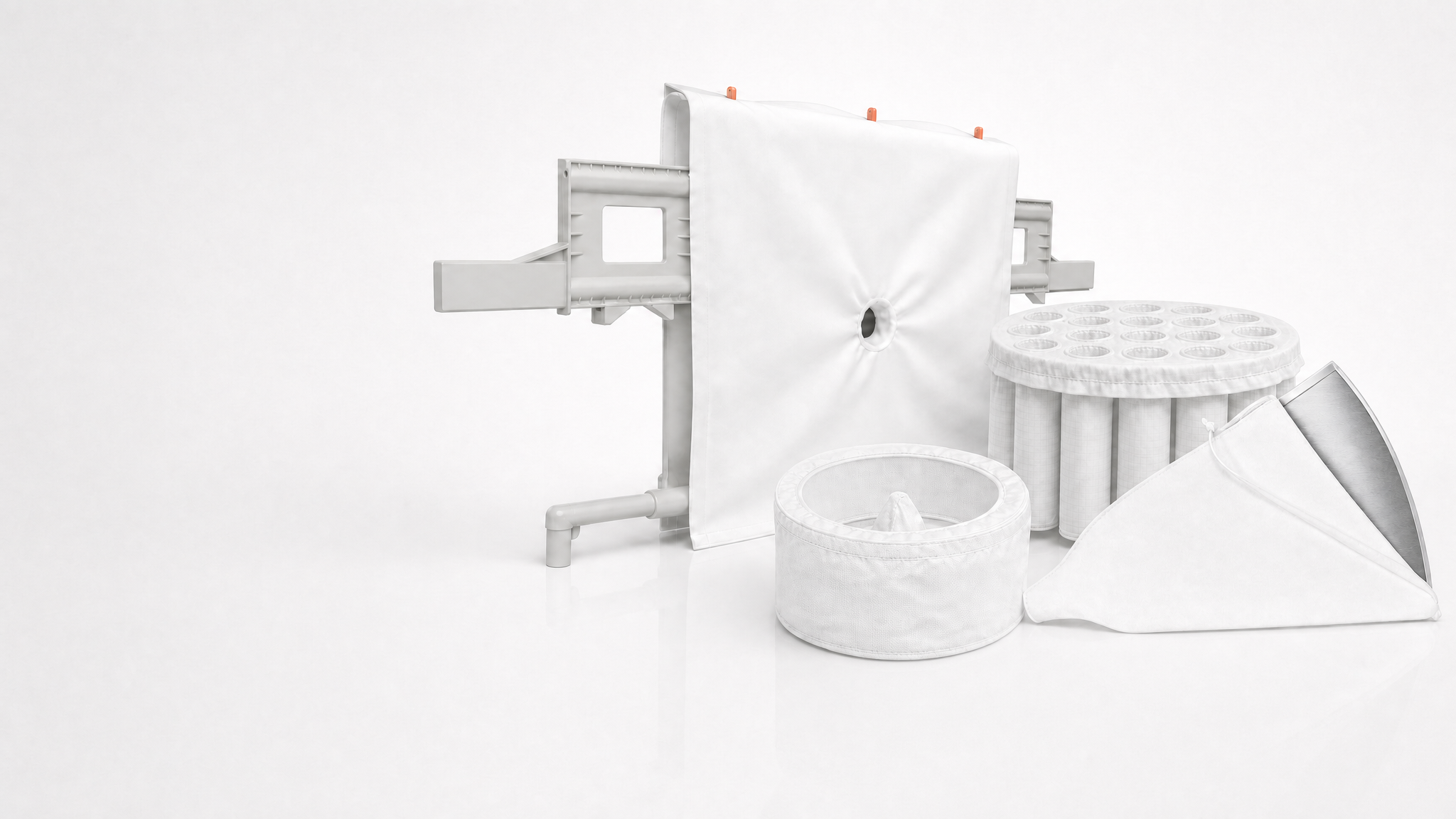
If you operate a press system, start with RF-FF Series filter press fabrics and evaluate pore stability, seam strength, and discharge behavior. For continuous wax handling, RF-BF Series belt filter fabrics are often the better starting point when your process needs steady drainage and simpler solids transport.
💡 Tip: In wax filtration, temperature stability matters as much as cloth selection. A premium fabric cannot compensate for a feed that cools too quickly in the pipework or on the plate surface.
What operators should check first
- Filtrate clarity after startup and after each temperature change
- Cake release behavior at full cycle end
- Blinding pattern — edge first, center first, or uniform
- Residual moisture if downstream melting or packaging is sensitive
📋 Pre-run checklist for wax filtration
- Confirm feed and cloth temperature are inside the operating window
- Verify no wax has set in nozzles, feed lines, or plate corners
- Check cloth tension, sealing surfaces, and seam condition
- Inspect whether the cake releases cleanly from the previous cycle
- Review any signs of filtrate carryover or contamination stitching
🏭 Best Machine Types for Synthetic Wax Solid-Liquid Separation
Different machines suit different wax duties. In filter press systems, you usually get the strongest control over cake dryness and batch clarity. In centrifuge operation, you gain speed and continuous handling, but cloth selection and thermal control become even more critical.
Typical equipment match
- Filter press — best for stable batch separation and high dryness
- Pressure leaf filter — useful where clarity and enclosed operation matter
- Centrifuge — good for faster throughput and process integration
- Belt filter — suitable for continuous operation with manageable solids load
For enclosed or higher-purity duties, many plants also review RF-SP Series sparkler filter fabrics or RF-NF Series needle felt media, depending on whether the process is more filtration-driven or support-layer driven. If your wax line includes downstream drying, RF-FBD Series fluid bed dryer fabrics can help with stable airflow and thermal handling after separation.
Rule of thumb: If cake release gets worse as the cycle progresses, suspect temperature loss or pore loading before you immediately switch to a tighter fabric.
🔧 Common Problems and How Operators Prevent Them
Most wax filtration problems are operational, not just media-related. If you notice rising differential pressure, look first at temperature control, feed conditioning, and whether solids are beginning to set inside the machine. For recurring blinding, see our page on filter cloth clogging.
- Poor cake release: often caused by underheating or a cloth surface that is too fine for the crystal structure; see cake release issues.
- Short fabric life: may come from thermal cycling, abrasion, or chemical incompatibility; review short filter lifespan.
- Drip leakage: can indicate poor sealing or seam wear; see drip leakage.
⚠️ Caution: Do not use aggressive cleaning methods that distort the fabric or create hot spots. Mechanical damage can reduce permeability and create permanent discharge problems in wax service.
✅ How to Specify the Right Fabric for Your Wax Line
When you request a new media design, be ready to describe the wax type, solids loading, operating temperature, and your machine configuration. The more accurate the process data, the better the cloth selection will match your actual cycle behavior. You can also use our find and configure the right filter fabric with our Solution Finder to select your machine and receive a pre-filled, non-binding specification inquiry.
State whether you run montan wax, Fischer-Tropsch wax, or a blended synthetic wax stream.
Capture temperature, viscosity trend, solids content, and whether filtration is batch or continuous.
Choose the machine family and match the fabric to cake release, permeability, and sealing needs.
Run a short trial, then compare clarity, discharge, cycle time, and cloth condition after the first shifts.
Need to compare more than one machine concept? Review the application pages for chemical industry and pharmaceutical processing if your wax line also has purity-sensitive downstream steps.
📩 Need Help Choosing the Right Fabric?
Our technical team at R+F FilterElements can help you find the perfect filter fabric for your specific application. Get in touch for a free consultation — we will recommend the right solution based on your machine, process, and operating conditions.
For a faster start, use our Solution Finder to configure the right filter fabric online and receive a pre-filled, non-binding inquiry for your wax filtration project.