When a filter press starts giving you cloudy filtrate, sticky cakes, or longer cycle times, the weave pattern is often part of the story. From the operator’s seat, the choice between plain, twill, and satin weave is not a theoretical fabric discussion — it directly affects how the cloth drains, how the cake forms, and how much cleaning you need between cycles.
If you run a press in mining, chemicals, wastewater, pigments, or food processing, the right weave can make the difference between a stable shift and constant babysitting. This guide breaks down the practical trade-offs so you can choose a cloth structure that fits your slurry, your machine, and your production target on filter press systems.
🔑 Key Takeaways
- Plain weave is the most stable and usually the best starting point for fine particles and high clarity requirements.
- Twill weave gives a balanced mix of drainage, strength, and cake release for many everyday slurries.
- Satin weave generally helps when cake release is difficult and throughput matters more than maximum filtration precision.
- The best weave depends on whether your bottleneck is clarity, release, throughput, or cloth life.
🏭 What the Weave Pattern Changes in Real Operation
Inside the press, the weave pattern controls how slurry meets the cloth surface, how fast liquid can pass through, and how the cake detaches at discharge. A tight, stable structure can improve filtrate clarity, while a smoother surface can reduce cake sticking and help the plate package discharge more cleanly.
From an operator perspective, weave choice shows up in three places:
- Filtrate clarity: how much fine solid slips through during the first part of the cycle.
- Cake release: whether the cake falls off cleanly or stays welded to the cloth.
- Throughput: how quickly liquid drains and whether the press reaches target cake dryness on time.
That last point matters. The “best” weave on paper may fail in the plant if your slurry is sticky, compressible, abrasive, or prone to blind the cloth. If you are already dealing with filter cloth clogging or short filter lifespan, weave selection becomes a process decision, not just a purchasing decision.
💡 Tip: When a press is running well, the weave usually disappears from daily attention. When it’s wrong, it shows up immediately in cloth washing, cake drop, and cycle time.
🔬 Plain vs. Twill vs. Satin: Side-by-Side Comparison
Every weave pattern changes the fabric geometry. On the press, that geometry decides whether the cloth behaves like a rigid barrier, a balanced drainage medium, or a smoother release surface. Here is the practical comparison I would use at the machine door:
| Weave pattern | What it feels like in operation | Filtrate clarity | Cake release | Typical best fit | Watch out for |
|---|---|---|---|---|---|
| Plain weave | Tight, stable, more “locked-in” structure | Excellent for fine solids and first-pass retention | Usually more difficult if the cake is sticky | Fine particles, high clarity targets, stable slurries | Can blind faster on sticky or gelatinous feed |
| Twill weave | Balanced surface and good mechanical strength | Very good, with a solid balance between clarity and flow | Better than plain in many mixed slurries | General-purpose press operation, mixed particle sizes | May not release as easily as satin on very tacky cakes |
| Satin weave | Smoother surface, lower friction feel | Can still be strong, but depends heavily on slurry and mesh | Often the easiest release of the three | Sticky cakes, higher solids, discharge-sensitive processes | Can be less forgiving if filtration stability is poor |
In simple terms: plain weave protects clarity, twill weave balances the process, and satin weave helps the cake let go. That is why a plant struggling with cake release often looks at satin or a smoother twill first, while a process chasing cleaner filtrate may stay with plain or a tighter twill construction.
⚠️ Caution: A smoother weave is not automatically a better weave. If the slurry is very fine or compressible, a cloth that releases cake easily may still allow early particle migration and weaken filtrate clarity.
How each weave behaves with common slurry types
- Fine mineral slurries: Plain weave is often the safest starting point when the priority is clarity and solids capture.
- Mixed industrial slurries: Twill often gives the best day-to-day compromise between drainage and cake handling.
- Sticky organic slurries: Satin can improve discharge, especially when the cake tends to smear or bridge.
- Abrasive feeds: Structure and wear resistance matter just as much as the surface feel; weave choice should be reviewed together with cloth material and support conditions.
📊 Matching Weave to Slurry and Process Goal
On the plant floor, the first question is not “Which weave is best?” It is “What is limiting my cycle?” If the press is clear but slow, you may need a weave that drains better. If the cycle is fast but the filtrate is dirty, you may need tighter retention. If the cake hangs on the cloth, release becomes the priority.
If you operate across different plants or product grades, you may not need one “perfect” weave. Many operators keep one cloth style for a clarity-critical slurry and another for a discharge-critical slurry. That approach is common in chemical processing, mining, and wastewater treatment, where the feed can change from batch to batch.
R+F product options to consider
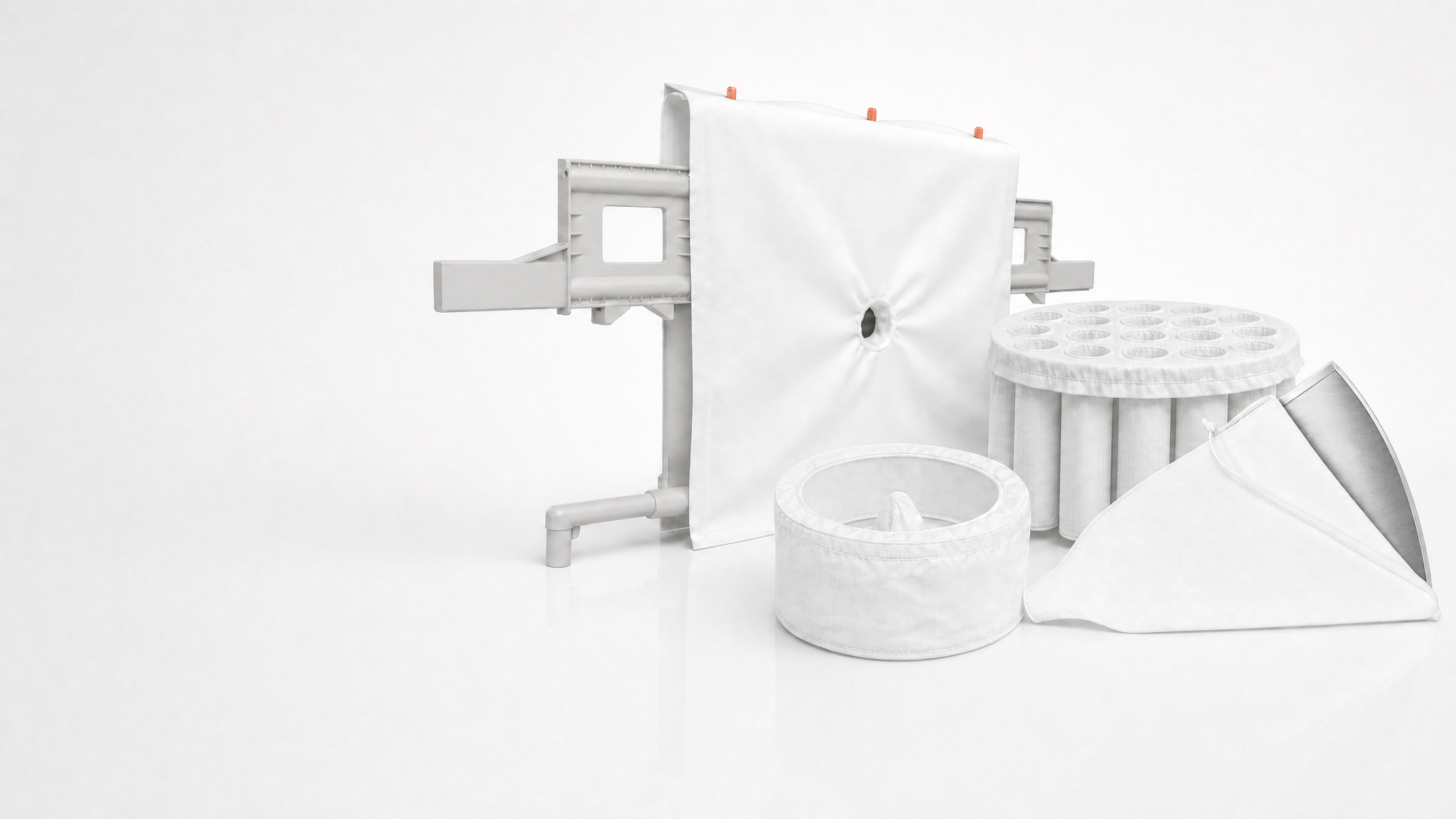
If your plant runs more than one solid-liquid separation technology, it can be useful to compare cloth behavior across machines. A weave that works beautifully on a press may not behave the same way on a different separation concept, especially when cake structure and discharge mechanics change.
Rule of thumb: If your problem is dirty filtrate, move toward a tighter, more stable weave. If your problem is sticky cake, move toward a smoother, easier-release weave.
🛠️ A Practical Selection Method for the Plant Floor
I always recommend a simple, repeatable selection workflow. It keeps the decision grounded in actual operating symptoms instead of supplier jargon or habit. Before you approve a new cloth style for the press, walk through the process below with production, maintenance, and quality together.
Decide whether the press is limited by clarity, release, cycle time, cloth life, or washing effort. Do not try to solve all five at once.
Look at particle size, stickiness, compressibility, and abrasive content. Fine and compressible slurries usually need more retention; tacky cakes usually need better release.
Start with plain for clarity, twill for balance, or satin for release. If the slurry is unknown, twill is often the safest first trial.
Run the cloth through a normal production cycle, not just a bench check. Measure cake release, filtrate quality, washing time, and the condition of the cloth after discharge.
📋 Pre-Selection Checklist
- What is the particle size distribution of the slurry?
- Is the cake sticky, compressible, or abrasive?
- Is filtrate clarity or cake release the main priority?
- Do you have a cloth washing system that can support the chosen weave?
- Are there ATEX or conductivity requirements for the area? If so, review anti-static / ATEX conditions before ordering.
For operators, the best test is often a one-shift comparison. If you are evaluating two cloths on the same press, keep the feed, pressure profile, and discharge procedure as constant as possible. That way, the differences you see are much more likely to come from the weave itself than from a process fluctuation.
✅ Common Mistakes, Troubleshooting, and Operator Rules
Weave selection often goes wrong because teams treat the cloth as a standalone component instead of part of the whole filtration system. The press frame condition, plate surface, feed consistency, wash water quality, and discharge method all influence how a weave performs.
What usually causes disappointment
- Choosing for one symptom only: A satin weave may solve release but worsen clarity if the slurry is too fine.
- Ignoring cloth blind-out: A structure that looks fine on day one may clog quickly in a sticky slurry.
- Not matching the wash strategy: Some weaves need better cleaning discipline to keep performance stable.
- Overlooking cloth damage: If the press has sharp edges, misaligned plates, or poor sealing, even the best weave will fail early.
⚠️ Caution: If you see drip leakage, edge bypass, or unexpected solids in the filtrate, do not blame the weave alone. Check plate alignment, gasketing, feed pressure, and cloth installation first. See also drip leakage.
The weave also needs to be considered together with installation and maintenance. A good cloth that is mounted poorly will behave like a bad cloth. If you are replacing media, review the full sealing condition on the plates and the support surfaces, and take a look at the condition of the rest of the filtration zone.
💡 Tip: If a cloth change fixes cake release but the improvement fades quickly, the issue is often not the weave itself — it is washing, feed stability, or a clogging tendency that needs to be addressed at the process level.
Rule of thumb: Start with twill when the process is unknown, move to plain if clarity is weak, and move to satin if discharge is the biggest headache.
That approach keeps the decision practical and helps you avoid chasing fabric changes when the real problem is elsewhere. It also makes troubleshooting easier the next time you compare cloth performance on a different batch or a different press configuration.
📩 Need Help Choosing the Right Fabric?
Our technical team at R+F FilterElements can help you find the perfect filter fabric for your specific application. Get in touch for a free consultation — we will recommend the right solution based on your machine, process, and operating conditions.