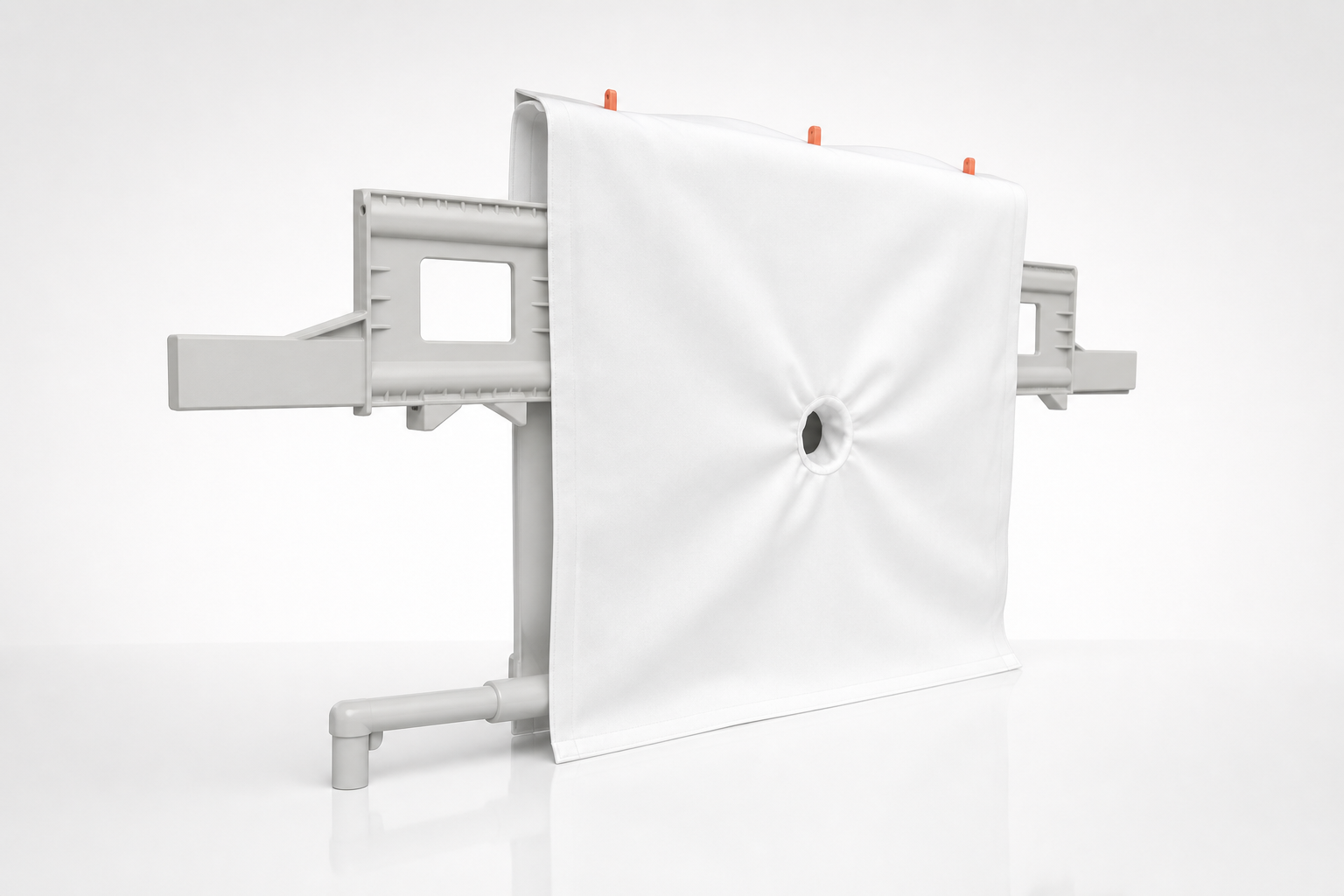
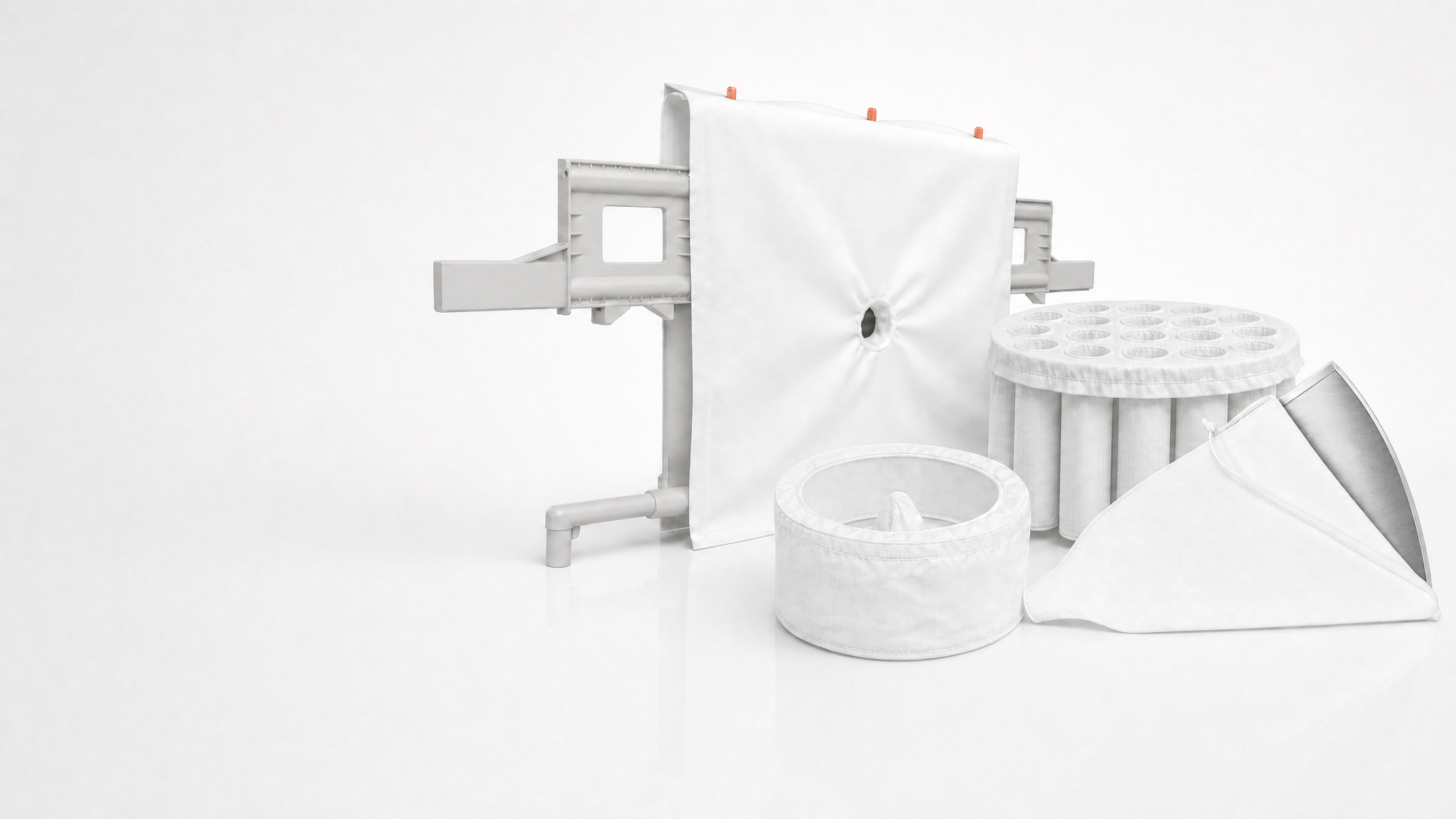
In filter press operation, the difference between a standard through-cloth design and a CGR (Cloth with Gasket Ring) setup becomes obvious the moment filtrate starts to escape. If your plant struggles with drip leakage, wet floors, or product loss around the cloth edges, CGR technology can change day-to-day operations in a very practical way. For operators, it is not just a design detail — it is a direct contributor to cleaner workspaces, safer handling, and better yield.
🔑 Key Takeaways
- CGR cloths use a gasket ring to seal the filtrate path and help eliminate edge dripping.
- Through-cloth designs can be simpler and more economical, but they are more prone to leakage at the cloth-to-plate interface.
- Drip-free operation reduces product loss, keeps the filter press area cleaner, and improves operator safety.
- Application conditions such as slurry chemistry, solids content, and operating pressure determine whether CGR is the best choice.
⚙️ What CGR Technology Actually Does
CGR stands for Cloth with Gasket Ring. In a CGR filter cloth, the fabric is built with a sealing element that mates with the filter plate and isolates the filtrate opening from the surrounding cloth area. Instead of allowing liquid to pass freely through the cloth edge and exit wherever it finds a gap, the gasket ring helps guide filtrate through a controlled path.
This matters because the edge of a filter press cloth is often the most vulnerable point in the system. Over time, even well-installed standard cloths can develop minor seepage around the filter plate opening, especially under repeated cycling, vibration, or uneven cloth tension. CGR construction is designed to minimize that weak point and improve sealing integrity.
💡 Tip: If you are seeing wet streaks around the plate pack or sludge marks beneath the press, check whether the issue is coming from the cloth edge, the plate sealing surface, or a mismatch between the cloth design and the plate type. That distinction is critical before you upgrade.
For operators working on a filter press machine, the advantage is immediate: less uncontrolled dripping during filtration, opening, and cake discharge. In many plants, that means fewer cleanup stops and more stable production routines.
🔬 CGR vs. Through-Cloth: The Practical Difference
Standard through-cloth designs are common because they are straightforward. The cloth is mounted so filtrate passes through the fabric and exits via the plate opening. This works well in many applications, especially where operating conditions are moderate and occasional drips are acceptable.
CGR cloths add a sealing function. That extra sealing step is exactly what makes them attractive in processes where zero drip is the goal. The difference is not theoretical; it shows up in the housekeeping burden, product recovery, and operator exposure to wet slurry residues.
| Feature | Standard Through-Cloth | CGR Cloth with Gasket Ring |
|---|---|---|
| Filtrate sealing | Relies mainly on cloth fit and plate alignment | Uses a gasket ring to improve edge sealing |
| Drip control | Moderate; drips may occur at the cloth edge | High; designed for drip-free operation |
| Housekeeping | More frequent cleanup around the press | Cleaner press area and less residue buildup |
| Product loss | Higher risk of lost filtrate or fines | Lower loss due to controlled discharge |
| Best fit | General-purpose or cost-sensitive operation | Applications where leakage prevention matters |
📊 Why Drip-Free Operation Matters on the Plant Floor
Drip-free operation is not only about visual cleanliness. In real production settings, every drip has a cost. It may be recovered product, it may be a slip hazard, and it may be an extra labor task that pulls operators away from higher-value work. Over time, those small leaks accumulate into measurable inefficiency.
For a plant running continuous or semi-continuous cycles, a cleaner press area can improve the entire workflow. Operators spend less time mopping, scraping, or checking under the plate pack. Maintenance teams spend less time investigating where residue is coming from. And supervisors get a process that is easier to standardize and audit.
⚠️ Caution: Persistent drip leakage is not just a housekeeping problem — in chemical and pharmaceutical applications, it can lead to regulatory non-compliance, contamination risks, and operator exposure to hazardous substances.
There is also a product-quality angle. In some processes, even small losses of filtrate or fine solids can affect downstream recovery, waste handling, or consistency. On applications such as mineral processing, chemical processing, or wastewater treatment, the economics of leakage are often bigger than they first appear.
Rule of thumb: If your operators spend more than 15 minutes per shift cleaning around the filter press, the cost of drip leakage likely exceeds the price difference between standard and CGR cloths within 3–6 months.
For plants already dealing with drip leakage, moving from standard cloths to a CGR solution is often one of the most effective ways to improve the operating environment without redesigning the whole filter press.
🛠️ Selection Factors: Choosing the Right Cloth for Your Process
Not every process needs CGR, but every process benefits from the right cloth construction. The most important step is to match the cloth design to the slurry, plate type, and production targets.
Inspect where leakage occurs: cloth edge, plate seal, or misalignment. Document the frequency and volume.
Review filtrate behaviour, solids profile, pH, temperature, and chemical exposure. This determines the fabric type.
Confirm plate geometry, feed configuration, and sealing surfaces. CGR requires proper gasket-to-plate contact.
Install on a test plate first, monitor filtrate clarity, cake release, and drip behaviour over multiple cycles.
🏭 Operational Benefits Beyond Leakage Control
The strongest argument for CGR is often drip elimination, but the benefits do not stop there. Plants that switch to a better-sealing cloth design typically notice improvements in several areas at once.
✅ Benefits operators typically report after switching to CGR
- Cleaner workplace — less residue on frames, floors, and nearby equipment
- Less product loss — filtrate stays inside the system where it belongs
- Better operator safety — reduced slip risk from wet floors and sticky residues
- Easier process discipline — operators focus on cycle quality instead of cleanup
- Higher uptime — the press becomes easier to operate and maintain shift after shift
In practice, these benefits often combine into a simple result: the filter press becomes easier to live with. That may sound modest, but in a busy plant, a machine that is easier to operate and maintain is usually the one that delivers better overall uptime.
✅ How to Decide Between CGR and Standard Cloths
The right choice depends on what your process values most. If your primary goal is lowest initial cost and your site can tolerate some moisture around the press, standard through-cloth designs may still be suitable. If, however, your team is fighting drip leakage, repeated cleanup, or product loss, CGR is usually the more operator-friendly solution.
💡 Tip: A good decision process includes: site inspection, process review, machine compatibility check, and clear definition of operational priorities. The fastest path to the right cloth is working from actual plant data, not assumptions.
Ultimately, CGR technology is about making the filter press behave more like a contained process and less like an open drip point. If your plant wants a cleaner floor, less product loss, and a more controlled operating environment, the benefits are straightforward and measurable.
📩 Need Help Choosing the Right Fabric?
Our technical team at R+F FilterElements can help you find the perfect filter fabric for your specific application. Get in touch for a free consultation — we will recommend the right solution based on your machine, process, and operating conditions.