
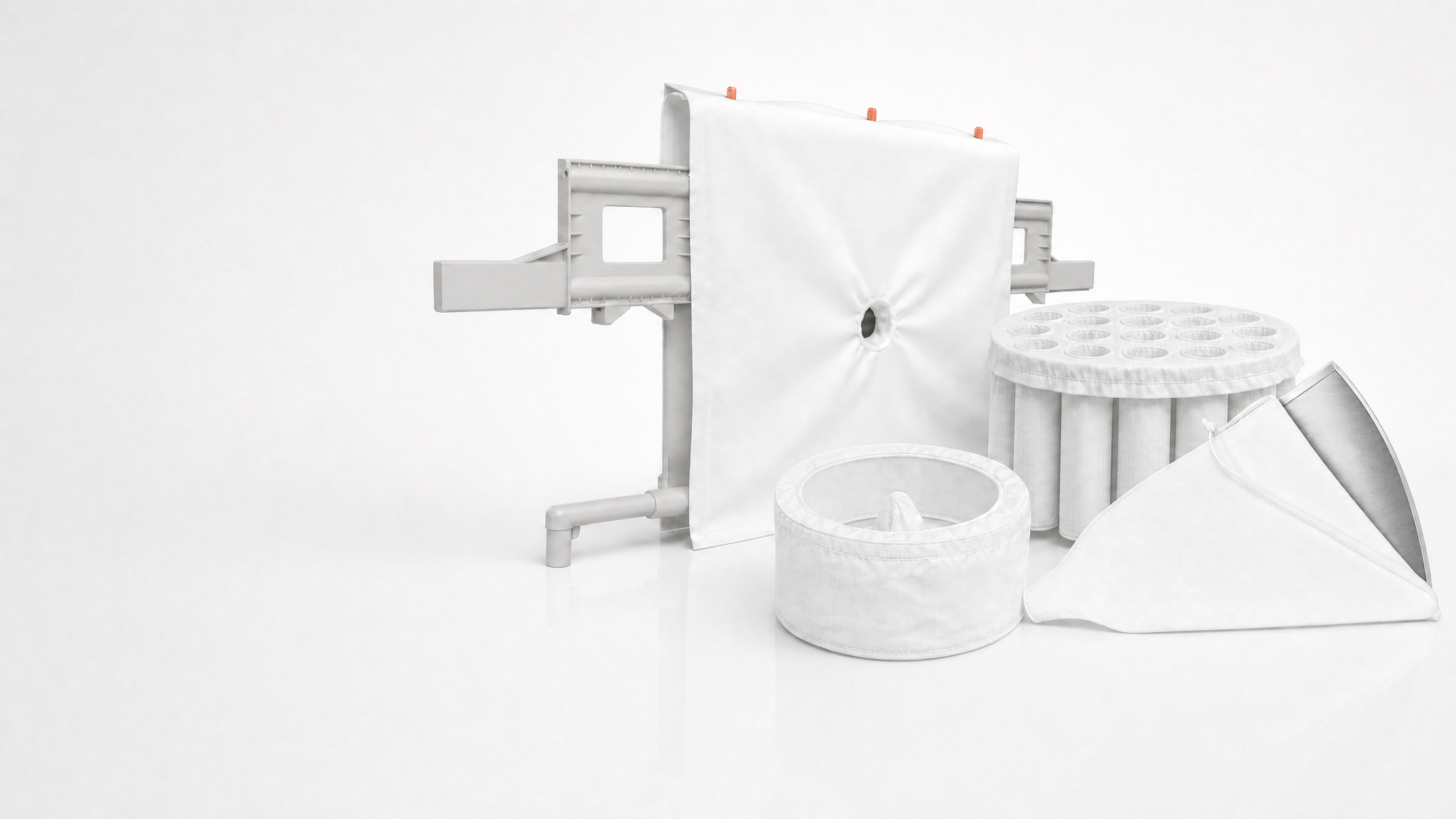
If you run a filter press every day, the choice between polypropylene (PP) and polyester (PET) is not just a material preference — it directly affects cloth life, cake release, and downtime. In many plants, the “cheaper” cloth turns out to be the more expensive one once chemical attack, heat, or abrasion start shortening service intervals.
🔑 Key Takeaways
- PP is usually the safer choice for broader chemical resistance, especially in acidic or alkaline service.
- PET typically handles higher temperatures and abrasion better, making it useful in tougher mechanical duty.
- The right cloth depends on chemistry, temperature, solids behavior, and cleaning cycle — not price alone.
- If you keep seeing premature failures, review short filter lifespan before changing the whole process.
⚙️ PP vs. PET in the Real Plant
From the operator’s chair, the question is simple: Which cloth keeps running longer with the least trouble? PP is often the default for filter press cloths because it offers very good resistance to many acids, alkalis, and process chemicals. PET, on the other hand, is often preferred when abrasion is high or when the press sees more thermal stress.
| Criterion | Polypropylene (PP) | Polyester (PET) |
|---|---|---|
| Chemical resistance | Very good in many acids and alkalis; strong all-round choice | Good in many applications, but weaker in strong alkalis and hot hydrolytic conditions |
| Temperature limit | Lower thermal ceiling; best when process heat is moderate | Usually better for higher temperatures and thermal cycling |
| Abrasion resistance | Good, but often not the best choice for aggressive mechanical wear | Typically stronger for wear-heavy slurries and frequent cake release |
| Cost | Often lower initial cost | Often slightly higher, but can pay back in longer service life |
| Typical use case | Chemically demanding filtration with moderate temperatures | Hot, abrasive, or mechanically demanding service |
💡 Tip: If your process chemistry changes batch by batch, choose the cloth for the worst-case condition, not the average one. That is usually the difference between stable operation and surprise cloth failures.
🔬 Chemical Resistance and Temperature Limits
In filter press service, PP usually wins when the slurry is chemically aggressive. It is a common choice for mineral processing, chemical production, wastewater treatment, and many fine solids applications where the cloth sees acids, alkalis, or cleaning agents. PET can still perform well, but it is more sensitive when hot alkaline solutions or hydrolysis are part of the operating reality.
⚠️ Caution: Do not select PET for a process with hot caustic cleaning or strong alkaline slurry simply because it looks robust. Heat plus alkali can reduce service life very quickly.
What matters on shift
- Operating temperature: repeated hot cycles can weaken the wrong fiber even if the cloth looks fine at first.
- Cleaning chemistry: caustic washes, acids, and oxidizing agents can be more damaging than the process slurry itself.
- Exposure time: a short peak temperature is not the same as continuous hot operation.
Rule of thumb: If the press runs hot and chemically aggressive, start with PP; if it runs hot and abrasive, PET becomes more attractive.
📊 Abrasion Resistance, Cake Release, and Service Life
When the cloth fails early, the damage is not always chemical. In many plants, the real killer is mechanical wear: sharp solids, cycling plates, frequent cake discharge, or poor washing that leaves solids embedded in the weave. PET generally handles this better than PP, which is why it can be the better long-term option in abrasive duty.
That said, abrasion resistance is only half the story. You also need the cloth to release the cake cleanly. If the cake sticks, operators often increase wash pressure, blow more air, or extend cycles — all of which can shorten cloth life further. If this sounds familiar, it is worth reviewing short filter lifespan and checking whether the real issue is the fabric, the cake properties, or the wash sequence.
Look at the cloth after removal: edge wear, seam damage, or central thinning point to different root causes.
If cake sticks, the cloth may be too fine, the finish may be wrong, or the chemistry may be causing blinding.
Use PP for chemical resistance and PET for stronger wear performance when the process allows it.
💡 When to Choose PP or PET
If you are running a filter press with changing feed conditions, it is often smart to test one cloth in a defined section before converting the full press. For operators who want a reliable starting point, our filter press solutions are designed to be matched with the correct fabric construction from the beginning.
🛠️ Practical Selection Checklist Before You Order
📋 Pre-Selection Checklist
- Record the slurry pH, temperature, and cleaning chemicals.
- Note whether the main issue is chemical attack or mechanical wear.
- Check if cake release, blinding, or seam damage is the current failure mode.
- Confirm whether the press sees one product or multiple products per week.
- Compare cloth life against downtime cost, not only purchase price.
Before you finalize a material choice, walk through the process step by step:
List the actual process media and the cleaning agents used on the cloth.
Separate peak temperature from continuous operating temperature.
Pick PP to fight chemical degradation, or PET to fight wear and heat.
For many plants, the best answer is not “PP or PET forever,” but “the right material for this job, this slurry, and this operating window.” That is exactly where a well-matched filter cloth saves time, cleaning effort, and replacement cost.
📩 Need Help Choosing the Right Fabric?
Our technical team at R+F FilterElements can help you find the perfect filter fabric for your specific application. Get in touch for a free consultation — we will recommend the right solution based on your machine, process, and operating conditions.