
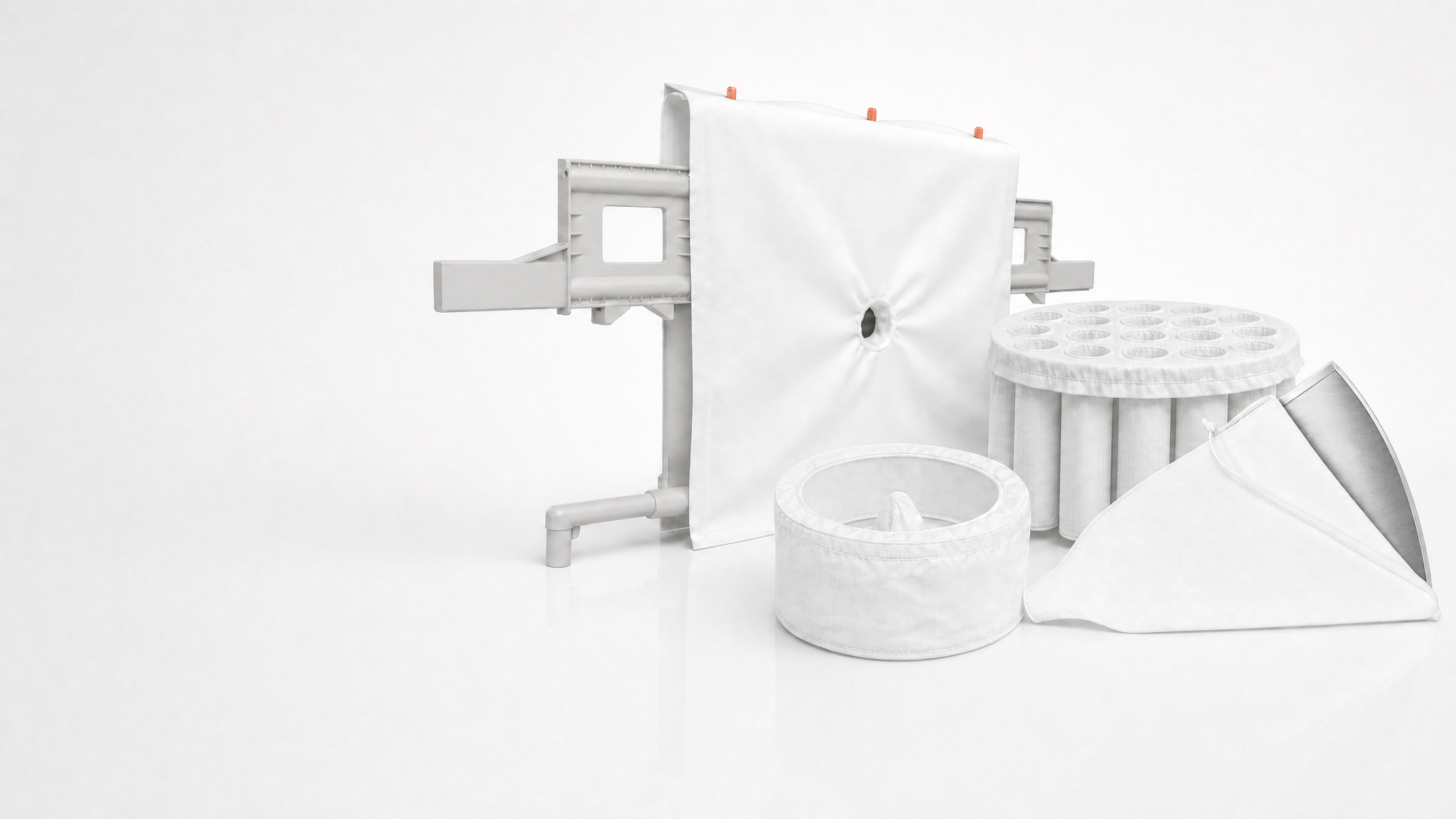
When you run a Rosenmund or GMM Pfaudler Nutsche filter, fabric compatibility is not just about fit — it affects cake release, filtrate clarity, and how often you need to stop for cleaning. For operators looking for a reliable replacement, RF-ANF fabrics are designed as compatible alternatives for ANF-style systems used in pharmaceutical and chemical processing.
🔑 Key Takeaways
- RF-ANF fabrics are designed for compatible replacement in Rosenmund and GMM Pfaudler Nutsche systems.
- The right fabric choice can improve cake release, hygiene, and uptime.
- Fabric performance depends on chemistry, temperature, pressure, and cleaning method.
- Operators should verify dimensions, seam design, and antistatic requirements before ordering.
⚙️ What RF-ANF Means for Nutsche Filter Operators
In day-to-day plant operation, a Nutsche filter fabric has to do more than separate solids from liquids. It must hold up during slurry filling, vacuum or pressure filtration, cake washing, and discharge — often in tightly controlled processes. That is why replacement fabrics for Rosenmund and GMM Pfaudler systems need to be selected as carefully as the original installation.
RF-ANF Series Nutsche pharma fabrics are intended for operators who need a compatible solution for ANF-style equipment without compromising process stability. If your setup is part of a broader vacuum solid-liquid separation line, it is worth comparing the ANF solution with other machine-specific products such as RF-NF needle felt fabrics or RF-PLF pressure leaf filter fabrics where the separation principle differs.
🔬 Selection Criteria That Matter on the Shop Floor
In a Nutsche system, small fabric differences can show up fast in the process data. If the cloth blinding increases, cycle time rises. If the seam design is not right, leakage at the edge can contaminate the batch. And if the material is not suited to the solvent package, service life drops earlier than expected.
| Selection Factor | Why It Matters | Operator Impact |
|---|---|---|
| Material compatibility | Must resist acids, solvents, and cleaning agents | Reduces premature failure and batch risk |
| Permeability | Affects filtrate rate and cake build-up | Influences cycle time and throughput |
| Surface finish | Controls release behavior and cleaning effort | Helps avoid product hold-up and carryover |
| Seam construction | Important for fit and leakage control | Supports tighter operation and less drip loss |
💡 Tip: If your current cloth is clogging too quickly, review the slurry particle distribution and wash sequence before changing the fabric spec. Many operators solve filter cloth clogging issues by matching fabric structure to the actual solids load.
How to check compatibility before replacement
- Confirm the exact vessel model and cloth geometry.
- Check whether the process needs vacuum, pressure, or both.
- Review solvent resistance and any ATEX or static-control needs.
- Inspect the old cloth for wear patterns that reveal the real root cause.
📋 Pre-order checklist for RF-ANF replacement fabrics
- Machine type and model number
- Cloth dimensions and fixing method
- Process temperature and chemical exposure
- Required permeability or retention target
- Seam, hem, and edge reinforcement details
🛠️ Operator Problems: What Usually Causes Fabric Issues?
When a Nutsche cloth underperforms, the root cause is often a mix of process and fabric factors. A fabric that looks “worn out” may actually be suffering from upstream crystallization behavior, abrasive solids, or poor wash-out conditions. In other cases, the cloth itself is simply the wrong construction for the duty.
For plants dealing with recurring residue hold-up, the issue may be tied to cake release problems rather than the filter medium alone. Likewise, if you are seeing liquid loss around the perimeter, review drip leakage at sealing and edge zones before assuming the textile is at fault.
⚠️ Caution: Never substitute a fabric based on visual similarity alone. A cloth that “fits” mechanically can still fail chemically, contaminate product, or shorten campaign life if its construction is not appropriate for the process.
📊 Comparing RF-ANF Replacement Fabrics to Other R+F Solutions
R+F offers multiple engineered fabric families, and the best choice depends on the machine and separation task. A Nutsche filter is not a filter press, and it is not a centrifuge — so fabric design has to match the hardware and the operating cycle.
| R+F Series | Best For | Typical Operator Priority |
|---|---|---|
| RF-ANF Series | Rosenmund / GMM Pfaudler ANF-compatible Nutsche systems | Cake discharge, sealing, batch consistency |
| RF-FF Series | Filter press applications | Pressure filtration and cloth life |
| RF-CF Series | Centrifuge applications | Dynamic wear resistance and drainage |
| RF-FBD Series | Fluid bed dryer systems | Airflow, temperature, and mechanical stability |
Confirm you are working with a Nutsche filter and not another vacuum or pressure unit.
Record slurry chemistry, temperature, wash media, and cycle times.
Select a compatible RF-ANF fabric construction based on retention and release needs.
Check seam layout, fastening, and edge sealing before startup.
💡 Practical Rules for Better Service Life
Most operators want the same outcome: stable batches, fewer unplanned stops, and longer cloth life. The quickest gains often come from simple discipline — correct handling, proper cleaning, and an honest review of the process conditions.
Rule of thumb: If a fabric fails too early, inspect the process first, then the cloth. Abrasion, chemistry, and cleaning intensity often explain more than age alone.
- Rinse promptly after the cycle to reduce residue hardening.
- Avoid aggressive mechanical scraping unless the fabric is designed for it.
- Check antistatic needs if the product or atmosphere creates ignition risk; see ATEX and antistatic guidance.
- Track service life trends so you can spot recurring process drift early.
If your operation is part of a pharmaceutical train, also review the wider machine and application context on the Nutsche filter machine page and the pharmaceutical application page. For plants working across multiple separation steps, consistent fabric strategy across assets can reduce spare-part complexity.
📩 Need Help Choosing the Right Fabric?
Our technical team at R+F FilterElements can help you find the perfect filter fabric for your specific application. Get in touch for a free consultation — we will recommend the right solution based on your machine, process, and operating conditions.