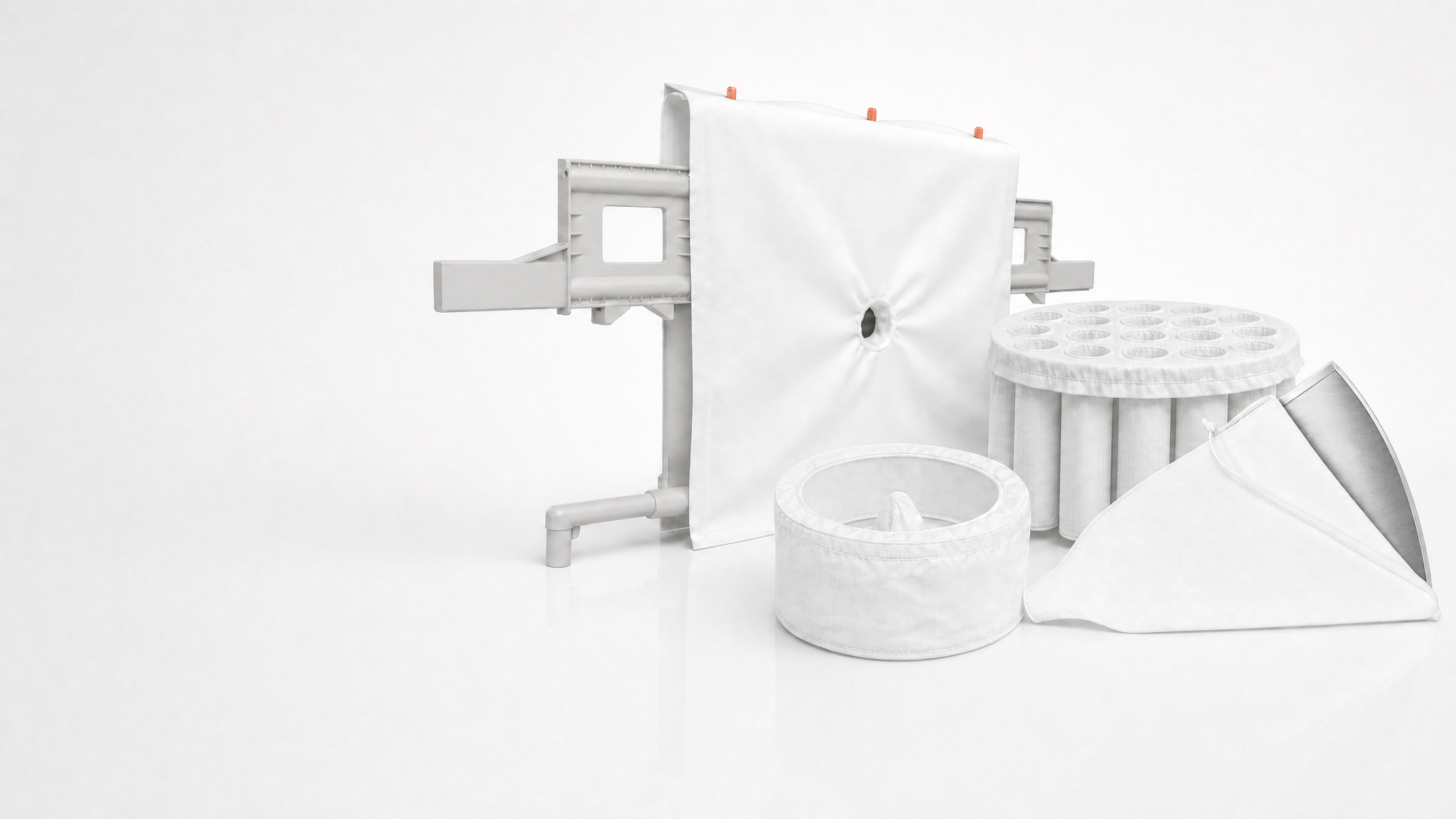
When a pressure leaf filter starts losing throughput or cake release becomes inconsistent, the filter leaf fabric is often the first component to inspect. For Schenk and Pall pressure leaf filters, the right compatible fabric must match the leaf geometry, filtration target, and your process chemistry to keep the system stable and easy to maintain.
🔑 Key Takeaways
- RF-PLF fabrics are engineered as compatible alternatives for Schenk and Pall pressure leaf filter systems.
- Matching the fabric to the leaf design, cake properties, and temperature is critical for reliable operation.
- Good cloth selection helps reduce blinding, improve dewatering, and support cleaner cake discharge.
- The Solution Finder helps you configure the right filter fabric online and receive a pre-filled, non-binding inquiry.
🏭 How RF-PLF Fabrics Fit Schenk and Pall Systems
In day-to-day plant operation, compatibility is about more than just shape. A replacement leaf fabric must fit the leaf frame securely, allow uniform flow across the full filtration area, and tolerate the real process conditions in your pressure leaf filter. That is exactly where RF-PLF Series fabrics are used: as engineered replacements for pressure leaf applications with Schenk and Pall-style systems.
Whether you run batch clarification, polishing filtration, or cake filtration, a well-chosen fabric helps maintain pressure stability and keeps the cycle predictable. In many plants, pressure leaf filters are used in demanding applications such as chemical processing and wastewater treatment, where even small changes in permeability can affect performance.
🔬 What Matters Most When Selecting a Replacement Leaf Fabric
For operators, the key question is simple: will the fabric run cleanly and consistently in my machine? To answer that, we look at the leaf dimensions, support structure, slurry solids, temperature, and cleaning method. If the fabric is too tight, throughput drops; if it is too open, solids retention may suffer.
| Selection Factor | Why It Matters | Operator Impact |
|---|---|---|
| Permeability | Controls flow and filtration speed | Too low = slow cycles; too high = poor retention |
| Fabric construction | Determines strength and cake release behavior | Stable support and easier cleaning |
| Chemical resistance | Needed for aggressive media and cleaning agents | Longer service life and fewer changeouts |
| Temperature resistance | Important for hot process streams | Prevents premature shrinkage or damage |
💡 Tip: If you are replacing an older OEM-style leaf cover, record the leaf dimensions, fastening method, and process temperature before ordering. That makes it easier to match the correct RF-PLF Series pressure leaf filter fabrics.
If your plant also runs other solid-liquid separation equipment, it helps to standardize on a single sourcing partner. R+F also supplies compatible media for filter press fabrics and belt filter fabrics, which can simplify maintenance planning across the filtration line.
🛠️ Practical Fit Check Before Installation
A good installation starts before the new fabric goes on the leaf. Clean the support frame, inspect the sealing edges, and confirm there are no burrs or damaged fastening points that could create premature wear. Many fabric failures are caused not by the media itself, but by sharp edges, misalignment, or poor tensioning.
Check for damage, residue build-up, and sharp edges that could cut the fabric during startup.
Confirm the cover matches the leaf geometry and attachment style used in your Schenk or Pall system.
Run a controlled start to verify there is no bypass, edge leakage, or uneven filtration across the leaf.
⚠️ Caution: Never force a fabric onto a leaf frame that is not dimensionally correct. Excess tension can cause seam stress, distorted flow, and early failure during pressure cycling.
📊 Choosing Between Open and Fine Filtration Behavior
In practice, the fabric choice depends on whether your priority is faster drainage or finer solids capture. For sticky slurries, operators often prefer a structure that helps with cake release and resists blinding. For polishing duty, a tighter structure may be needed to keep product clarity high.
Rule of thumb: If you are seeing slow drainage, rising cycle times, or frequent cloth washing, review permeability and blinding behavior before changing any process settings.
✅ Common Operator Symptoms and What They Usually Mean
Most pressure leaf problems show up in the same few ways: slow filling, wet cake, poor discharge, or unexpected drip leakage. These symptoms often point to fabric wear, process mismatch, or contamination on the cloth surface. Early action keeps the filter from becoming a bottleneck.
- Slow filtration: often linked to cloth clogging or a fabric that is too tight for the slurry.
- Poor cake release: may indicate surface blinding or a fabric structure that is too fine.
- Drip leakage: can come from poor sealing, misalignment, or damaged edges.
- Short service life: may result from aggressive chemicals, heat, or mechanical rubbing.
For operators troubleshooting recurring wear, the related guides on filter cloth clogging and cake release issues can help narrow down the root cause. If you suspect an abrasive duty cycle, also review short filter lifespan to see whether the fabric specification needs adjustment.
📋 Pre-Order Checklist for RF-PLF Replacement Fabrics
- Machine type and leaf dimensions
- Operating temperature and cleaning chemicals
- Solids load, particle size, and cake behavior
- Required permeability or retention level
- Preferred fastening and installation method
If you want to speed up selection, use the online Solution Finder to find and configure the right filter fabric. You select your filtration machine, enter the process details, and receive a pre-filled, non-binding specification and inquiry that our team can review quickly.
📩 Need Help Choosing the Right Fabric?
Our technical team at R+F FilterElements can help you find the perfect filter fabric for your specific application. Get in touch for a free consultation — we will recommend the right solution based on your machine, process, and operating conditions.
If you are ready to compare options online, use the Solution Finder to configure your compatible leaf fabric and send us your request in just a few steps.