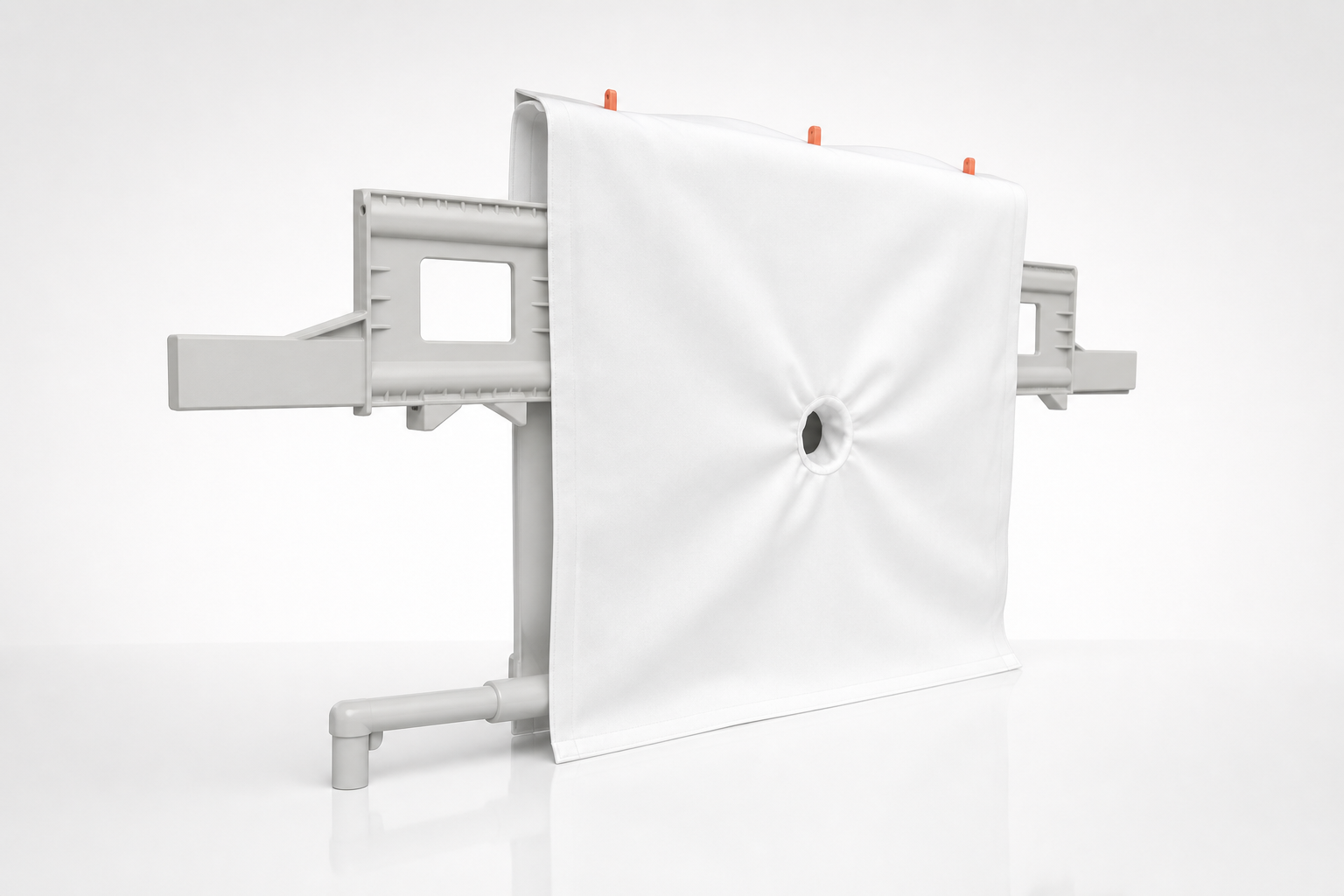
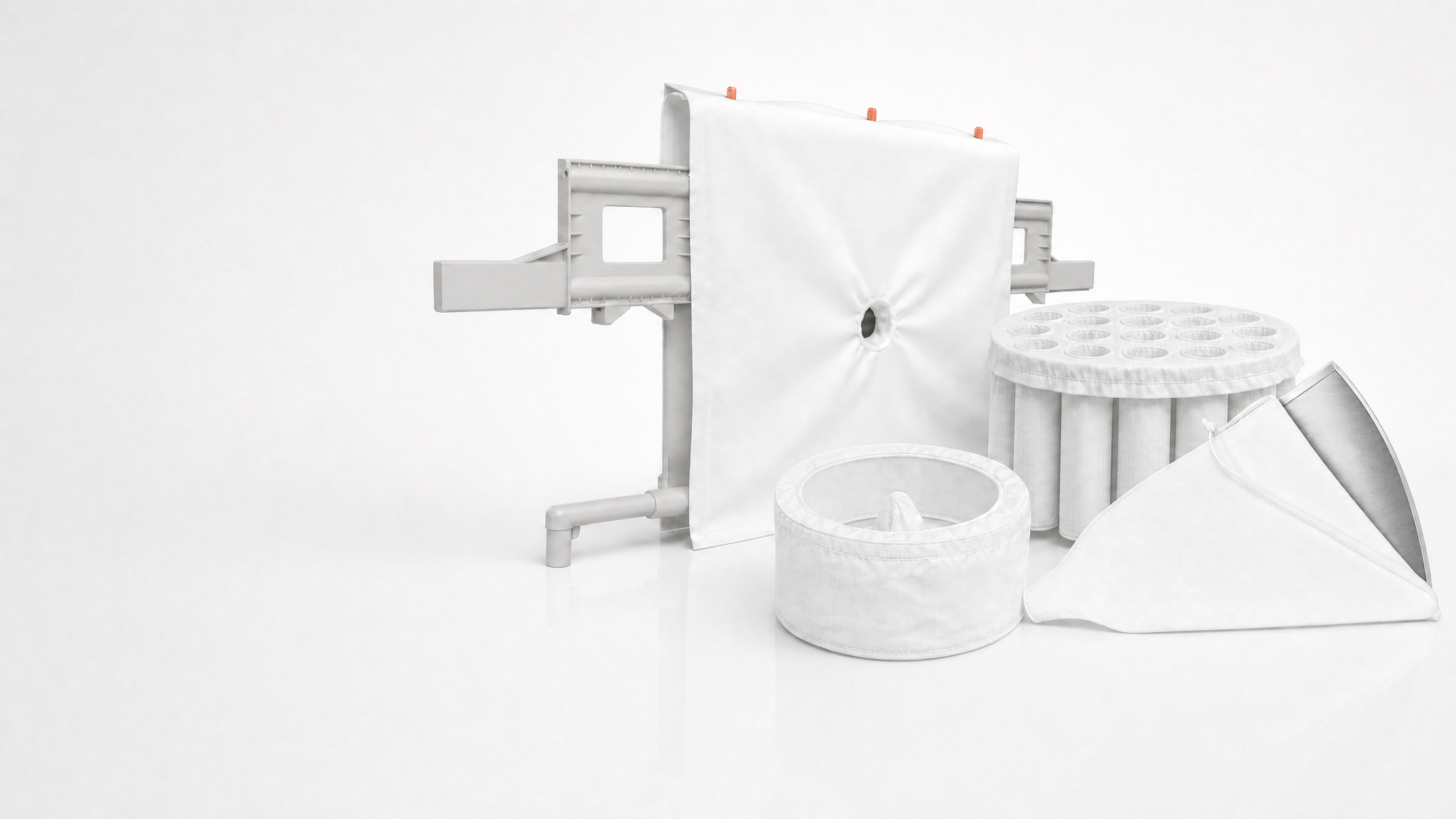
When a BHS-Sonthofen pressure filter is running well, you feel it immediately: stable throughput, clean cake release, and fewer shutdowns for cloth cleaning or changeout. If your rotary pressure filter, pressure disc filter, or indexing belt filter needs replacement media, RF-FF Series filter cloths provide a practical compatible alternative designed for demanding industrial separation duties.
🔑 Key Takeaways
- RF-FF Series offers compatible filter cloths for common BHS-Sonthofen pressure filter applications.
- Material choice matters: PP, PET, and PA each offer different chemical and thermal advantages.
- Fine particle retention and stable cake release depend on correct weave, permeability, and edge construction.
- Use the configure your filter press filter fabric online tool to generate a pre-filled, non-binding inquiry.
🏭 Typical BHS-Sonthofen Pressure Filter Setups
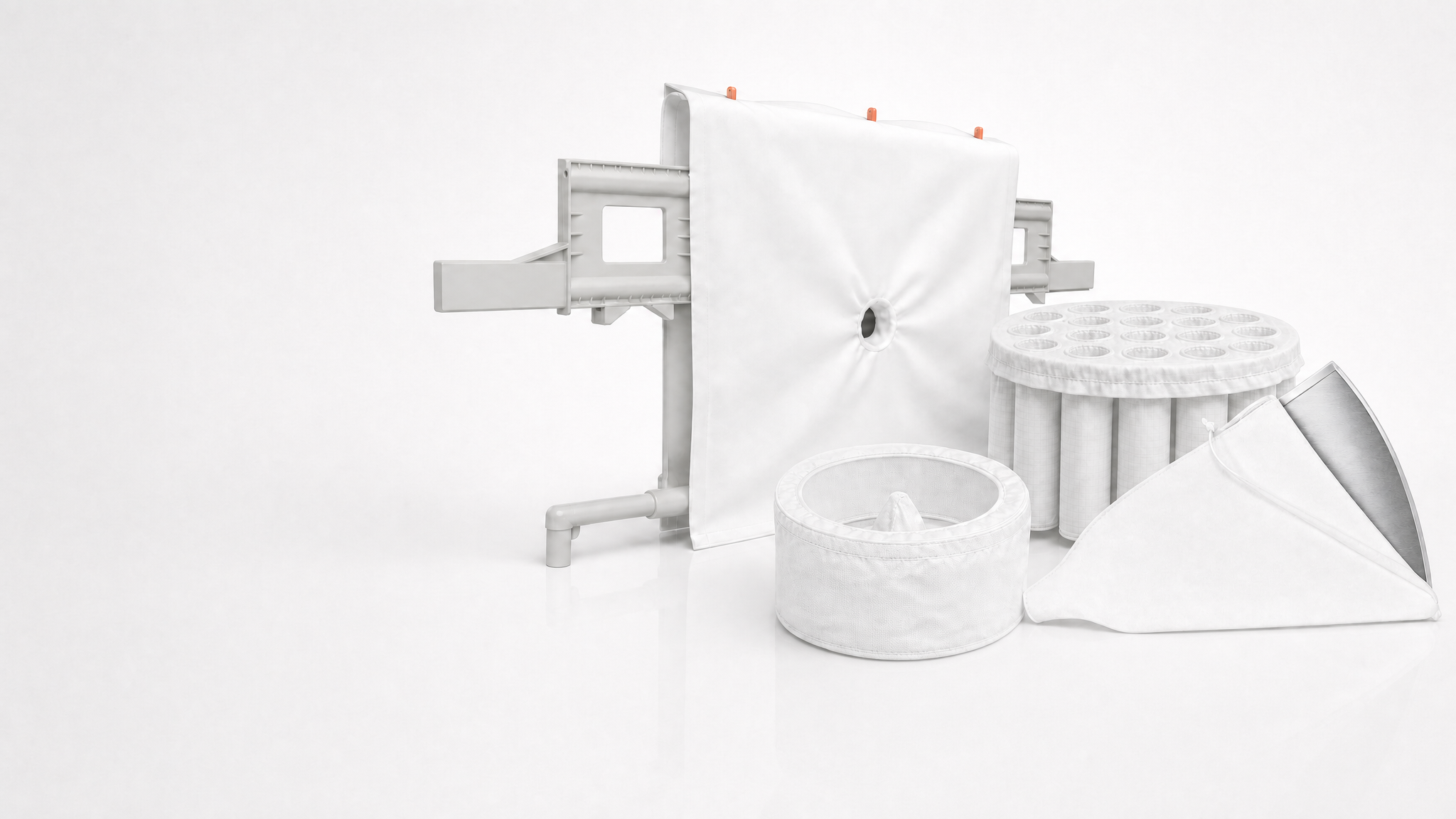
In the field, BHS pressure filters are rarely “one-size-fits-all.” The cloth has to fit the machine geometry, drainage concept, suspension chemistry, and cleaning routine. That is why operators often need a compatible replacement that matches not only the dimensions, but also the process behavior of the original media.
For rotary pressure filters, pressure disc filters, and indexing belt filters, the demands are similar: high solids capture, reliable discharge, and resistance to process media that may be abrasive, acidic, alkaline, or solvent-containing. If your system is part of a broader chemical industry line, the wrong fabric choice can quickly lead to clogging, leakage, or shortened service life.
What operators usually need from a replacement cloth
- Consistent cake formation across all sectors or segments
- Good release behavior during discharge and washing
- Stable permeability over long run times
- Compatibility with chemicals, temperature, and cleaning cycles
🔬 How RF-FF Series Matches the Process Requirements
The RF-FF Series filter cloths are built as compatible alternatives for pressure filter applications where the media must balance retention, drainage, and long service life. For operators, the main benefit is simple: you can replace worn cloths without compromising the process characteristics you depend on every shift.
RF-FF fabrics are engineered for fine particle retention while maintaining open drainage pathways. In practice, that means better solids capture without turning the cloth into a bottleneck. For many plants, this helps reduce downtime linked to filter cloth clogging and improves overall cleaning intervals.
⚠️ Caution: Chemical compatibility must always be checked against the actual filtrate, cleaning agents, and operating temperature. A cloth that works well in water-based slurry service may fail quickly in hot caustic, oxidizing, or solvent-rich duty.
💡 Tip: When replacing a cloth set, keep the original permeability, weave style, and seam/edge details as close as possible to the existing process behavior. Small changes can affect cake build-up and discharge.
If you are also evaluating other filter platforms in your plant, the same RF engineering approach is available across multiple machine types, including filter press systems and related separation equipment.
⚙️ PP vs PET vs PA: Choosing the Right Base Material
The right polymer depends on chemistry, temperature, mechanical load, and expected cloth life. The choice is not only about resistance; it also affects flexing, abrasion behavior, and how the cloth releases cake after filtration.
| Material | Strengths | Typical fit for operators |
|---|---|---|
| PP | Strong general chemical resistance, cost-effective, widely used | Many aqueous and mixed industrial slurries |
| PET | Good dimensional stability, robust mechanical behavior | Applications with higher mechanical stress |
| PA | Tough, wear-resistant, useful in abrasive service | Processes with more abrasion and repeated flexing |
Rule of thumb: If the cloth is failing early, do not only blame the weave. Check temperature, cleaning chemistry, solids load, and discharge mechanics first.
🛠️ Installation and Changeout: What Matters on the Shop Floor
From the operator’s perspective, a good compatible cloth is one that installs cleanly, seals properly, and starts performing quickly after commissioning. That is especially important on segmented or rotating pressure filter systems where edge finish and seam quality influence leakage and bypass.
Confirm whether you are running a rotary pressure filter, pressure disc filter, or indexing belt filter, then note dimensions, fixation, and sector design.
Check filtrate, wash liquid, and CIP agents for compatibility with PP, PET, or PA before ordering replacement media.
Select the cloth structure that supports the required balance between cake dryness, throughput, and particle retention.
Watch for early signs of blinding, leakage, or uneven cake formation during startup and adjust if needed.
📋 Pre-Order Checklist
- Machine type and manufacturer model
- Cloth dimensions and fixation style
- Filtrate chemistry and pH range
- Operating temperature and cleaning media
- Target retention and cake release behavior
For operators dealing with related filtration lines, R+F also supplies compatible fabrics for other equipment such as RF-BF Series belt filter fabrics and rotary disc filter systems. That makes it easier to standardize procurement across multiple assets.
✅ When to Replace, and How to Avoid Unplanned Downtime
Most cloth changes are triggered by declining throughput, visible leakage, poor cake release, or rising differential pressure. If these symptoms appear together, the cloth may be blinded, worn, or chemically attacked. In those cases, a compatible replacement is often the most direct route back to stable operation.
Do not wait until the cloth tears or the process quality drops below spec. Early replacement can protect downstream equipment and reduce cleaning effort, especially in abrasive or sticky applications. If you are troubleshooting repeated blinding, also review the dedicated guide on filter cloth clogging.
⚠️ Caution: Never assume “compatible” means universally resistant. Always confirm the exact process media, pH, oxidizers, solvents, and thermal peaks before final selection.
If you want to compare options for the same platform, the filter press configurator lets you configure your filter press filter fabric online and receive a pre-filled, non-binding specification and inquiry. It is a fast way to move from symptoms to a practical replacement concept.
📩 Need Help Choosing the Right Fabric?
Our technical team at R+F FilterElements can help you find the perfect filter fabric for your specific application. Get in touch for a free consultation — we will recommend the right solution based on your machine, process, and operating conditions.
Prefer to start online? Configure your filter press filter fabric online to generate a non-binding request in just a few steps.