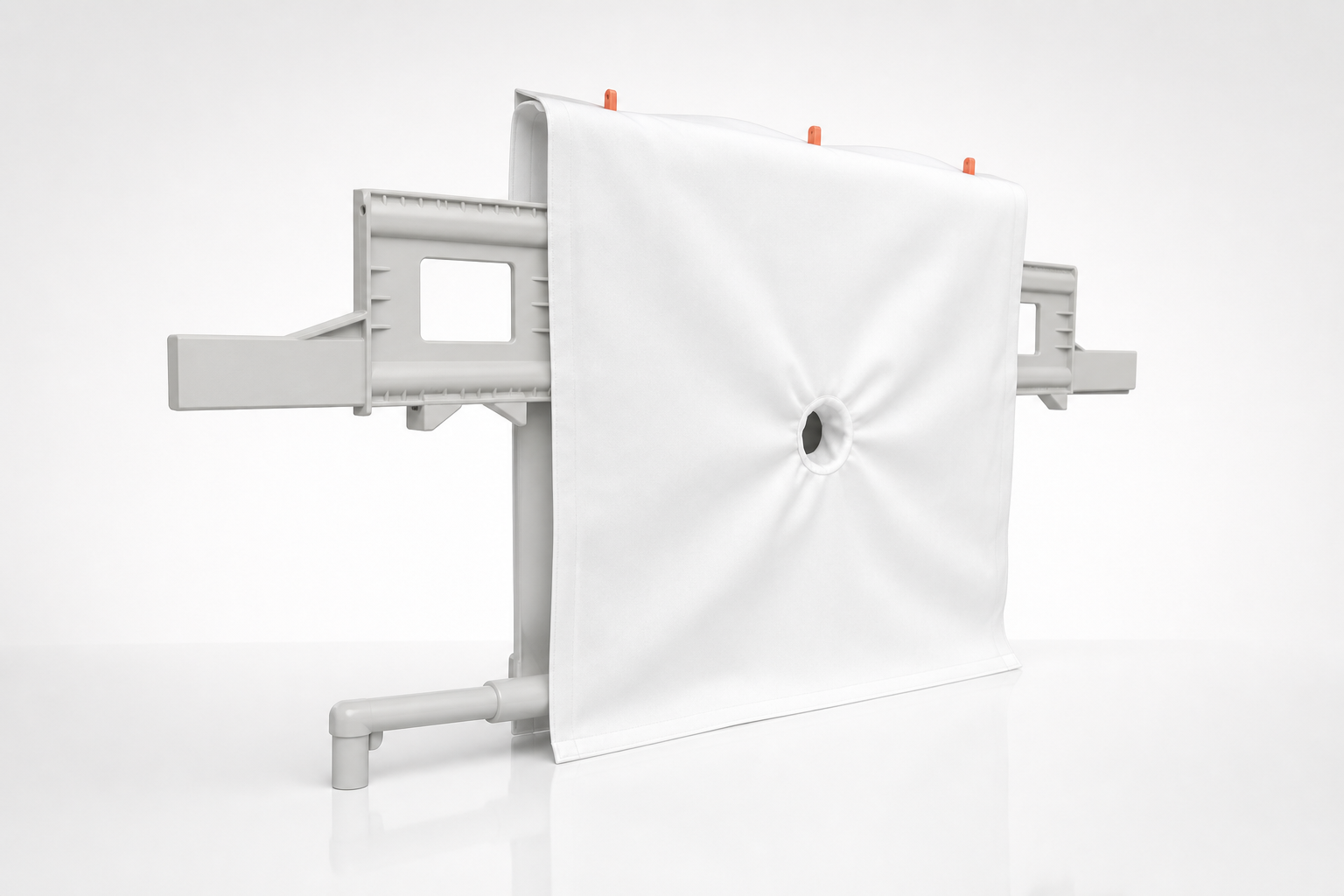
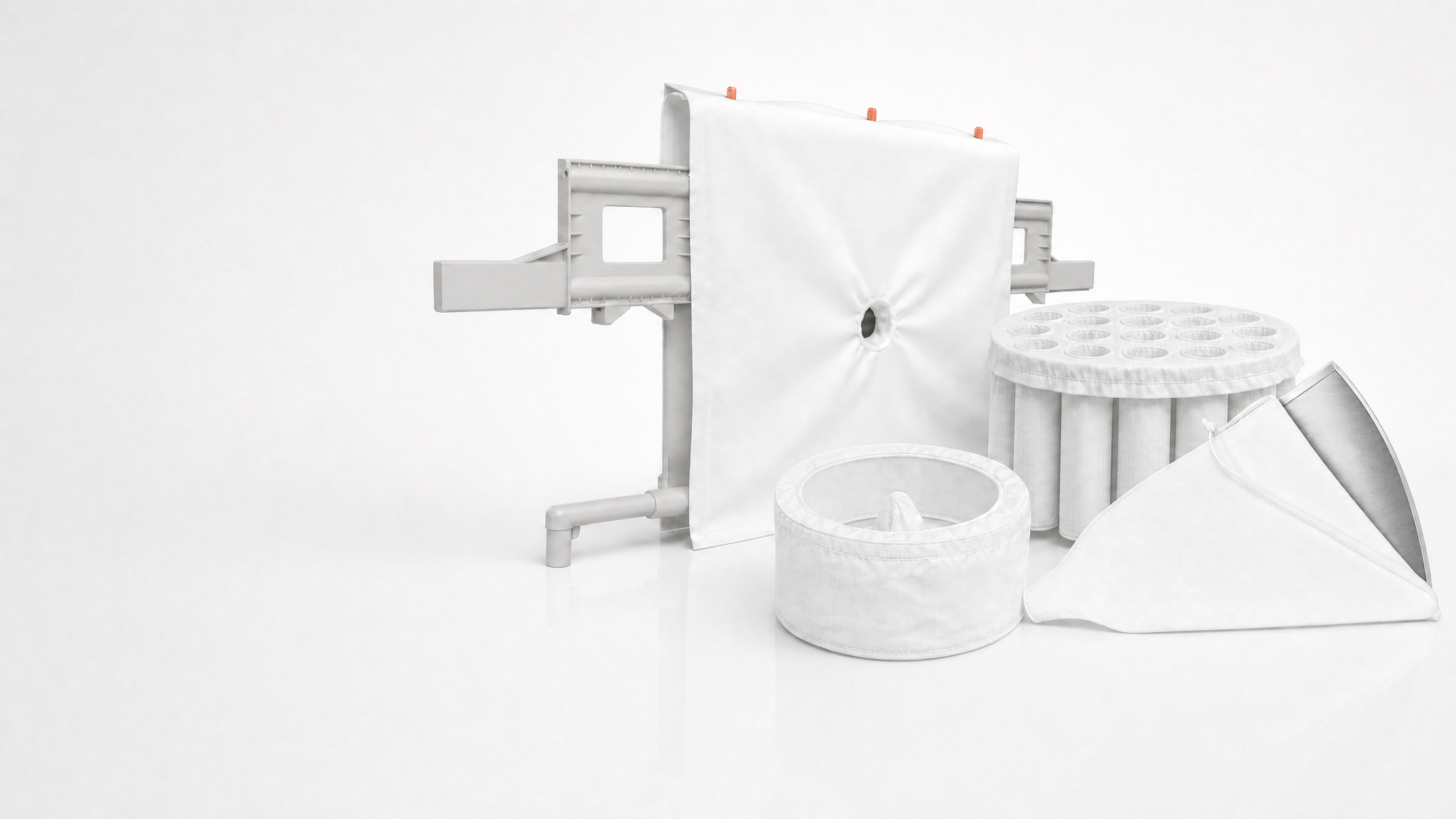
When you run a Metso pressure filter in mineral concentrate dewatering, cloth choice has a direct impact on cake dryness, cycle time, leakage, and cloth life. The right replacement must tolerate high pressure, seal reliably in CGR systems, and stand up to abrasive fine slurries without causing premature blinding or seam wear.
🔑 Key Takeaways
- RF-FF Series cloths are engineered as compatible replacements for large mineral-processing filter presses.
- High-pressure resistance and stable sealing are critical for CGR and barrel neck designs.
- Fine, abrasive mineral slurries require strong yarn selection and abrasion-resistant construction.
- Correct measurements and machine details help you avoid drip leakage, poor cake release, and short service life.
⚙️ Why Cloth Selection Matters on Metso Pressure Filters
In mineral processing, the filter press is not just a dewatering step — it often determines whether you hit moisture targets, protect downstream handling, and keep the plant stable. On a filter press used for concentrates such as copper, zinc, iron ore, or tailings, the cloth sees repeated pressure loading, fast filling, and aggressive solids abrasion.
That is why RF-FF Series replacement fabrics are designed around the realities of plant operation: pressure resistance, reliable sealing, and long wear life. If your current cloth is showing early edge wear, seepage at the gasket line, or inconsistent cake discharge, the fabric design is likely part of the problem. For broader mining use cases, see our mining applications page.
⚠️ Caution: A cloth that is too light for the operating pressure can stretch, deform at the sealing edge, and create drip leakage. That often looks like a gasket problem, but the fabric is frequently the real cause.
🔬 RF-FF Series Features for Mining Filter Presses
RF-FF Series is developed as a compatible alternative for filter press applications where the cloth must stay dimensionally stable under load. For operators, the practical value is simple: better sealing, fewer shutdowns for cloth changeouts, and more predictable cake discharge.
High-pressure resistance
Large mining filter presses typically run with strong feed pressure and repeated plate opening/closing cycles. RF-FF fabrics are selected to hold shape under these conditions, reducing ballooning, seam stress, and distortion around the feed and discharge areas.
CGR sealing compatibility
In CGR (closed gasketed recess) systems, the cloth edge seal is essential. A cloth that does not match the groove, gasket, or edge profile can cause bypass and leakage. RF-FF construction is tailored for dependable sealing at the plate edge, helping operators maintain cleaner plate packs and fewer external drips.
Abrasion resistance for fine mineral slurries
Fine concentrates are often deceptively tough on fabric. Even when particles are small, the slurry can be highly abrasive due to sharp edges, high solids content, and repetitive contact during cake build-up and discharge. RF-FF cloths use robust woven structures that help reduce wear at high-friction zones.
Rule of thumb: If you see edge fraying before center wear, the fabric is likely fighting the sealing mechanics — not just the slurry chemistry.
📊 CGR vs. Through-Cloth: Which Sealing Style Fits Your Press?
Operators usually need to choose between cloth designs that support CGR sealing and those used in through-cloth configurations. The right choice depends on the plate design, drip-control strategy, and how your press is piped and drained.
| Selection factor | CGR-compatible cloth | Through-cloth design |
|---|---|---|
| Edge leakage control | Very strong | Moderate |
| Best use case | Presses with sealed plate grooves | Presses with open routing or simpler plate geometry |
| Maintenance impact | Reduced drip leakage and cleaner operation | Fewer sealing components, but more dependent on fit |
| Compatibility priority | Critical | Moderate |
If you are not sure which construction matches your machine, use our configure your filter press filter fabric online tool. It helps you enter your press details and receive a pre-filled, non-binding specification and inquiry instantly.
🛠️ Barrel Neck Construction and Cake Release
For many mineral presses, the cloth is only as good as its weakest transition point. The barrel neck construction is important because it reinforces the area where the cloth must transition around the feed or discharge zone. On presses handling coarse or abrasive slurries, this area often sees repeated stress and wear.
When the barrel neck is correctly engineered, you get better cloth stability, less tearing near the feed zone, and improved consistency during cake discharge. That matters especially when the cake is sticky, partially wet, or prone to hang-up. If cake release is already a challenge, review our page on cake release problems for additional troubleshooting guidance.
💡 Tip: If the cake releases well in the center but hangs at the edges, inspect both the barrel neck and the sealing geometry before changing slurry chemistry or cycle settings.
📋 What to Verify Before Ordering Replacement Cloths
Good fabric selection starts with accurate information. The more complete your machine data, the faster you can match the cloth to your press and avoid trial-and-error downtime. If your site also suffers from seepage or wet spots around the plate pack, see drip leakage troubleshooting.
📋 Ordering checklist
- Filter press make, model, and plate size
- Plate design: CGR, recessed, membrane, or other
- Required cloth dimensions and sealing edge style
- Feed-hole and barrel neck details
- Slurry type, solids size, and abrasion level
- Operating pressure, temperature, and cycle time
- Target cake moisture and discharge behavior
- Any previous issues: leakage, blinding, or short life
Confirm whether your Metso press uses CGR sealing, through-cloth routing, or a special plate geometry.
Record cloth length, width, hole positions, sealing edges, and barrel neck geometry carefully.
Choose the fabric structure that best handles your particle size, pressure, and abrasion conditions.
✅ Compatible Replacement Support from R+F FilterElements
R+F FilterElements supplies engineered replacement fabrics for operators who need reliable performance without compromising on fit or durability. The RF-FF Series filter press fabrics are built for demanding mineral service, and they can be configured for machine-specific requirements where sealing, wear resistance, and cake discharge are critical.
For plants that run more than one separation stage, R+F also provides fabrics for other equipment such as RF-BF Series belt filter fabrics, allowing you to standardize sourcing across the site. But when your priority is a large mineral filter press, the RF-FF range is the most relevant fit.
Need to narrow down the correct specification quickly? Use the online tool to configure your filter press filter fabric online and send a pre-filled, non-binding inquiry to our team.
📩 Need Help Choosing the Right Fabric?
Our technical team at R+F FilterElements can help you find the perfect filter fabric for your specific application. Get in touch for a free consultation — we will recommend the right solution based on your machine, process, and operating conditions.