
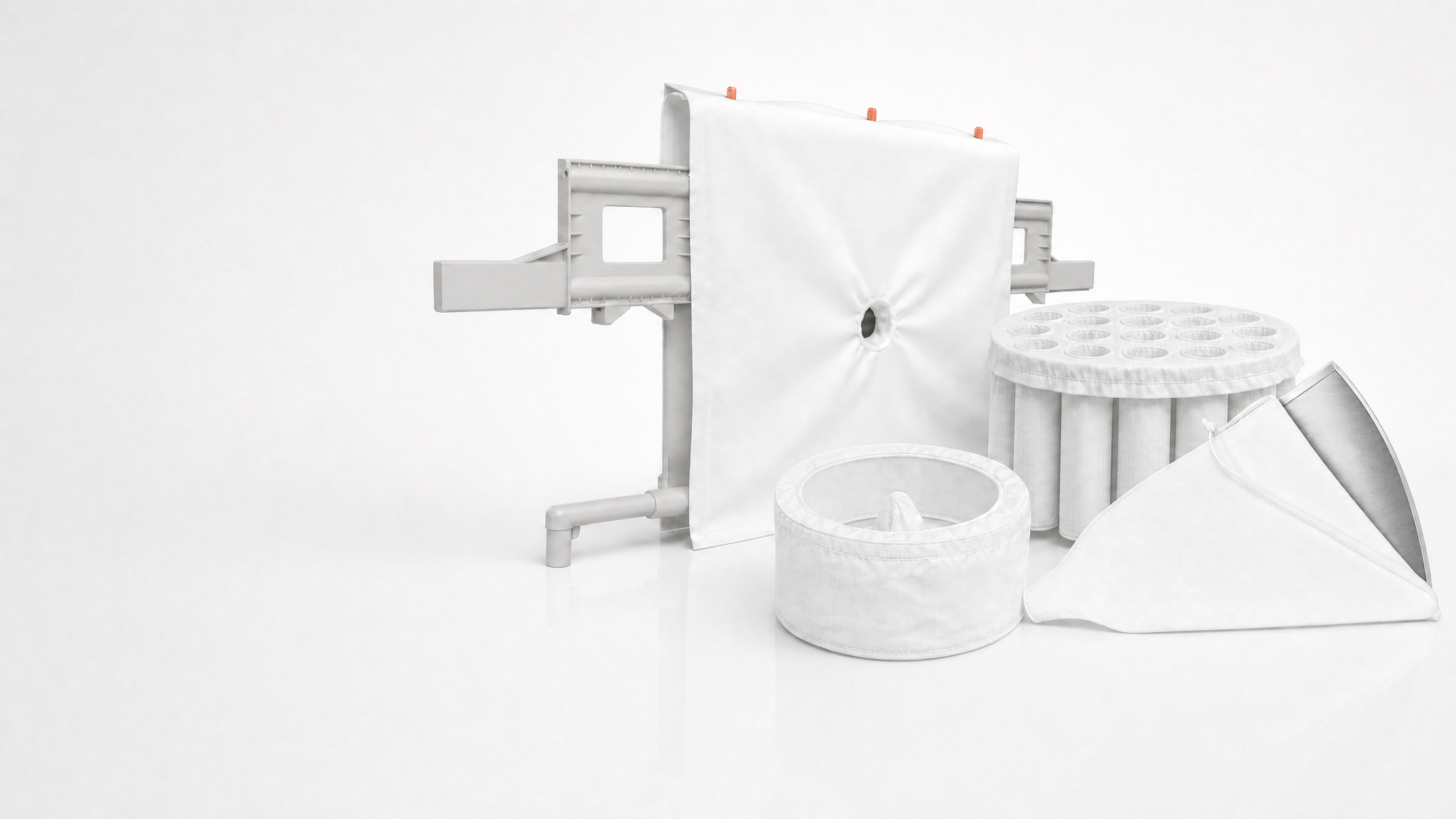
On a rotary disc filter, the cloth is only as good as the way it fits the sector. If the geometry is wrong, you will see uneven tension, poor cake release, premature wear, and sometimes even leakage at the fastening point. From an operator’s point of view, the details that matter are simple: sector shape, attachment method, and how consistently the fabric stays seated during every cycle.
In this technical deep dive, we look at the practical differences between sector geometries and fastening methods such as snap rings, caulking rope, and sewn-in solutions. If you are maintaining a rotary disc filter in mining, wastewater, or chemical service, the right fabric design can make the difference between stable vacuum performance and constant troubleshooting. For standard product options, see the RF-RD Series disc filter fabrics.
🔑 Key Takeaways
- Sector geometry must match the disc layout to avoid wrinkles, edge wear, and air leakage.
- Snap rings, rope, and sewn attachment each solve different mechanical and maintenance needs.
- Fabric choice affects cake release, filtrate clarity, and the risk of filter cloth clogging.
- Operators should verify fit, fastening stability, and vacuum integrity before returning the filter to service.
⚙️ Why Sector Geometry Matters on a Rotary Disc Filter
The disc filter sector is not just a carrier for the cloth; it defines how the fabric is tensioned, supported, and exposed to slurry. A sector with the wrong angle or edge profile can cause the cloth to bridge, fold, or rub against the structure during rotation. That often shows up as localized wear long before the rest of the fabric reaches the end of its life.
Sector shape and cloth behavior
- Wide sectors usually offer simpler installation, but they can demand tighter control of edge tension.
- Narrow or deep sectors often improve drainage geometry, but the fabric must be cut and fixed more precisely.
- Segmented designs help on large filters where maintenance access is limited and replacement must be fast.
⚠️ Caution: Never force a cloth onto a sector that is visibly out of tolerance. Excess preload may look acceptable at startup but often leads to seam stress, edge tearing, and early failure under vacuum.
🔧 Fastening Methods: Snap Rings, Rope, and Sewn Fixation
Most rotary disc filter cloth issues are not caused by the media itself, but by how it is attached. The fastening method has to resist rotation, vacuum pulses, wash cycles, and thermal or chemical exposure. On the same machine, one attachment style may be ideal for quick service, while another provides better long-term sealing.
| Fastening method | Main advantage | Main limitation | Typical operator use case |
|---|---|---|---|
| Snap ring | Fast installation and secure edge hold | Can loosen if tolerances are poor | Frequent maintenance and rapid changeouts |
| Caulking rope | Good seal and adaptable fit | Needs careful, even seating | Applications where vacuum leakage must be minimized |
| Sewn-in attachment | Stable, clean fixation with fewer loose parts | Less flexible during replacement | Longer campaigns and controlled operating conditions |
For operators dealing with high solids loading or demanding clarification targets, the attachment method should be selected together with the fabric structure. If you are comparing disc filter cloths with other separation media, the fastening logic is very different from a RF-PLF Series pressure leaf filter fabric or an RF-FF Series filter press cloth, even if the slurry chemistry is similar.
📊 Practical Effects on Filtration Performance
When the sector geometry and fastening are right, the disc filter runs more evenly: filtrate flow stabilizes, cake forms more predictably, and discharge improves. When they are wrong, the first signs are usually air ingress, uneven cake thickness, or cloth movement at the edges.
Rule of thumb: If you see recurring leakage at the sector edge, check the fastening and fit first before changing the entire cloth specification.
What operators notice first
- Poor cake release when the cloth is over-tensioned or distorted.
- Short cloth life when edges rub or the sector sits unevenly.
- Drip leakage when the seal path is interrupted by a weak fastening point.
💡 Tip: If you are unsure whether a faster-change snap ring or a tighter-sealing rope fixation is best, use our online tool to configure your rotary disc filter filter fabric online and receive a pre-filled, non-binding specification and inquiry.
For tough process environments, the same basic principle applies across equipment: keep the fabric aligned, keep the sealing line intact, and avoid unnecessary mechanical stress. That is true whether you are working in mining, wastewater, or the chemical industry.
🛠️ Installation and Maintenance Checklist
Before the filter goes back online, the cloth should sit cleanly on the sector without twists, folds, or trapped debris. A five-minute inspection can prevent hours of lost production later.
Check edges, holes, and support surfaces for burrs, corrosion, or wear that could damage the cloth.
Lay the cloth evenly so that seams, cutouts, and fastening points align with the sector geometry.
Seat the snap ring, rope, or sewn edge uniformly to avoid local stress and vacuum leakage.
Run a controlled cycle and watch for flutter, drips, or uneven cake formation before full production.
📋 Pre-start checklist
- Sector surfaces are clean and undamaged
- Cloth sits flat with no wrinkles
- Fastening is continuous around the full edge
- Vacuum connections show no bypass or leakage
- Discharge pattern is even across all sectors
💡 Matching the Fabric to the Application
Not every disc filter runs the same slurry, temperature, or abrasion load. A fabric that performs well in low-abrasion wastewater may fail too quickly in mineral concentrate service. If the process involves aggressive chemistry or tighter cleanliness requirements, the construction and fastening must be chosen with that in mind.
When your process is closer to pharma or fine chemical handling, the same operator logic applies in other machines too, such as RF-ANF Series nutsche pharma fabrics for nutsche filters or RF-CF Series centrifuge fabrics for centrifuges. The geometry is different, but the goal is the same: stable fit, clean release, and dependable service life.
In rotary disc filtration, the best results usually come from selecting the sector geometry and fastening method together, not separately. A well-matched design reduces maintenance, improves cake discharge, and protects vacuum efficiency over the full campaign.
📩 Need Help Choosing the Right Fabric?
Our technical team at R+F FilterElements can help you find the perfect filter fabric for your specific application. Get in touch for a free consultation — we will recommend the right solution based on your machine, process, and operating conditions.
Ready to move forward? You can also configure your rotary disc filter filter fabric online to generate a pre-filled, non-binding specification and inquiry in just a few steps.