
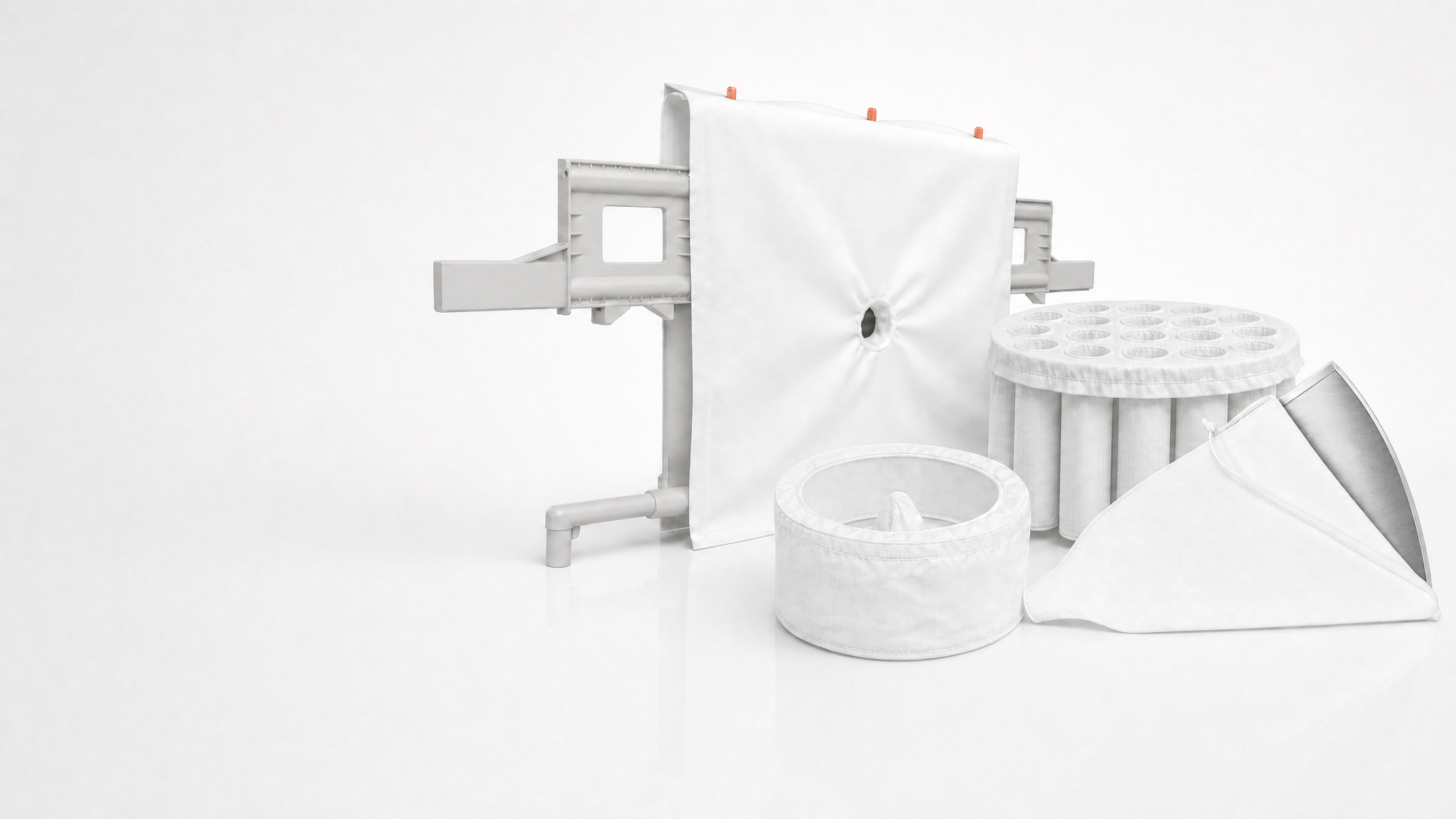
In pharmaceutical centrifugation, even a small amount of fibre shedding or particle release can put batch quality, yield, and GMP compliance at risk. For operators, the challenge is not only separating solids efficiently, but doing it with a clean, reproducible, low-contamination filter bag that supports validated processes.
That is where seamless, welded centrifuge bags make a real difference: they remove stitched seam zones from the product-contact area, reduce potential contamination points, and simplify hygienic handling in daily production. If you run a centrifuge in a regulated plant, especially in the pharmaceutical application area, the filter cloth design deserves the same attention as the machine itself — see also our centrifuge machine guidance.
🔑 Key Takeaways
- Seamless, welded centrifuge bags help reduce fibre shedding and particle contamination in GMP production.
- Removing stitched seams from the product zone lowers the risk of contamination stitching and drip leakage.
- Material choice, seam design, and fit-up are just as important as filtration performance.
- Operator checks before installation and discharge help protect batch purity and repeatability.
⚙️ Why Contamination Risk Is So Critical in Pharma Centrifuges
In a pharmaceutical centrifuge, the filter bag sits close to the product stream, so every seam, edge, and surface finish matters. Traditional stitched constructions can introduce needle holes, loose fibres, and abrasion points that become more visible over time, especially during frequent cleaning cycles and high-throughput operation.
For GMP plants, contamination control is not only about the end product. It also affects:
- batch release confidence
- rework and rejection rates
- cleaning validation effort
- operator handling hygiene
💡 Tip: If you are troubleshooting visible fibres in centrifuge discharge, review the bag seam first. In many cases, the issue is not the process settings but the construction of the filter fabric itself.
At R+F FilterElements, our engineered RF-CF Series centrifuge fabrics are designed for demanding separation tasks where clean product contact and stable fit are essential. For more GMP-focused systems, the RF-ANF Series Nutsche Pharma fabrics are another strong reference point for hygienic design principles.
🔬 Seamless Welded vs. Stitched Bags: What Changes in Practice?
The biggest advantage of seamless, welded construction is simple: no stitched seam in the product zone. That means fewer potential fibre-release points, fewer contamination traps, and smoother internal surfaces that are easier to clean and inspect.
| Feature | Stitched Centrifuge Bag | Seamless Welded Centrifuge Bag |
|---|---|---|
| Product-contact seams | Visible stitch line; potential fibre release | No stitch line in the critical product area |
| Contamination risk | Higher risk of particle shedding and seam wear | Reduced risk from clean, continuous construction |
| Cleaning effort | Seams can trap residues | Smoother surfaces are easier to rinse and inspect |
| GMP suitability | May require closer scrutiny and more frequent replacement | Better aligned with hygienic, validated operation |
Rule of thumb: If the seam can touch the product, it can also become a contamination source. Keep seams out of the active filtration zone whenever possible.
In the field, that can translate into fewer complaints about contamination stitching and fewer leaks around the edge area that contribute to drip leakage. For operators, the benefit is not just cleaner product — it is also a more stable and predictable centrifuge run.
🛠️ What to Check Before You Move to a Welded Design
Not every centrifuge bag needs the same construction, but pharma applications typically reward a stricter specification. Before choosing a welded bag, check the process conditions and the machine interface carefully.
📋 Pre-Selection Checklist for Pharma Centrifuges
- Basket dimensions and bag fit tolerance
- Product particle size and abrasion behaviour
- Required washing intensity and drying time
- Cleaning and sterilisation method
- Acceptance criteria for fibre release and visible contamination
- Need for antistatic or special material properties
When product purity is sensitive, the fabric should also match the upstream and downstream handling. If contamination is already a concern in your plant, it may help to compare the symptoms with our page on filter cloth clogging, because clogging and contamination often appear together in poorly matched fabric designs.
⚠️ Caution: Do not assume that a tighter cloth alone solves contamination. If the seam, edging, or installation method is poor, fibres can still enter the product stream even when the base media is correct.
Decision point: stitched or welded?
📊 Installation and Changeover: Small Details, Big Hygiene Impact
A good bag can still underperform if it is installed poorly. For centrifuge operators, the changeover sequence should be treated like a hygiene-critical task, not just a mechanical swap. A clean fit, correct tension, and proper edge alignment all help the welded design perform as intended.
Remove residues, burrs, and sharp edges that could damage the fabric or create abrasion points.
Keep the weld orientation consistent and ensure the product zone sits flat against the basket.
Check for folds or gaps that could promote bypass, leakage, or hidden contamination pockets.
Record appearance, discharge quality, and cleaning behaviour so future validations stay consistent.
This disciplined approach helps prevent the common problems associated with worn or misaligned cloths, including short filter lifespan. In GMP environments, consistency across batches matters as much as peak performance on one good run.
✅ Selecting the Right Centrifuge Fabric for GMP Reliability
For pharmaceutical centrifugation, the best fabric choice balances cleanliness, process stability, and ease of handling. Seamless welded designs are especially attractive where the plant wants to minimise contamination risk without adding unnecessary operating complexity.
If you are evaluating options for a centrifuge line, start with the process requirement, then match the fabric to the machine. Our RF-CF Series centrifuge fabrics are built for this application, while the broader pharmaceutical application overview shows how fabric design changes with the regulatory and hygiene context.
💡 Tip: When in doubt, prioritise product-contact cleanliness over marginal gains in open area. In pharma, a cleaner separation often beats a slightly higher throughput that creates extra contamination risk.
Seamless, welded bags are not just a technical upgrade; they are an operator-friendly way to reduce avoidable contamination points and keep GMP production under control.
📩 Need Help Choosing the Right Fabric?
Our technical team at R+F FilterElements can help you find the perfect filter fabric for your specific application. Get in touch for a free consultation — we will recommend the right solution based on your machine, process, and operating conditions.