
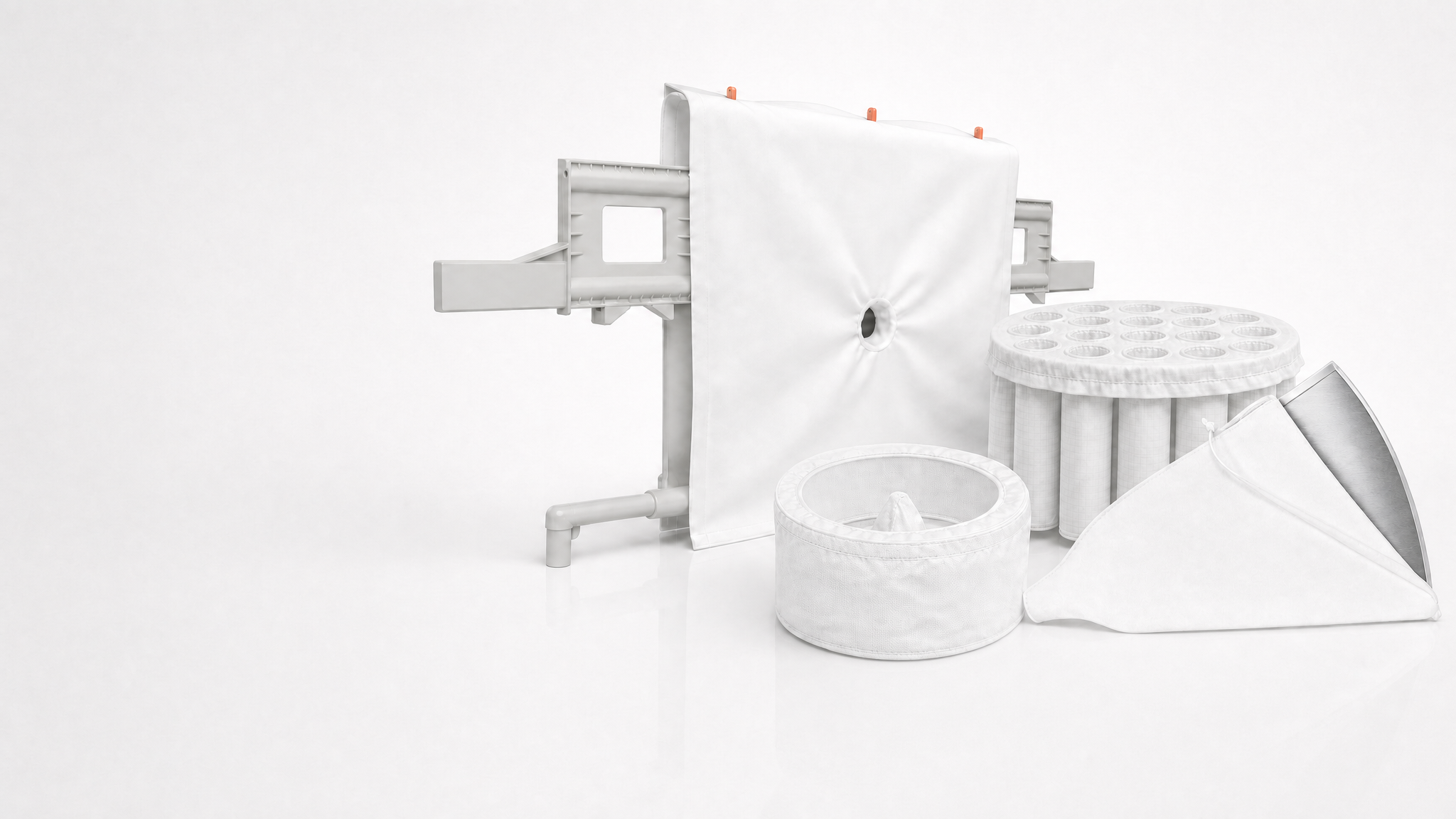
Plastic recycling plants face a tough mix of dirt, labels, adhesive residues, and fine polymer particles every day. In wash water treatment and polymer recovery, the filter fabric often decides whether the line runs smoothly or clogs, blinds, and loses yield.
🔑 Key Takeaways
- Plastic recycling fabrics must handle abrasive flakes, sticky residues, and changing particle sizes.
- Belt filters are ideal for continuous dewatering, while filter presses are often used for sludge and fines.
- Good fabric design helps reduce clogging, carryover, and short service life in wash water systems.
- R+F’s RF-BF Series belt filter fabrics and RF-FF Series filter press fabrics support stable operation in demanding recycling plants.
🏭 Why Filtration Matters in Plastic Recycling
European recycling capacity is growing fast as brand owners, waste processors, and municipalities push harder on circular economy targets. For plant operators, that means more throughput, tighter water loops, and less tolerance for downtime. Every stage of plastic recycling — from bale washing to flake cleaning and polymer slurry dewatering — depends on reliable solid-liquid separation.
In practice, the challenge is not just removing solids. Wash water contains labels, glue, dirt, sand, organics, and microplastics, all in different sizes and densities. That combination makes filter cloth selection just as important as the machine itself.
🔬 Typical Processes: Wash Water, PET Flakes, and Polymer Slurry
Most recycling lines have three filtration tasks in common: cleaning wash water, recovering usable polymer solids, and dewatering sludge. The operating conditions vary, but the fabric problems are similar: abrasion, blinding, and unstable cake formation.
Wash water treatment
In wash water loops, the fabric has to capture labels, paper fibers, fines, adhesive residue, and dirt before they recirculate through the plant. If the fabric is too open, suspended solids pass through and foul downstream equipment. If it is too tight, pressure rises and the line slows down.
PET flake washing
PET flake washing often creates a high load of fine contaminants and sticky particles. This is where stable drainage and good release behavior matter most. Operators need fabrics that support fast throughput without rapid blinding, especially when washing temperatures and chemistry vary.
Polymer slurry dewatering
For polymer slurry dewatering, the goal is to recover as much valuable solids as possible while minimizing moisture in the cake. A well-matched fabric can improve cake dryness and shorten cycle times on a filter press or keep a continuous belt filter running at steady capacity.
| Application | Typical machine | Main fabric challenge | Operator focus |
|---|---|---|---|
| Wash water treatment | Belt filter | Fouling from labels and adhesive residue | Continuous drainage and easy cleaning |
| PET flake washing | Belt filter / vacuum filter | Variable particle size and abrasive flakes | Stable permeability and wear resistance |
| Polymer slurry dewatering | Filter press | Fine solids and slow cake release | Dry cake, short cycle time, low carryover |
⚙️ Choosing the Right Machine and Fabric
For continuous dewatering, belt filters are often the first choice. If you need robust batch dewatering for sludge, fines, or intermittent solids loads, a filter press is usually more efficient. In many plants, the best setup combines both: a belt stage for primary water removal and a press for final sludge handling.
R+F’s RF-BF Series belt filter fabrics are designed for continuous separation duties where drainage, wear resistance, and cleaning behavior must stay balanced. For batch systems, RF-FF Series filter press fabrics help support reliable cake release and consistent performance over many cycles.
🛠️ Fabric Challenges in Recycling Plants
Plastic recycling is hard on fabrics because the solids are not uniform. You may see sharp PET flakes, soft film residues, sand, adhesive fragments, and occasional fibrous contamination — all in the same stream. That combination accelerates wear and makes filter cloth clogging one of the most common operator headaches.
💡 Tip: In plants with sticky residues, choose a fabric structure that supports easy backwash and fast release. This often reduces downtime more effectively than simply moving to a tighter weave.
- Abrasive particles can shorten fabric life, especially on high-speed belt filters.
- Adhesive residue can blind the surface and reduce drainage rates.
- Variable particle sizes make it difficult to find one fabric that performs well in every season.
- Inconsistent feed quality can lead to unstable cake formation and higher moisture.
⚠️ Caution: If the fabric blinds repeatedly, do not simply increase pressure or tension. That can damage the cloth, overload the machine, and worsen solids passage. Investigate feed quality, wash chemistry, and fabric permeability first.
When operators report filter cloth clogging or short filter lifespan, the root cause is often a mismatch between fabric construction and the actual solids profile. If the cake will not release cleanly, review the process for cake release issues before changing operating pressure.
📋 Practical Operating Rules for Better Performance
Small adjustments often make a big difference in recycling filtration. The goal is not only to keep the line running, but also to keep wash water clean enough for reuse and polymer recovery efficient enough to protect yield.
Check whether the main load is labels, dirt, adhesive, fines, or a mix of all four. That determines how open or fine the fabric should be.
Use continuous fabrics for belt filtration and stronger dewatering fabrics for press cycles. Do not use one style for every application.
If drainage slows or washing becomes irregular, investigate blinding before the cake quality drops.
Rule of thumb: If your wash water is getting dirtier over time, the fabric is often losing drainage efficiency before it fails mechanically.
✅ How R+F Supports Recycling Operators
At R+F FilterElements, we focus on engineered filter fabrics that fit the demands of industrial separation. For plastic recycling, that means fabrics that handle wear, improve drainage stability, and help you recover more reusable water and solids.
Operators who run belt filters can review RF-BF Series belt filter fabrics for continuous dewatering tasks. Plants running batch filtration on sludge can evaluate RF-FF Series filter press fabrics for dependable cake release and robust cycle performance. If your process also involves other separation stages, you can compare suitable machine solutions on our find and configure the right filter fabric with our Solution Finder and receive a pre-filled, non-binding specification request.
📋 Pre-selection checklist for recycling plants
- What is the main solid: flakes, labels, sand, sludge, or adhesive fines?
- Is the process continuous or batch-based?
- How important are cake dryness and water reuse?
- Are you seeing blinding, wear, or poor cake release?
- Do you need a fabric optimized for belt filtration or press filtration?
📩 Need Help Choosing the Right Fabric?
Our technical team at R+F FilterElements can help you find the perfect filter fabric for your specific application. Get in touch for a free consultation — we will recommend the right solution based on your machine, process, and operating conditions.
If you want a faster starting point, use our Solution Finder to select your machine and configure the right filter fabric online. You will receive a pre-filled, non-binding specification and inquiry tailored to your process.