
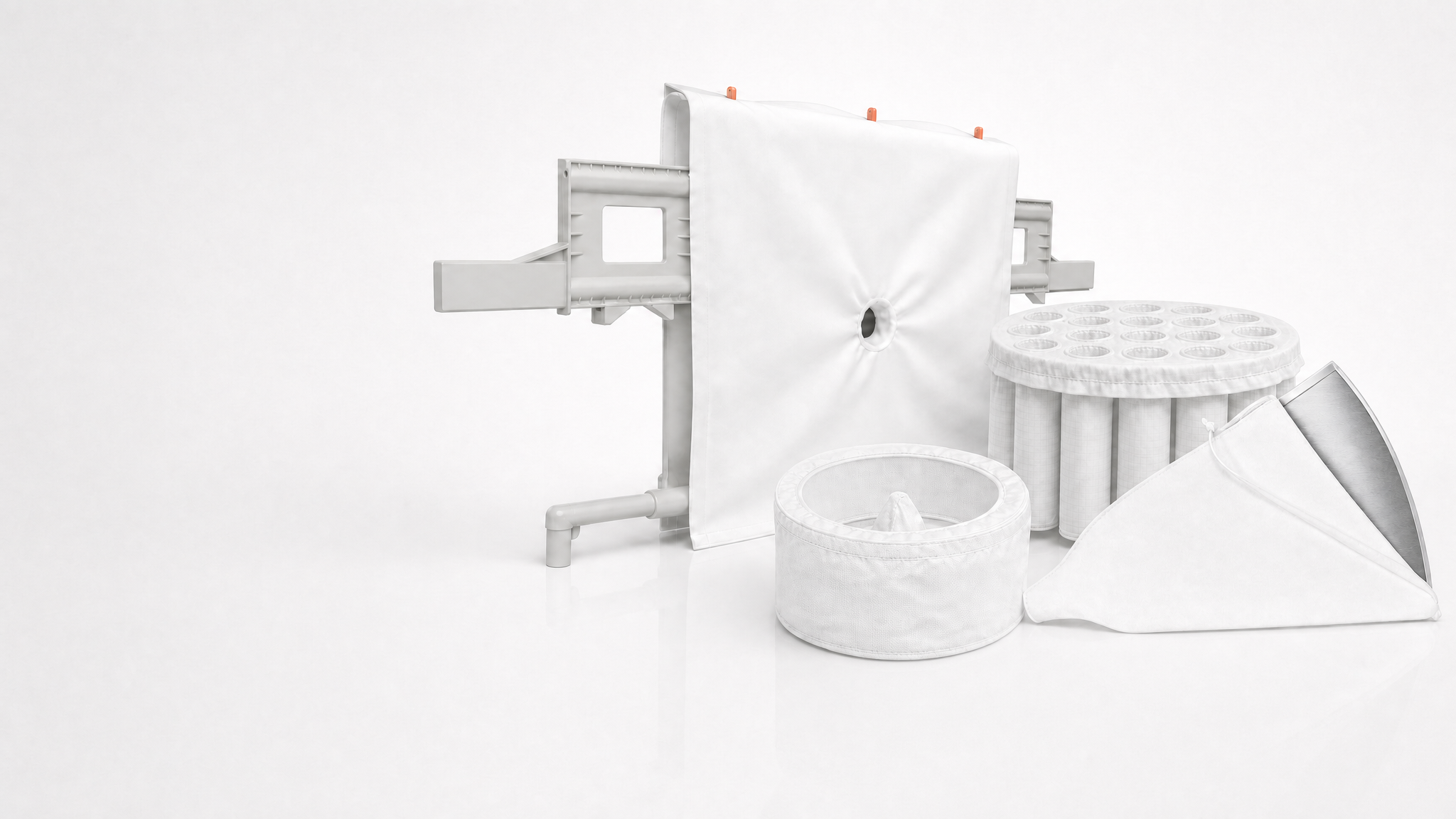
Biodiesel plants live or die by separation efficiency. After transesterification, the methyl ester stream still carries glycerin, soaps, methanol, catalyst residues, and fine solids that can quickly push a process out of EN 14214 compliance if filtration is unstable.
🔑 Key Takeaways
- Post-transesterification separation is the first critical step for removing glycerin- and soap-laden phases.
- Water washing and dry wash polishing both need fabrics that resist methanol, glycerin, and elevated process temperatures.
- Fine retention matters when capturing adsorbents, soaps, and trace solids before final methyl ester storage.
- R+F RF-FF and RF-PLF series are well suited for filter press and pressure leaf applications in biodiesel purification.
💡 Tip: If you are fighting recurring haze, soap carryover, or poor phase split, do not only look at chemistry. The wrong filter fabric can cause blinding, bypass, and unstable cake release even when the biodiesel recipe is correct.
🏭 Where Filtration Fits in Biodiesel Production
In FAME production, filtration is not a single polishing step at the end. It is part of the whole purification chain: after transesterification, during glycerin separation, in water washing, and again in dry wash and final polishing. Each stage puts different demands on the filter medium.
For operators, the goal is simple: stable separation, clean methyl ester, and predictable throughput. That means the filter fabric must handle methanol-rich mixtures, viscous glycerin, soap residues, and sometimes hot process temperatures without losing permeability or strength. Relevant process insights can also be found in our chemical industry applications overview and on the filter press and pressure leaf filter machine pages.
⚙️ Post-Transesterification Glycerin Separation
Right after reaction, the biodiesel stream usually contains a heavier glycerin-rich phase plus dissolved soaps and catalyst carryover. This is where a filter press with the right fabric can help remove suspended impurities and support more stable downstream separation.
Allow glycerin-rich material to split off before the polishing stage. This reduces load on later filtration steps.
Use filter media with fine retention to capture emulsified residues and solids that can create haze.
Choose a structure that resists blinding when glycerin viscosity increases or the feed composition fluctuates.
⚠️ Caution: Methanol-rich streams are flammable and may require ATEX-compliant plant design. Always check process safety requirements and, where relevant, link filtration design to your ATEX and antistatic requirements.
🧪 Water Washing and Dry Wash: Choosing the Right Fabric
Water washing removes residual soaps, catalyst, and polar contaminants, but it can also create emulsions that are difficult to separate. In dry wash systems, adsorbents such as magnesium silicate, ion-exchange media, or bleaching-type powders must be removed efficiently without letting fine particles pass into the final product.
This is where fine retention, chemical resistance, and temperature stability become non-negotiable. For plants using adsorbent polishing, the RF-PLF Series pressure leaf filter fabrics are a strong fit because they are designed for efficient solids capture in polishing duties. For filter press duties, the RF-FF Series filter press fabrics provide robust support for glycerin/soap removal and clarification.
| Process Stage | Typical Contaminants | Recommended Machine | Fabric Requirement |
|---|---|---|---|
| Post-transesterification separation | Glycerin, soaps, catalyst residue | Filter press | High cake release, chemical resistance |
| Water washing | Emulsions, dissolved polar contaminants | Filter press | Stable permeability, resistance to blinding |
| Dry wash | Adsorbent powders, fine solids | Pressure leaf filter | Fine retention, low particle migration |
| Final polishing | Trace fines, haze-forming particles | Pressure leaf filter | High clarity, stable finish quality |
🔬 Fabric Requirements for FAME and Methyl Ester Purification
Biodiesel filtration is harsh on textiles because the process media can be chemically aggressive and thermally demanding. The best fabric choice combines resistance to methanol and glycerin with good dimensional stability and reliable retention of very fine particles.
- Chemical resistance: Needed for methanol, glycerin, soaps, and alkaline residues.
- Temperature stability: Important when process streams are warm or fluctuate during operation.
- Fine retention: Critical when capturing adsorbents and polishing particles.
- Good release behavior: Helps minimize downtime and shortens cleaning cycles.
Rule of thumb: If your cake is sticky or gelatinous, prioritize release behavior and anti-blinding performance before chasing the finest possible retention rating.
For operators who want to find and configure the right filter fabric with our Solution Finder, the online tool can match the machine type and generate a pre-filled, non-binding inquiry for your application.
🛠️ Practical Setup Tips on the Plant Floor
When a biodiesel line starts to drift, the root cause is often not the reactor but the filtration step. Soap carryover, wet cake, or poor polishing performance usually show up first as haze, higher pressure drop, or failed lab values against EN 14214.
📋 Pre-Start Checklist for Biodiesel Filtration
- Verify feed temperature and viscosity before start-up.
- Check fabric compatibility with methanol and glycerin exposure.
- Inspect seams, sealing edges, and support surfaces for leakage risks.
- Confirm the target retention level for adsorbent or fine solids removal.
- Monitor differential pressure to catch blinding early.
💡 Tip: If you are seeing drip loss or wet edges after discharge, review sealing, cake release, and cloth tension together. Small mechanical issues can look like a chemistry problem. See also drip leakage troubleshooting and cake release guidance.
✅ R+F Solutions for Biodiesel Plants
R+F FilterElements supports biodiesel operators with engineered fabrics for the most demanding purification steps. The RF-FF Series is a practical choice for filter press duties in glycerin and soap removal, while the RF-PLF Series is designed for pressure leaf polishing applications where clarity and fine retention matter most.
If your plant also uses other solid-liquid separation equipment, our broader product range includes solutions for belt filter fabrics, centrifuge fabrics, and sparkler filter fabrics depending on the process step and machine design. You can also explore application pages such as wastewater or chemical industry for related filtration challenges.
📩 Need Help Choosing the Right Fabric?
Our technical team at R+F FilterElements can help you find the perfect filter fabric for your specific application. Get in touch for a free consultation — we will recommend the right solution based on your machine, process, and operating conditions.
Prefer a faster start? Use our Solution Finder to select your filtration machine, configure the right fabric online, and receive a pre-filled, non-binding specification and inquiry.