
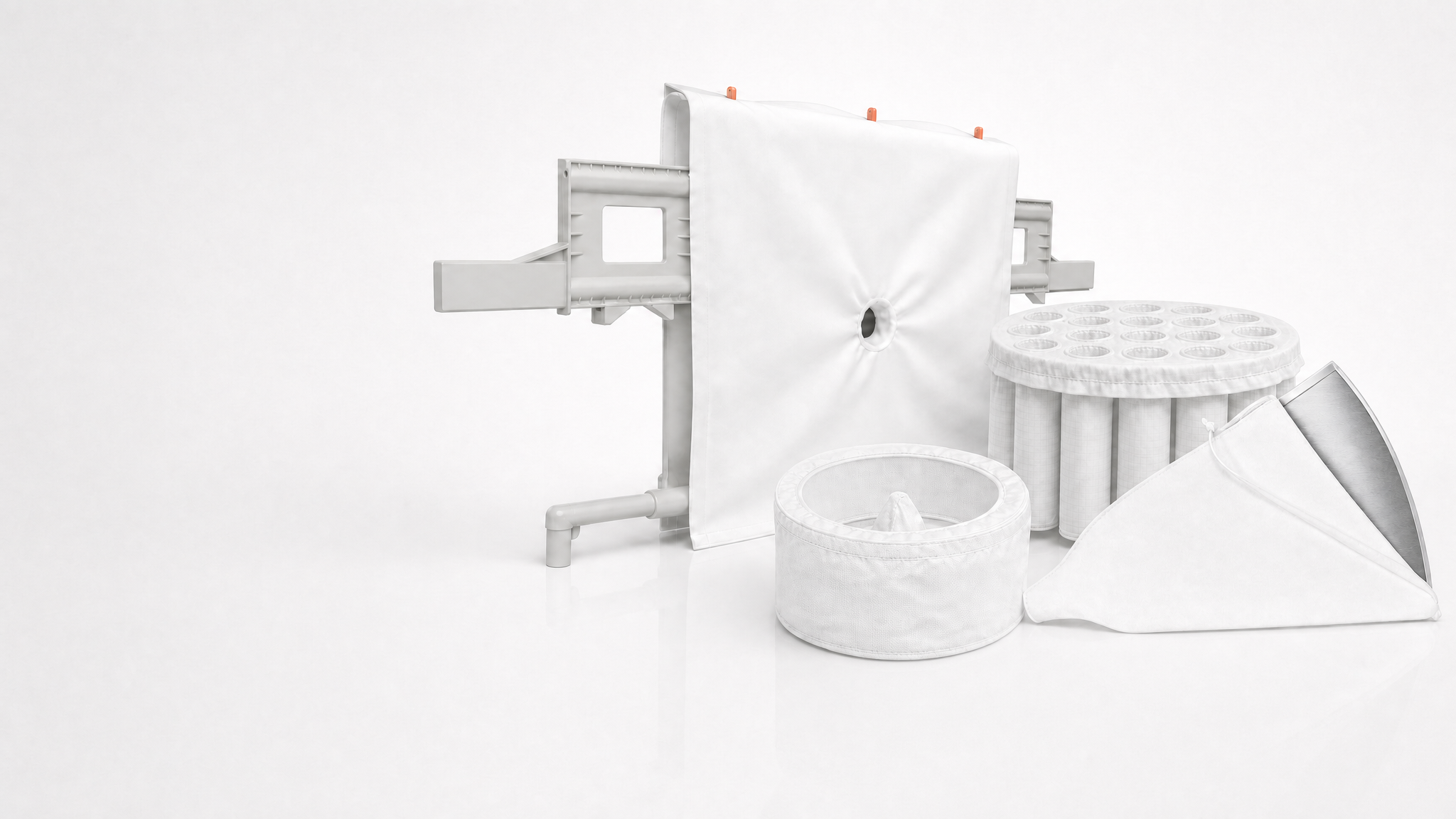
Iron oxide pigments may look simple on the label, but in the plant they can be difficult to dewater and even harder to keep consistently clean. Whether you are running red, yellow, or black Fe2O3 filtration, the right filter fabric has a direct impact on cake dryness, filtrate clarity, and operating stability.
🔑 Key Takeaways
- Iron oxide slurries can blind cloth quickly, so pore structure and surface finish matter.
- Dryness and cake release are often the main targets in pigment dewatering.
- Filter press, centrifuge, and belt filter fabrics each solve different process challenges.
- The right fabric choice reduces downtime, cloth changes, and contamination risk.
🏭 What Makes Iron Oxide Filtration Difficult?
Iron oxide pigment filtration is not just about separating solids from water. In practice, operators have to deal with fine particles, varying crystal shapes, and sticky slurry behavior that changes from batch to batch. A pigment that filters well in one grade can behave very differently in another, especially when switching between red, yellow, and black formulations.
For chemical industry applications, the biggest pain points are usually slow drainage, cloth blinding, and poor cake release. If your process uses a filter press, these issues show up as longer cycle times and wetter cakes. If you operate a centrifuge or belt system, they often appear as carryover, build-up, or unstable discharge.
⚠️ Caution: Fine iron oxide particles can plug the fabric surface very quickly. If cloth selection is too tight, your pressure may rise while throughput drops, leading to shortened filtration runs and premature cloth replacement.
🔬 Choosing the Right Fabric for Pigment Dewatering
The best pigment dewatering filter cloth depends on the machine, particle size distribution, and target cake dryness. In many iron oxide lines, you want a fabric that supports fast drainage without sacrificing solids capture. That balance is especially important when using a RF-FF Series filter press fabric or an RF-BF Series belt filter fabric.
If your operation runs a centrifuge, the RF-CF Series centrifuge fabric is often the better fit because it must tolerate high mechanical load while still releasing fines reliably. For vacuum-based systems, you may also compare against pressure leaf filter fabrics or rotary disc filter fabrics, depending on your process layout.
| Machine | Typical Strength | Main Operator Concern | Fabric Priority |
|---|---|---|---|
| Filter press | High cake dryness | Cake release and cloth blinding | Surface finish and drainage |
| Belt filter | Continuous dewatering | Drainage and belt tracking | Permeability and stability |
| Centrifuge | Fast solids discharge | Wear and mechanical stress | Strength and retention |
| Pressure leaf filter | Clear filtrate | Filter area utilization | Fine particle retention |
🛠️ Process Tuning for Better Cake Release and Dryness
Many operators focus on pressure first, but with iron oxide pigments the fabric often determines whether pressure helps or hurts. If the cloth pores are too fine, the surface loads up and drainage slows. If the pores are too open, you risk solids carryover and a cloudy filtrate.
Look at particle size, viscosity, solids concentration, and whether the pigment tends to smear or settle.
Select a weave and surface style that supports your machine type, whether it is a press, belt, or centrifuge.
Test whether the cake drops cleanly or sticks to the medium after the cycle or discharge phase.
Watch pressure rise, cycle time, and cloth cleaning frequency to spot blinding before it becomes a bottleneck.
💡 Tip: If your cake sticks to the cloth after each cycle, the issue is often not only chemistry. A smoother fabric surface or a different weave can improve release without changing the whole process.
Rule of thumb: If filtration slows down over time but slurry quality has not changed, suspect surface blinding before you increase pressure or shorten the cycle.
📋 Operator Checklist Before Choosing a Fabric
📋 Pigment Filtration Selection Checklist
- What is the machine type: filter press, belt filter, centrifuge, or vacuum unit?
- Is the priority dry cake, clear filtrate, or continuous discharge?
- Does the iron oxide slurry contain very fine or sticky particles?
- How important is fast cake release during discharge?
- Do you have recurring issues with cloth clogging or short service life?
If you are already fighting filter cloth clogging or poor cake release, fabric optimization is often the fastest improvement available. For operators dealing with frequent changeouts, it is also worth checking short filter lifespan and whether the current cloth is being overloaded by process conditions.
✅ Practical Product Options for Iron Oxide Lines
Different machines need different media geometries and fabric constructions. That is why R+F offers dedicated product families for industrial separation duty. For example, the RF-FF Series filter press fabrics are designed for batch dewatering applications, while the RF-BF Series belt filter fabrics support continuous solid-liquid separation.
For operators working with iron oxide in broader chemical production, these fabrics can also support related systems such as pressure leaf filters, centrifuges, and belt filters. If you are unsure which machine-specific construction is right for your line, you can find and configure the right filter fabric with our Solution Finder and receive a pre-filled, non-binding specification request.
💡 Tip: If your plant handles multiple pigment grades, ask for a fabric concept that covers the most demanding grade first. That usually protects performance across the full product range.
📩 Need Help Choosing the Right Fabric?
Our technical team at R+F FilterElements can help you find the perfect filter fabric for your specific application. Get in touch for a free consultation — we will recommend the right solution based on your machine, process, and operating conditions.
Prefer a faster start? Use our Solution Finder to find and configure the right filter fabric for your iron oxide filtration line and receive a non-binding inquiry with the key specifications already prepared.