
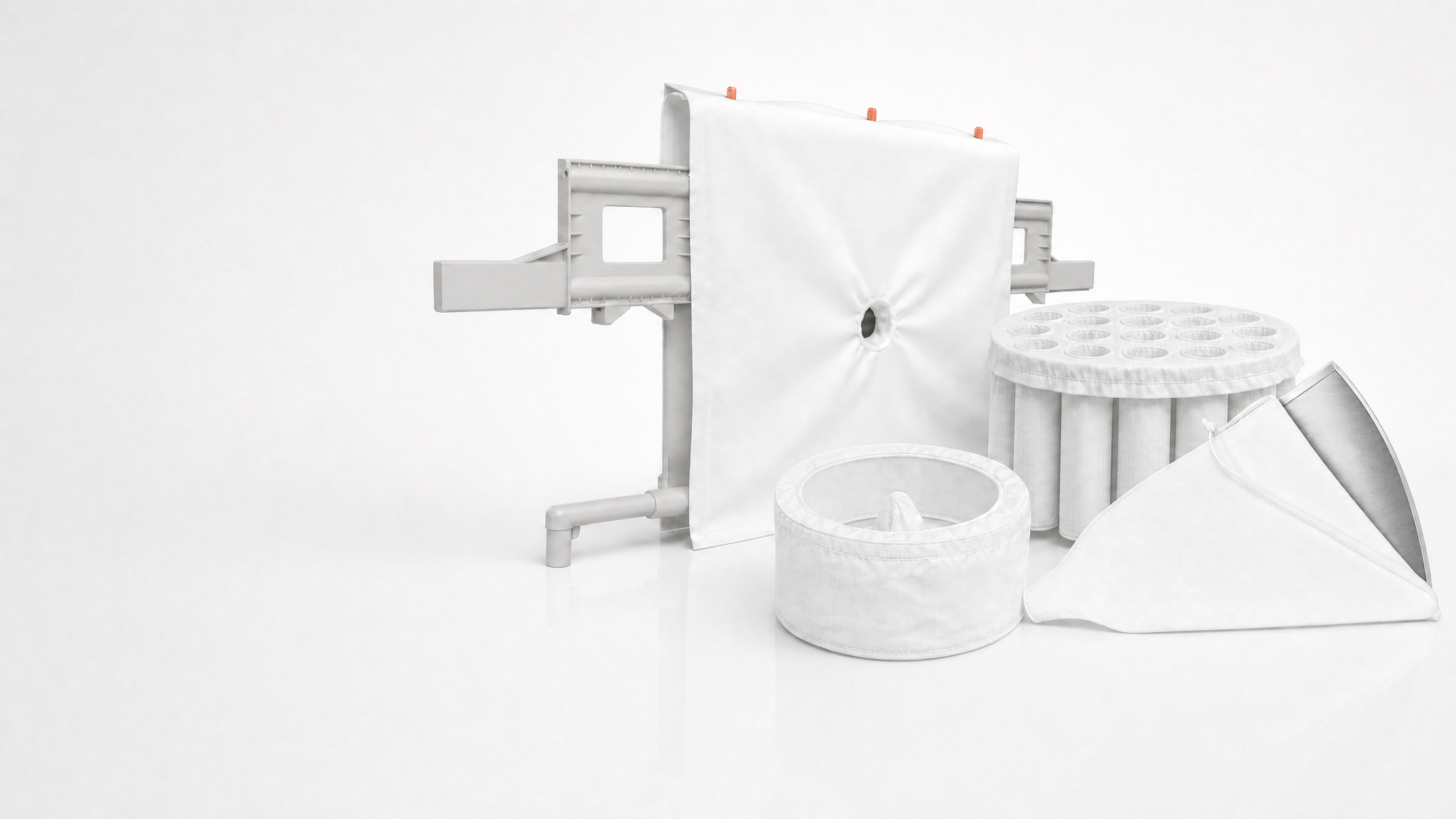
In Bayer process alumina plants, disc filtration is a demanding job: hot slurry, abrasive particles, and rapid blinding can quickly turn stable performance into rising moisture and lower throughput. The right disc filter cloth does more than separate solids and liquids — it helps keep vacuum performance steady, improves cake release, and protects your operating window.
🔑 Key Takeaways
- Alumina slurry is highly abrasive, so cloth wear resistance is critical for uptime.
- Blinding reduces capacity fast, especially when fine particles and scaling build up in the fabric.
- Temperature stability and chemical compatibility matter as much as filtration efficiency.
- Choosing the right RF-RD Series disc filter fabrics can improve cake release and extend service life.
⚙️ Why alumina filtration is so hard on disc filter cloth
In the Bayer process, disc filters see a mix of elevated temperatures, caustic conditions, and abrasive red-mud or alumina hydrate particles. That combination punishes standard fabrics quickly, especially when the cloth is expected to run continuously with minimal intervention.
Operators usually notice the same symptoms first: slower vacuum build, wetter cake, increased wash demand, and more frequent cloth cleaning. If those signs sound familiar, it is worth reviewing your fabric selection alongside your machine settings and maintenance routine. For broader rotary vacuum filtration guidance, see rotary disc filter machines and our mining applications overview.
⚠️ Caution: If your cloth starts blinding early, do not only increase cleaning frequency. Repeated cleaning can mask a fabric mismatch and may accelerate premature wear or seam damage.
🔬 What the right disc filter cloth must do
The best cloth for alumina filtration balances abrasion resistance, open filtration structure, and thermal stability. In practice, that means the fabric should release cake cleanly without retaining fine particles that can seal the pores after only a short run time.
| Selection factor | What operators need | Why it matters in alumina service |
|---|---|---|
| Abrasion resistance | Robust yarns and stable weave | Reduces wear from mineral solids and extends cloth life |
| Anti-blinding behavior | Good surface release and pore stability | Maintains airflow and capacity over longer runs |
| Temperature resistance | Fabric that stays stable under hot slurry | Helps preserve fit, tension, and filtration performance |
| Cake release | Consistent discharge during indexing | Prevents carryover and reduces downstream washing load |
Rule of thumb: If your disc filter cloth looks “clean” but throughput keeps falling, suspect internal blinding before you suspect pump capacity.
🛠️ Common failure modes and how operators can respond
Most alumina plants run into one of three practical problems: abrasive wear, blinding, or heat-related loss of stability. The best response depends on which symptom dominates your operation.
For operators comparing filtration assets across the plant, the same thinking often applies elsewhere too. A cloth that performs well in alumina service may differ from what you would specify for a RF-CF Series centrifuge fabric or RF-BF Series belt filter fabrics.
💡 Tip: Track cloth changeout data by run hours, cake moisture, and wash frequency. A small rise in moisture can be the earliest signal that blinding is building long before a failure becomes visible.
📋 Practical selection checklist for alumina disc filters
Before ordering replacement fabric, confirm the operating data that actually drives performance. This keeps the specification grounded in plant reality rather than catalog assumptions.
📋 Pre-selection checklist
- Slurry temperature range during normal and upset conditions
- Solids type, particle size, and abrasion intensity
- Target cake moisture and throughput
- Cleaning method and indexing cycle
- Current cloth life and failure mode
- Any compatibility needs with caustic process conditions
Step-by-step: how to improve performance
Separate wear, blinding, and temperature effects using operating logs and used-cloth inspection.
Select the disc filter cloth construction that fits your slurry chemistry, solids load, and temperature profile.
Check cake release, vacuum stability, and cleaning response after installation.
If you want to narrow the specification faster, you can configure your rotary disc filter fabric online. The configurator helps you define the key process parameters and instantly generates a pre-filled, non-binding specification and inquiry.
✅ The operator payoff: steadier filtration, fewer interruptions
When the fabric matches the process, the gains are usually visible quickly: more stable vacuum, better cake release, less cleaning, and lower moisture variability. In an alumina plant, that translates into fewer surprises in downstream handling and a more predictable operating window.
For teams working in mining and mineral processing, disc filter optimization is one of the simplest ways to protect throughput without changing the whole system. The fabric is only one component, but it is often the component that determines whether the machine runs smoothly or becomes a maintenance issue.
📩 Need Help Choosing the Right Fabric?
Our technical team at R+F FilterElements can help you find the perfect filter fabric for your specific application. Get in touch for a free consultation — we will recommend the right solution based on your machine, process, and operating conditions.
Prefer to start online? Configure your rotary disc filter fabric online and receive a pre-filled, non-binding specification request in just a few steps.