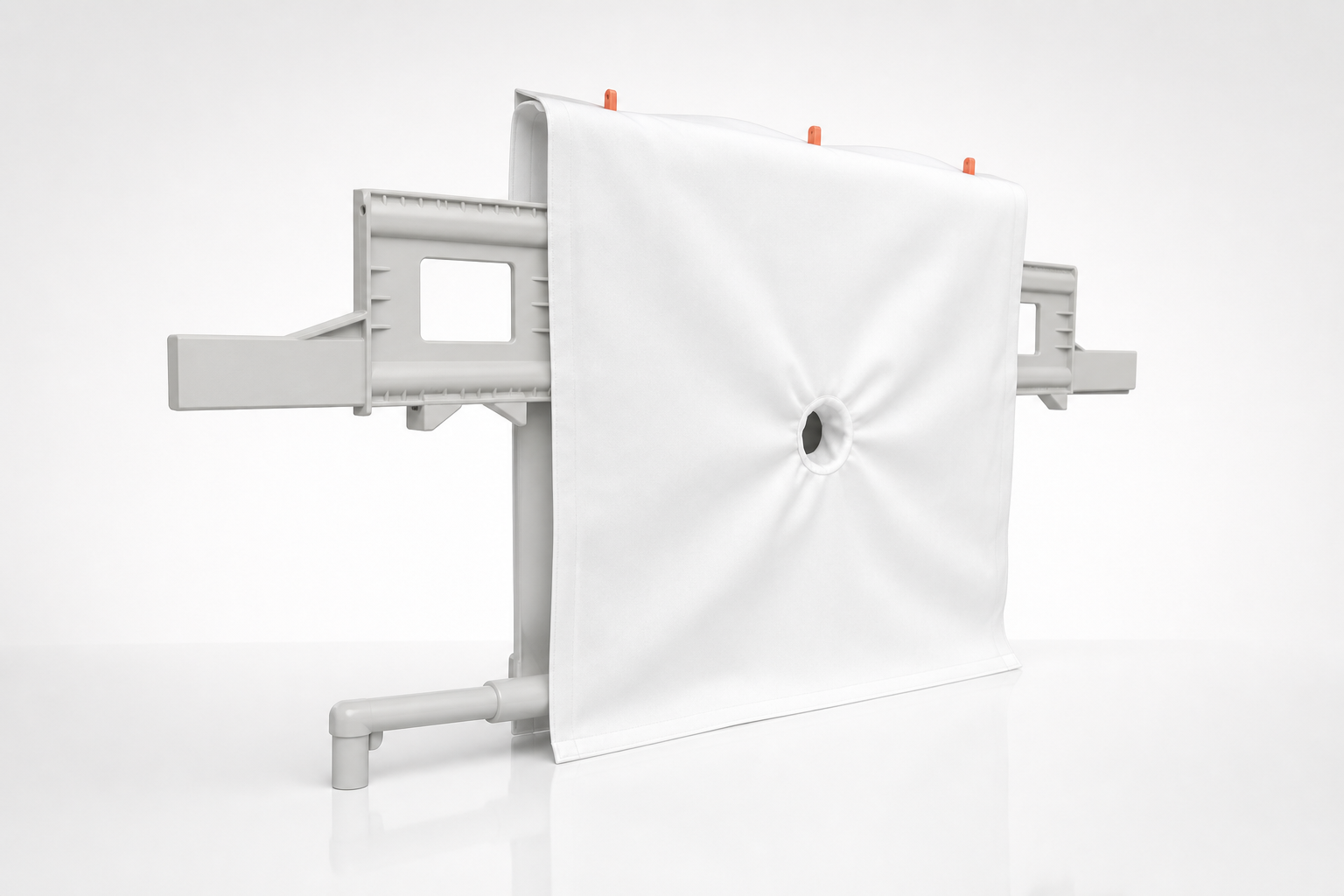
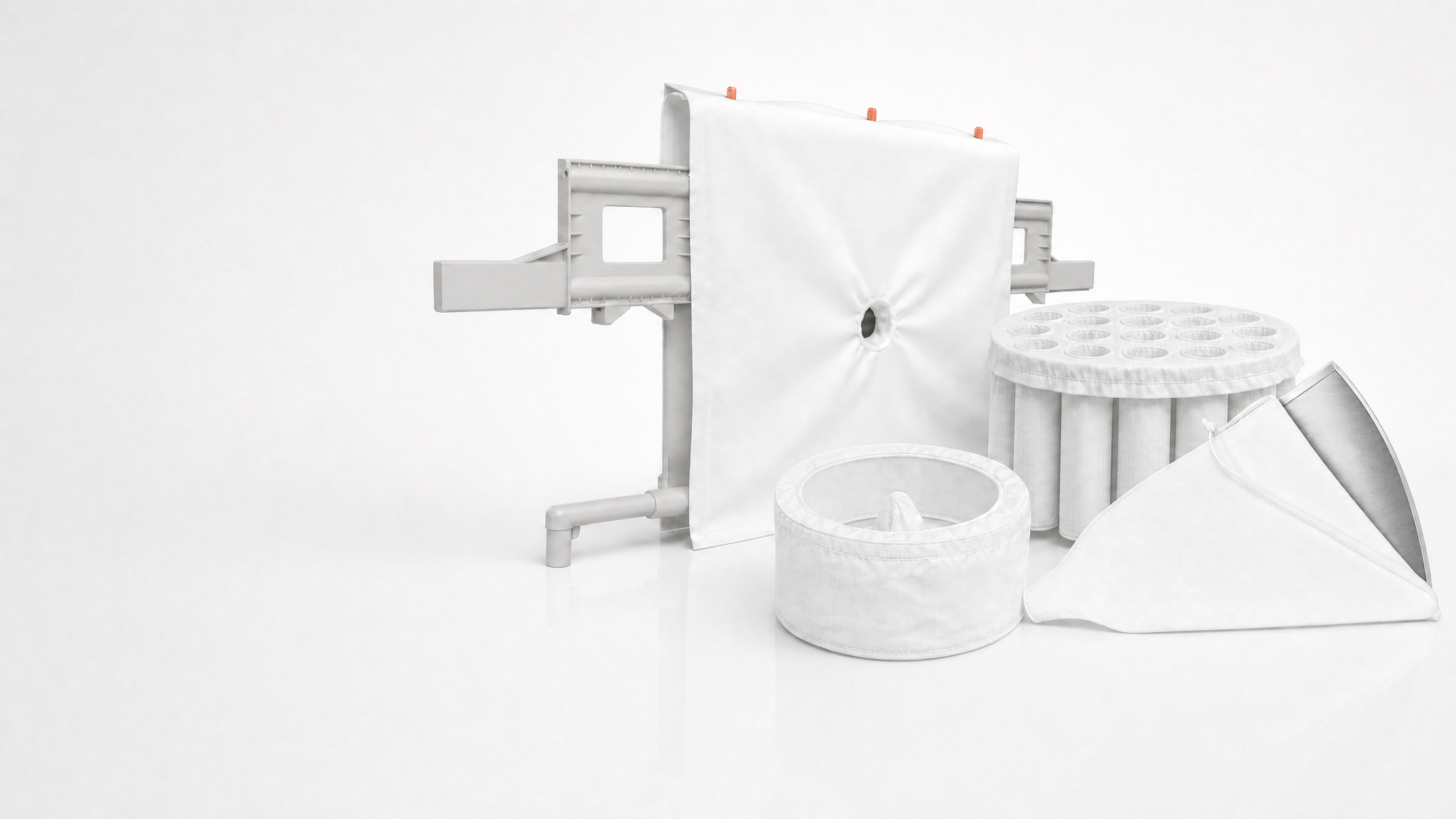
When a Netzsch filter press is running well, the cloth is easy to forget—until cake discharge slows, filtrate turns cloudy, or cycle times start creeping up. That is where a compatible replacement fabric matters: it has to fit the plate correctly, seal reliably, and hold up under your real process conditions.
R+F FilterElements' RF-FF Series is designed as a high-quality compatible option for filter press operators who need dependable fit and repeatable performance without changing the machine.
🔑 Key Takeaways
- RF-FF Series cloths are built for compatible replacement use on Netzsch filter presses.
- Correct fit depends on plate size, feed position, seal design, and seam details.
- Good cloth selection improves cake release, filtration clarity, and service life.
- Ordering goes faster when you share a cloth sample, drawing, or key machine data up front.
⚙️ What “Compatible” Means on a Netzsch Filter Press
In practice, compatible means the cloth must match the mechanical and process requirements of your filter press—not just the plate outline. On the operator side, that means the cloth should seat cleanly in the groove or over the drainage surface, align with feed and wash ports, and stay tight through repeated opening, closing, and cake discharge.
If you are troubleshooting poor dewatering or frequent cloth changes, start by checking the basics on the machine side. A cloth issue can look like a process problem, which is why we recommend reviewing the press setup together with related operating conditions on filter press machines and common wear issues like filter cloth clogging or cake release problems.
Fit checks we look at first
- Plate size and chamber geometry — the cloth must match the press layout exactly.
- Feed and filtrate port positions — misalignment can cause bypass or leaks.
- Seam and edge finish — the wrong seam can reduce service life or create leak paths.
- Release behavior — if cake sticks, the cloth design may need to change.
💡 Tip: If you still have the old cloth, send us one used sample. Even a worn sample often reveals the original cut, seam style, and port details faster than guessing from the machine type alone.
🔬 RF-FF Series Performance in Daily Operation
The RF-FF Series is selected for operators who want a practical balance of clarity, drainage, and durability. In many plants, the cloth must do more than retain solids—it must also release cake cleanly, tolerate repeated wash cycles, and resist premature plugging.
For plants where solid-liquid separation is part of a wider line, the same basic design logic applies across other equipment too. If your site also runs belt filtration or centrifugal separation, you may want to compare the cloth requirements with industrial solid-liquid separation applications or other R+F series such as RF-BF Series and RF-CF Series.
Rule of thumb: If the cake comes off cleanly but filtrate quality is weak, tighten the retention strategy. If filtrate is clear but the press spends too long draining, focus on permeability and release behavior.
📊 OEM Cloth vs. Compatible Replacement
Operators usually want two things: a cloth that fits properly and a cloth that performs consistently over the full service interval. The table below shows how a compatible RF-FF Series solution is typically evaluated in the field.
| Evaluation Point | OEM-Branded Cloth | R+F RF-FF Compatible Cloth |
|---|---|---|
| Fit to press | Designed for original machine specification | Matched to the same machine dimensions and port layout |
| Ordering process | Usually ordered by OEM part reference | Ordered by cloth sample, drawing, or machine data |
| Performance goal | Standard filtration and release behavior | Comparable filtration with emphasis on practical operator value |
| Service life | Depends on process and maintenance | Depends on process and maintenance, plus correct specification |
| Support | OEM channel | Direct technical support from R+F FilterElements |
If your main pain point is short filter cloth lifespan, do not focus only on price. A cloth that seals better and releases cake faster often saves more in downtime than it costs in material.
🛠️ How to Order the Right RF-FF Cloth
The fastest orders are the ones with the cleanest technical data. If you can provide the press model, plate size, and a sample cloth or drawing, we can usually narrow the design quickly and avoid back-and-forth.
Send the Netzsch press model, plate dimensions, chamber depth, and the number of cloths needed.
Share slurry type, solids load, temperature, pH, and whether you need faster release or finer retention.
We verify media, seam style, port cutouts, edge finish, and any special requirements before production.
📋 Order Checklist
- Machine model and plate size
- Cloth sample, sketch, or existing part number
- Process details: temperature, pH, solids load
- Desired focus: clarity, speed, or cake release
- Any special requirements: washability, antistatic, or reinforced seams
⚠️ Caution: A cloth that is even slightly off in port position or sealing edge can cause bypass, leakage, or premature wear. Do not force-install a “nearly fitting” replacement.
✅ Practical Operator Tips for Longer Cloth Life
💡 Tip: Cloth life is usually improved more by correct fit and clean operation than by any single material choice. Stable feed pressure, good cake formation, and regular wash routines matter.
- Keep an eye on drip leakage at the plate edge or seam area after closing.
- Inspect cloths for blind spots, pinholes, and edge fraying during shutdowns.
- Avoid aggressive cleaning that damages the fabric surface more than the fouling itself.
- Record how the cloth behaves after each cycle change so you can spot wear trends early.
📩 Need Help Choosing the Right Fabric?
Our technical team at R+F FilterElements can help you find the perfect filter fabric for your specific application. Get in touch for a free consultation — we will recommend the right solution based on your machine, process, and operating conditions.