
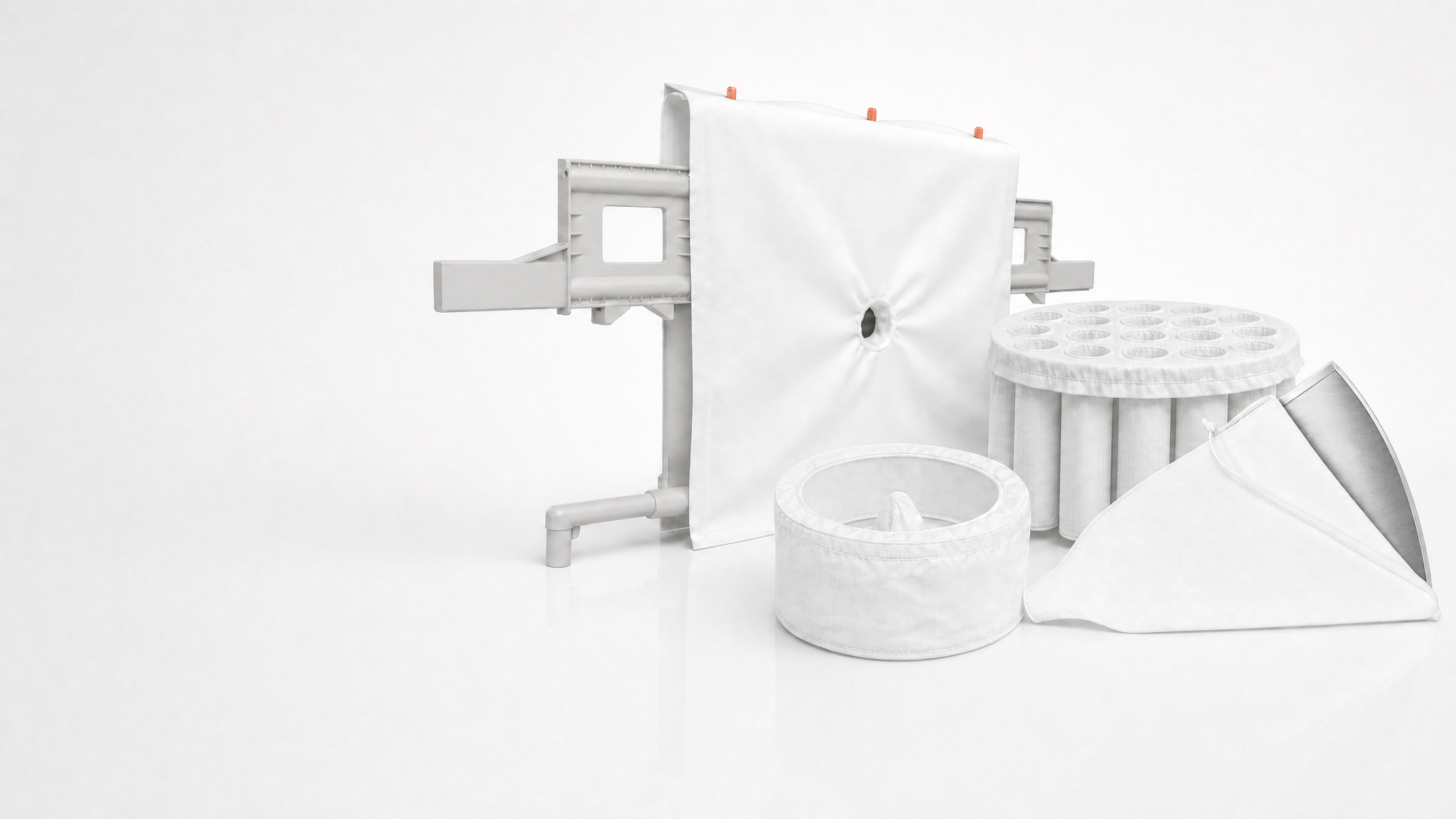
When you run a BHS Filtration peeler centrifuge, the filter fabric is not just a consumable — it directly affects cake release, product purity, and uptime. For operators in chemical, pharmaceutical, and fine chemicals production, the right compatible replacement must fit the basket precisely, handle aggressive media, and support hygienic cleaning routines.
🔑 Key Takeaways
- RF-CF Series centrifuge bags and liners are compatible alternatives for BHS Filtration peeler centrifuges.
- Welded seams help reduce stitching-related contamination risks and improve mechanical durability.
- PP, PET, and PA materials each suit different chemical and thermal operating conditions.
- For pharma and fine chemicals, GMP-oriented design and traceability are often as important as filtration performance.
💡 Tip: If your current basket bag fails at the seams or shows stitching contamination, switching to a contamination-stitching resistant welded design can immediately improve reliability.
⚙️ Why BHS Filtration Peeler Centrifuges Need the Right Fabric
Peeler centrifuges operate under demanding conditions: rapid cake formation, mechanical stress during peeling, and repeated exposure to process liquids and cleaning agents. In that environment, the filter fabric must stay dimensionally stable, resist wear, and release cake cleanly so the basket does not lose throughput over time.
For operators in the chemical industry and pharmaceutical production, the most common pain points are premature wear, seam failure, and contamination risk. The centrifuge machine page gives a broader overview of centrifugal separation, but for BHS-style peeler units the fabric construction is especially critical.
🔬 RF-CF Series: Compatible Bags and Liners for Peeler Centrifuges
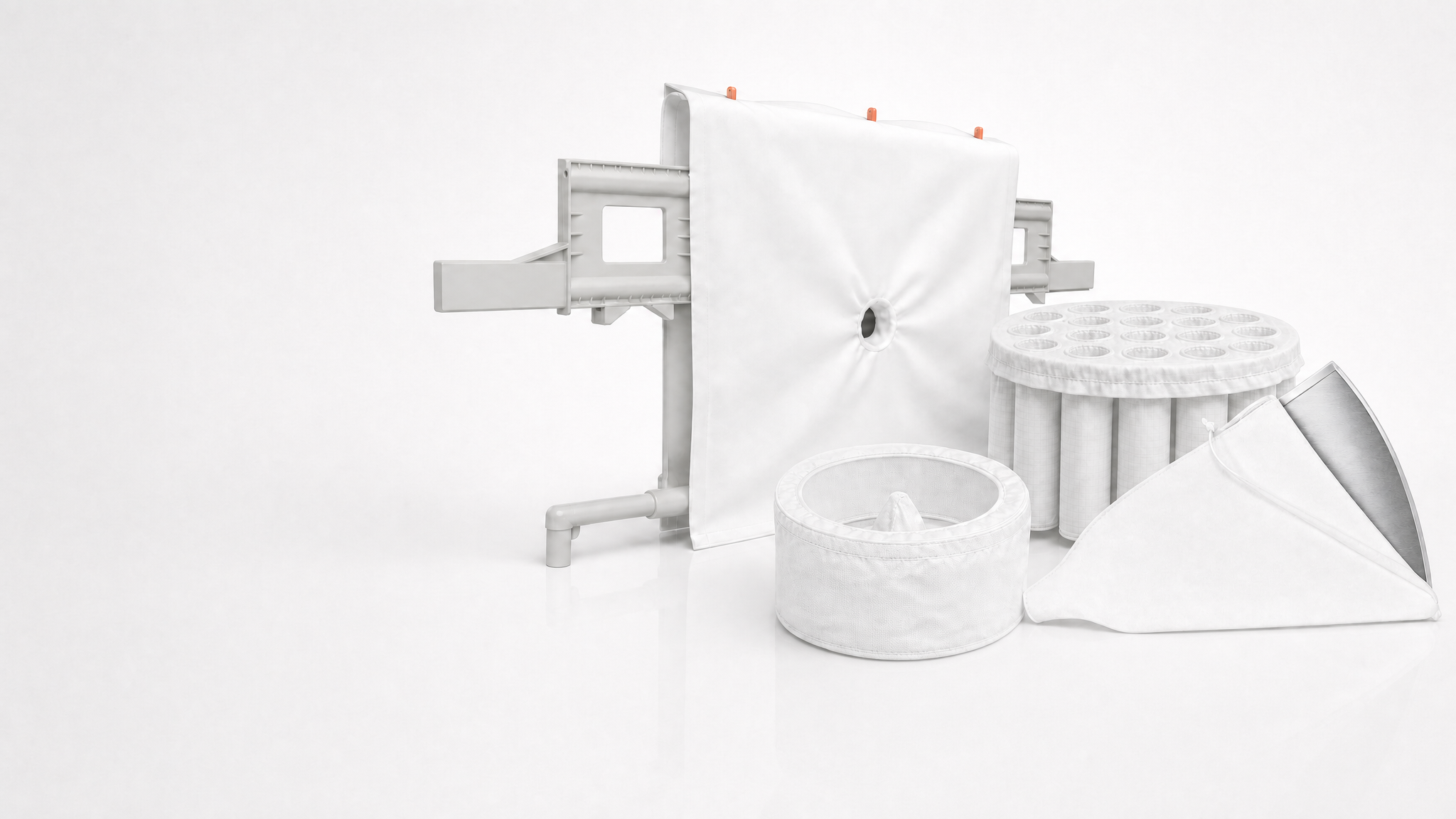
The RF-CF Series centrifuge fabrics are designed as compatible alternatives for basket and peeler centrifuges. Depending on the machine design, operators can use full bags, liners, or custom-made shapes to match the basket geometry and discharge behavior.
What matters most in daily operation is not only nominal fit, but how the fabric behaves in real production: does it hold the cake evenly, resist chemical attack, and survive repeated washing cycles? RF-CF solutions are built around those questions.
Welded seams instead of vulnerable stitching
In many centrifuge applications, welded seams are the better choice because they reduce the chance of thread abrasion, fiber shedding, and contamination at needle holes. This is particularly relevant when product purity is critical or when fine particles tend to lodge in stitched seams.
- Cleaner construction: fewer trapped residues in the seam area
- Better durability: less risk of seam opening under cyclic load
- Improved hygiene: easier to align with GMP expectations
Operators who have seen seam-related failures should also review contamination caused by stitching as a practical failure mode, especially in sensitive batches.
📊 Material Choice: PP vs PET vs PA
Material selection should follow the chemistry of the mother liquor, cleaning media, and operating temperature. The right polymer can extend service intervals and reduce unplanned downtime. The table below summarizes the practical operator view.
| Material | Best For | Strengths | Watch Outs |
|---|---|---|---|
| PP | General chemicals, many aqueous processes | Good chemical resistance, economical, widely used | Lower temperature resistance than PET or PA in some cases |
| PET | Higher mechanical load, stable filtration geometry | Good dimensional stability, robust under cyclic stress | Check compatibility with strong alkalis and specific solvents |
| PA | Applications requiring toughness and abrasion resistance | Strong mechanically, good wear resistance | Must be checked carefully against moisture and chemical exposure |
Rule of thumb: If the seam fails before the cloth does, move to a welded design; if the cloth fails before the seam, the polymer choice is usually the real issue.
🏭 GMP-Compliant Options for Pharma and Fine Chemicals
In pharmaceutical and fine chemical production, compliance is not a marketing term — it is a day-to-day operating requirement. That means controlled fabrication, clear documentation, defined material selection, and designs that support cleaning and traceability.
⚠️ Caution: Pharma-specific fabric requirements may include documentation, material traceability, low-shedding construction, and validated cleaning compatibility. Always align the fabric specification with your QA and validation team before release to production.
R+F can supply RF-CF variants with GMP-oriented considerations such as welded seams, reduced contamination risk, and application-specific documentation. If your plant also runs other filtration equipment, the same engineering approach is used across product families such as RF-ANF Series Nutsche pharma fabrics and RF-FF Series filter press cloths.
What operators should verify before ordering
📋 Centrifuge Fabric Checklist
- Basket diameter and active filtration height
- Feed chemistry, pH, and cleaning agents
- Operating temperature and cycle frequency
- Required seam type: stitched or welded
- Documentation needs for GMP or QA release
Confirm basket diameter, depth, discharge geometry, and any wear allowances.
Select PP, PET, or PA based on the mother liquor, wash fluid, and cleaning cycle.
Choose welded seams when contamination control and durability matter most.
🛠️ Faster Sourcing with the Online Configurator
If you already know your centrifuge dimensions and process conditions, you can configure your centrifuge filter fabric online and receive a pre-filled, non-binding specification and inquiry. That is often the quickest way to get a technically sound starting point without back-and-forth over basic sizing details.
The configurator is especially useful for replacement projects where you need a compatible upgrade for a BHS Filtration peeler centrifuge and want to compare fabric options before shutdown.
📩 Need Help Choosing the Right Fabric?
Our technical team at R+F FilterElements can help you find the perfect filter fabric for your specific application. Get in touch for a free consultation — we will recommend the right solution based on your machine, process, and operating conditions.
Prefer to start immediately? Configure your centrifuge filter fabric online and send us a pre-filled inquiry for a fast, non-binding review.