
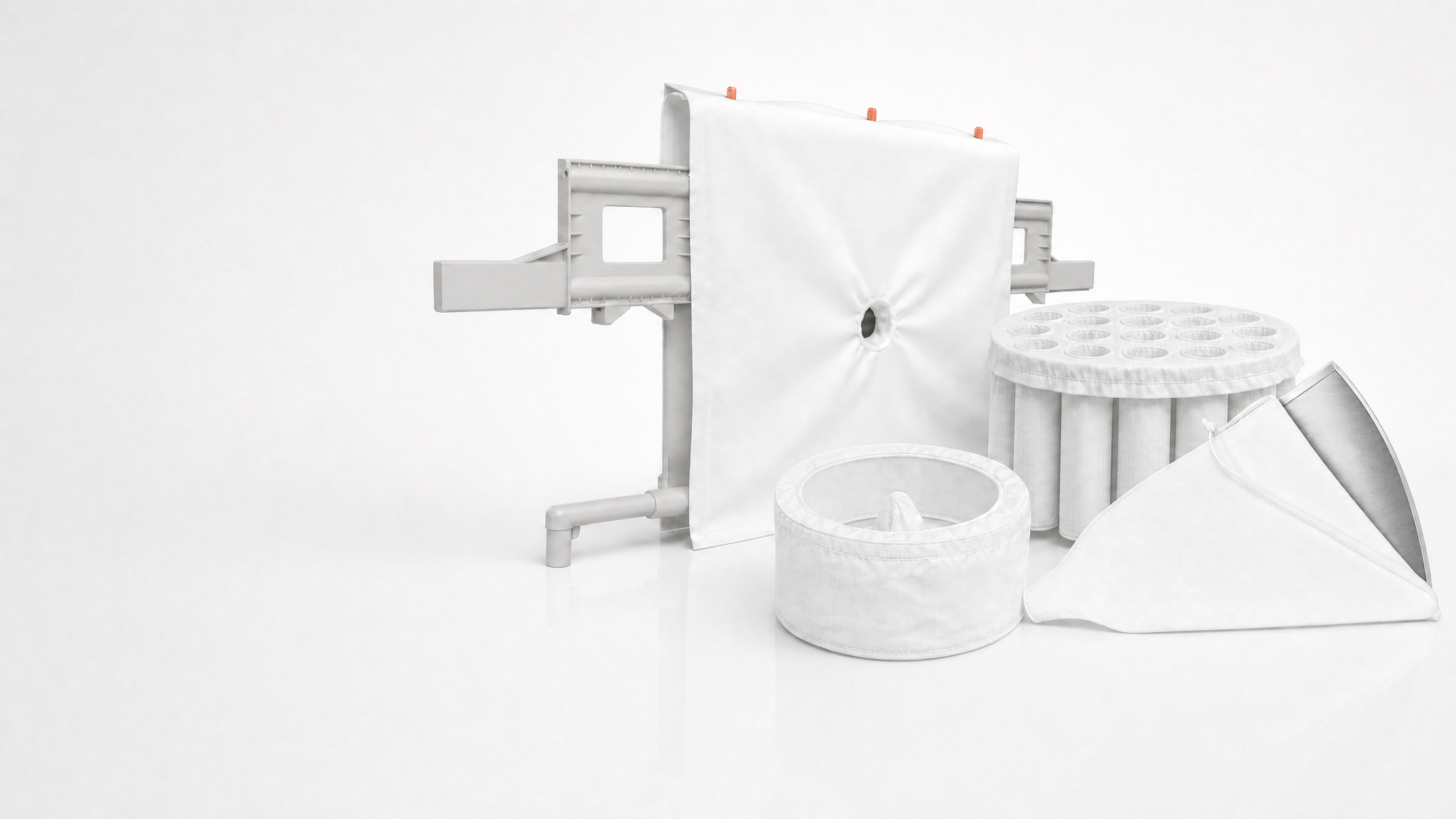
If you run a Krauss-Maffei peeler centrifuge, a worn bag can show up fast as poor separation, longer cycle times, or messy discharge. The right replacement bag is not just about dimensions — it has to match the basket, the product chemistry, the seam construction, and any ATEX requirements in your plant.
🔑 Key Takeaways
- RF-CF compatible centrifuge bags are designed for peeler centrifuges where fit, drainage, and cake release matter.
- Material choice should follow your slurry chemistry, temperature, abrasion level, and cleaning routine.
- Seam construction affects leakage risk, mechanical strength, and how easily the cake releases from the bag.
- ATEX-ready options are available for processes where static build-up or combustible dusts are a concern.
🏭 What a Compatible Peeler Centrifuge Bag Must Match
On a peeler centrifuge, the bag has to do more than hold solids. It must sit cleanly in the basket, support the filtration cycle, and release cake without fighting the discharge knife. If the fit is off by even a small amount, you can see edge wear, bypass, or a damp cake that clings to the cloth.
For operators, the most important reference points are the same ones you already check during maintenance: basket diameter, usable height, fixation details, outlet geometry, and the process medium. If you want a broader overview of machine-specific fabric options, start with our centrifuge machine solutions and the RF-CF Series centrifuge fabrics.
💡 Tip: Keep one removed bag on hand as a reference. The old bag often tells you more about wear patterns, seam stress, and basket contact points than the drawing alone.
🧪 Choosing the Right Material for RF-CF Bags
Material selection depends on what the centrifuge sees every day. In chemical duty, solvent resistance may matter more than absolute strength. In mineral or wastewater service, abrasion and solid loading can dominate. In pharma or fine chemical production, cleanliness and consistent drainage are usually the priority.
| Material | Best for | Operator advantage | Watch-outs |
|---|---|---|---|
| Polypropylene (PP) | Many chemical and wastewater duties | Good chemical resistance and reliable drainage | Check temperature limits and abrasion behavior |
| Polyester (PES) | General industrial separation | Balanced strength, good process stability | Not ideal for all aggressive chemistries |
| Polyamide (PA) | Applications with higher mechanical stress | Tough, flexible, and wear-resistant | Confirm chemical compatibility before use |
| Conductive / antistatic versions | ATEX-sensitive installations | Helps reduce static build-up | Must be paired with correct grounding concept |
If your process involves aggressive media or frequent cleaning, it can also be worth comparing your centrifuge setup with other fabric families such as RF-NF Series needle felt fabrics for adjacent filtration duties, or with application guidance for the chemical industry and pharmaceutical production.
🔧 Seam Types: Leakage Control vs. Easy Cake Release
The seam is often where a good bag fails first. If the seam is too weak, you get leakage or tearing. If it is too bulky, the cake can hang up and slow the cycle. The best seam type depends on whether your first priority is tight sealing, mechanical durability, or smooth discharge.
Rule of thumb: If the old bag shows damage at the hem or seam before the field area wears out, upgrade the seam construction before changing the whole process recipe.
For operators chasing better cake release, seam choice matters just as much as fabric selection. If your cake tends to stick or smear, review our guidance on cake release problems and filter cloth clogging.
⚠️ ATEX Options and Safety Checks
Static electricity is easy to underestimate on centrifuges, especially with dry solids, fine particles, or solvent-bearing products. If your plant has ATEX zones, the bag must be selected as part of the full safety concept — not as a standalone fix.
⚠️ Caution: Do not assume that an antistatic fabric alone makes the centrifuge safe for ATEX service. Grounding, bonding, basket design, instrumentation, and the full risk assessment must all be aligned.
Typical ATEX-oriented options include conductive yarns, antistatic constructions, and defined earthing points or attachments. These features are especially important where operators have already seen static shocks, dust attraction, or unexplained process interruptions. If static issues are part of your current troubleshooting, see our page on antistatic and ATEX problems.
- Use conductive or antistatic fabric where the risk assessment requires it.
- Verify earthing continuity during installation and after maintenance work.
- Inspect for wear at contact points, because damaged conductive paths can reduce safety margins.
- Document the exact bag specification for future reorders.
🛠️ How to Replace a Centrifuge Bag Without Surprises
A smooth replacement starts before the machine is stopped. The fastest way to avoid rework is to measure the used bag, compare it with the basket, and confirm all process details before ordering. That is especially important when the original bag has shrunk, stretched, or deformed during service.
Measure diameter, height, fastening points, seam layout, and wear locations before removal is complete.
Confirm product chemistry, temperature, solids size, and whether ATEX measures are required.
Choose the RF-CF material grade and seam construction that best fits your discharge and sealing needs.
Check fit, drainage, cake release, and edge contact during the first cycles before going back to full load.
📋 Pre-Order Checklist
- Basket dimensions confirmed
- Fastening and suspension details confirmed
- Process medium and temperature documented
- Abrasive wear points identified
- ATEX / antistatic requirement clarified
- Preferred seam type selected
If you operate more than one separation stage, it can help to align your spare parts strategy across the plant. The same operator mindset that you use on a filter press or a belt filter also applies here: fit, drainage, cleaning behavior, and repeatability matter more than catalog language.
💡 Tip: When you reorder, keep the bag code, machine model, and basket measurements together in one maintenance record. That reduces the risk of mixing up sizes between similar centrifuges.
📩 Need Help Choosing the Right Fabric?
Our technical team at R+F FilterElements can help you find the perfect filter fabric for your specific application. Get in touch for a free consultation — we will recommend the right solution based on your machine, process, and operating conditions.