
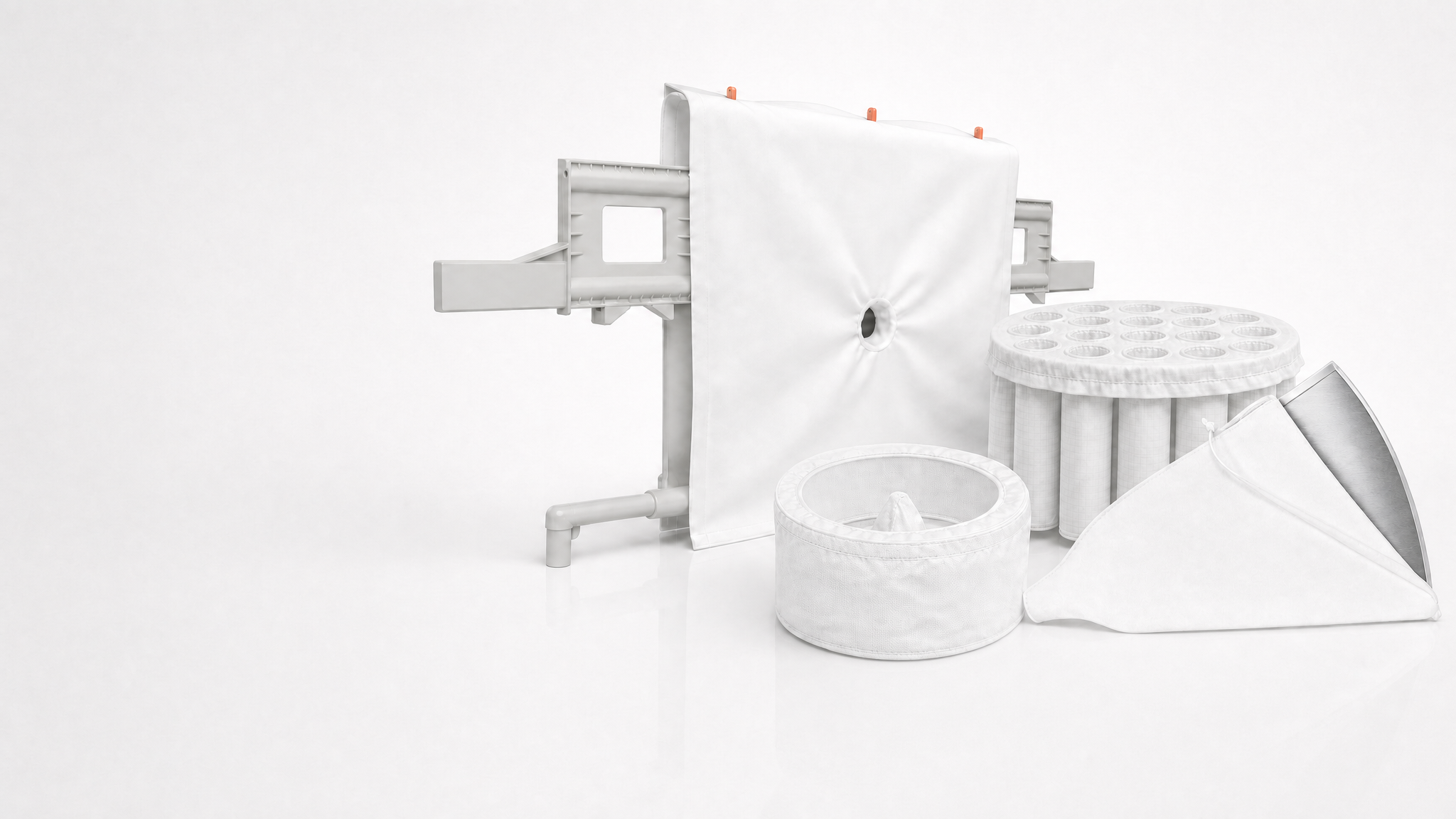
Honey is one of those products where filtration must be gentle: you want to remove wax fines, air bubbles, and other impurities without stripping away flavour, aroma, enzymes, or the natural character customers expect. In practice, that means controlled temperatures, food-grade materials, and a filtration setup that gives you precise retention rather than “maximum polishing at any cost.”
🔑 Key Takeaways
- Honey filtration is about clarification, not over-processing.
- Typical operating temperatures are 40–50°C to reduce viscosity without damaging quality.
- Sparkler filters and small filter presses are common for gentle pressure filtration.
- Food-grade fabrics with reliable, easy cleaning support hygienic operation and organic compliance.
💡 Tip: If your honey is filtering too slowly, the first thing to check is usually temperature and cake loading before changing the fabric. Small process adjustments often solve the issue faster than switching equipment.
⚙️ What Honey Filtration Has to Do — and Not Do
From the operator’s point of view, honey filtration is a balancing act. You need to remove visible wax particles, comb debris, and process impurities, but you generally do not want to remove everything. Fine pollen and micro-particles are sometimes retained intentionally because they contribute to a more “natural” product profile.
This is why honey clarification is usually gentler than filtration in chemical or mineral processes. The target is clean, stable, visually appealing honey with minimal loss of sensory quality. If your line uses a sparkler unit, a small filter press, or a similar polishing stage, the fabric choice has a direct impact on taste, appearance, and throughput. For similar pressure-driven set-ups, see our sparkler filter machine overview and the compatible RF-SP Series sparkler filter fabrics.
🔬 Why Temperature Control Matters
Honey becomes easier to filter when warmed, because viscosity drops sharply in the 40–50°C range. That makes flow through the cloth or pad more stable and reduces the risk of blinding. At the same time, you must avoid overheating: excessive heat can affect enzymes, aroma compounds, and the “raw” character that premium honey buyers expect.
⚠️ Caution: Do not treat honey like a standard industrial liquid. Pushing temperature too high can degrade quality and may put organic or premium claims at risk.
In a well-run line, the operator watches three things closely:
- Feed temperature at the filter inlet
- Differential pressure across the cloth or pads
- Clarity target based on the final product grade
Rule of thumb: Use the lowest temperature that still gives stable flow. If you need more pressure to move honey, first verify heat transfer and pre-screening instead of forcing the filtration step.
🏭 Typical Machines and Where They Fit
Honey operations commonly use sparkler filters, plate-style systems, or compact filter presses for small to medium batch sizes. These machines are attractive because they support pressure filtration with relatively low product hold-up and manageable cleaning. For operators using a press-style setup, our filter press machine overview pairs well with RF-FF Series filter press fabrics, while sparkler-style clarification is often matched with RF-SP Series sparkler filter fabrics.
Comparison of common clarification approaches
| System | Strength | Best fit | Operator note |
|---|---|---|---|
| Sparkler filter | Gentle polishing, compact layout | Premium clarification | Keep temperature stable for consistent flow |
| Small filter press | Flexible batch handling | Variable production volumes | Monitor cake build-up and cleaning frequency |
| Pre-screen + polish stage | Lower fouling load | Quality-focused operations | Reduces pressure on the final fabric |
🧪 Fabric Requirements for Honey Contact
The fabric is where filtration quality is won or lost. For honey, you need a food-grade medium with consistent pore structure, low fiber shedding, and enough retention precision to remove unwanted wax while preserving desirable components when required by the product spec. Cleaning must also be simple, because sticky residue will otherwise shorten service life and create hygiene issues.
📋 Fabric Selection Checklist
- Food-contact suitability and documented material compliance
- Stable retention for the target clarity level
- Low extractables and minimal risk of flavour transfer
- Easy washout of viscous residues
- Good mechanical stability under warm, sticky product conditions
For operators looking at fabric families for food and process filtration, the RF-NF Series needle felt fabrics can be relevant in supporting roles, while the RF-SP Series sparkler filter fabrics are designed for pressure clarification duties. If you are still deciding on the machine platform, our Solution Finder helps you find and configure the right filter fabric online and sends you a pre-filled, non-binding specification inquiry.
📋 Organic Honey and Certification Considerations
Organic honey brings an extra layer of discipline. Besides protecting the product from contamination, you need to ensure that filtration aids, cleaning residues, and fabric materials align with the certification framework you are working under. In many cases, the issue is not only the final product quality but also the traceability of all product-contact components.
- Use approved food-contact materials only
- Keep cleaning and maintenance records complete
- Prevent cross-contamination with non-organic product streams
- Confirm that any auxiliaries or aids are acceptable for your certification scheme
⚠️ Caution: Always verify certification requirements with your auditor or certification body before changing fabrics, cleaning chemicals, or process aids in an organic honey line.
For plants that also handle other sensitive food or pharma products, the same attention to cleanliness and traceability applies across applications. You can explore related hygienic process solutions in our pharmaceutical applications and nutsche filter overview.
🛠️ How to Improve Clarification Without Losing Quality
Bring the honey into the 40–50°C range slowly and evenly to reduce viscosity without damaging delicate properties.
Remove coarse solids first, then polish with a fabric selected for the final clarity target.
Sticky residues build up fast, so washing and drying routines must be repeatable and easy to execute.
💡 Tip: If your product spec allows some pollen retention, select a fabric that clarifies wax and debris efficiently but does not over-polish the honey.
✅ Why R+F RF-SP Series Fits Sparkler Honey Filtration
For gentle honey clarification, the R+F RF-SP Series is a strong fit when you need reliable retention, food-grade construction, and a fabric that can be cleaned efficiently after sticky service. It is especially useful in sparkler-style systems where stable flow and controlled clarity matter more than aggressive solids removal.
When honey is your product, every filter decision affects the final jar on the shelf. The right fabric keeps your process efficient, protects natural properties, and reduces rework from cloudy or over-processed batches. If you are evaluating alternatives, compare the RF-SP Series with your current setup and check whether the retention level matches your desired appearance and certification requirements.
📩 Need Help Choosing the Right Fabric?
Our technical team at R+F FilterElements can help you find the perfect filter fabric for your specific application. Get in touch for a free consultation — we will recommend the right solution based on your machine, process, and operating conditions.
If you want a fast starting point, use our Solution Finder to find and configure the right filter fabric online and receive a pre-filled, non-binding inquiry for your honey filtration setup.