
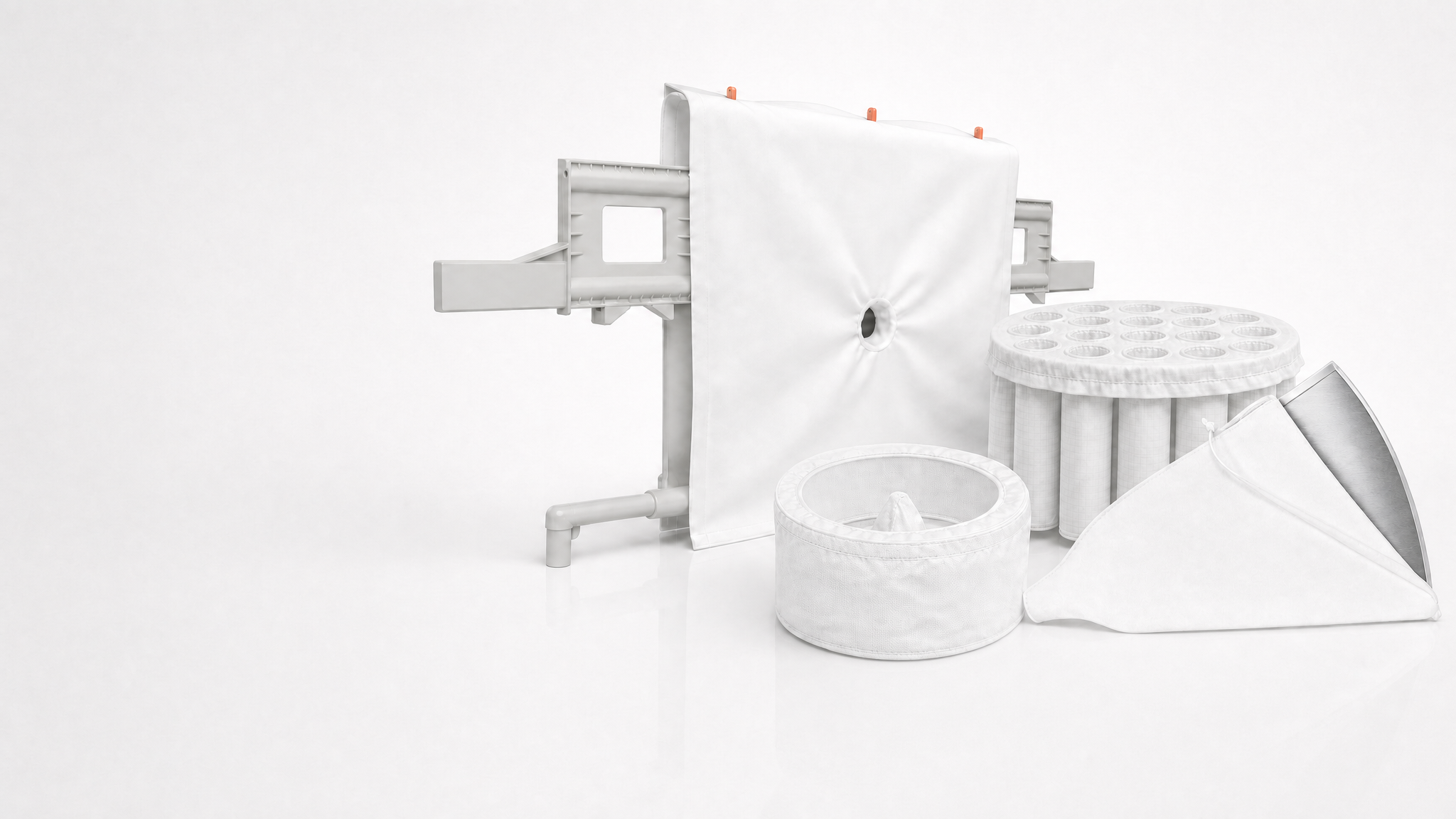
In electroplating, even tiny particles can turn into visible defects, rework, or rejected parts. Whether you run a plating line for automotive trim, electronics housings, or precision components, the right filter fabric helps keep baths clean, recover valuable metals, and stabilize rinse-water treatment.
🔑 Key Takeaways
- Bath filtration removes particles before they become nodules, pits, or rough surfaces.
- Dragout recovery and sludge dewatering can return valuable metals to the process or waste stream.
- Fabric selection must match aggressive chemistries such as chromic acid, sulphuric acid, cyanide baths, and metal salts.
- R+F RF-SP and RF-FF series support sparkler filtration and filter press duties in demanding plating lines.
⚙️ Why filtration matters in electroplating
In plating, the bath is the product. If particles circulate too long, they can settle on the workpiece and create surface defects that are expensive to remove downstream. Operators see this as pitting, roughness, dull spots, streaks, or poor adhesion — especially on high-visibility parts.
That is why bath polishing is common in electroplating lines. A sparkler or plate filter typically runs continuously or in regular cycles to remove fines, carbon, anode debris, and other suspended solids. For sludge or spent process residues, a filter press is often the better choice because it can dewater metal-bearing solids efficiently. Learn more about the machine setup on our sparkler filter systems and filter press applications.
🔬 Typical filtration stages in plating and surface treatment
Bath polishing
Bath polishing removes suspended particles before they can attach to the part surface. This is especially important in decorative and functional plating, where finish quality is closely tied to bath cleanliness. For sparkler filtration, the fabric must keep fine solids out while still allowing stable flow and easy cake discharge. The RF-SP Series sparkler filter fabrics are designed for this type of duty.
Dragout recovery
Dragout recovery is where operators reclaim valuable chemistry from rinse overflows or carryover streams. The recovered liquid may contain nickel, copper, zinc, chromium, or other dissolved metals. In many plants, this stream is treated separately so the chemistry can be reused or safely concentrated before disposal.
Rinse water treatment
Rinse water is often the largest volume stream in the plating area. It can carry dissolved salts, acids, alkalis, and metal fines. Good filtration stabilizes downstream treatment and reduces load on ion exchange, precipitation, or neutralization steps. For sludge dewatering, many plants rely on a RF-FF Series filter press fabric to improve cake dryness and ease handling.
| Application | Typical machine | Main purpose | Fabric priority |
|---|---|---|---|
| Bath polishing | Sparkler / plate filter | Remove particles that cause surface defects | Fine retention, stable flow, chemical resistance |
| Dragout recovery | Plate filter or auxiliary system | Recover valuable metals and reduce losses | Low contamination, durable seams, broad pH resistance |
| Rinse water treatment | Filter press | Dewater metal hydroxide sludge | Cake release, tear strength, long service life |
🧪 What the filter fabric must resist
Electroplating is chemically aggressive. A fabric that performs well in one bath may fail quickly in another. Operators often have to deal with chromic acid, sulphuric acid, alkaline cleaners, cyanide-containing baths, and dissolved metal salts. The wrong fabric can swell, embrittle, leak at the seams, or lose permeability too quickly.
For harsh plating chemistry, operators should look for fabrics with strong resistance to acids, alkalis, and metal salt exposure, plus stable dimensional behavior during thermal or chemical cycling. If your process involves corrosive recovery or slurry handling, also review our short filter lifespan troubleshooting guide to identify wear mechanisms early.
⚠️ Caution: In plating systems, a fabric that looks fine after installation can still fail early if the chemistry shifts, the bath temperature rises, or solids load spikes. Always confirm compatibility with the actual process liquid, not only the nominal pH.
🏭 Automotive and electronics: where quality tolerances are tightest
Automotive plating often demands consistent appearance, corrosion resistance, and repeatable layer thickness. Electronics plating can be even more sensitive, because tiny contamination levels may affect conductivity, solderability, or contact performance. In both sectors, the filtration fabric is part of the quality chain — not just a consumable.
- Automotive: visible finish, corrosion protection, lower reject rates.
- Electronics: ultra-clean baths, minimal particulate contamination, stable process windows.
- Surface treatment lines: reduced downtime and fewer bath corrections.
For operators, the practical goal is simple: keep the bath stable long enough to protect output quality and reduce chemical loss. That is why many plants standardize on dedicated fabrics for each bath family instead of using one universal cloth across the entire line.
Rule of thumb: If the defect shows up on the part, the root cause may already have started in the filter cloth — either through clogging, poor retention, or chemical attack.
📋 Pre-selection checklist for plating filtration
- Which chemistry is in contact with the fabric: acid, alkali, cyanide, or metal salt?
- Is the duty bath polishing, dragout recovery, or sludge dewatering?
- What particle size must be retained?
- How often is the fabric exposed to cleaning cycles?
- Does the line require fast cake release or maximum clarity?
🛠️ How R+F RF-SP and RF-FF series fit the line
For sparkler and plate filters, the R+F RF-SP Series is a strong fit when operators need dependable bath polishing with tight particle control and chemical resistance. For sludge dewatering and metal-bearing solids, the R+F RF-FF Series supports filter press operation where strength, drainage, and cake release matter most.
Separate bath polishing, dragout recovery, and rinse sludge so each duty gets the right fabric construction.
Check acid, alkali, and metal salt exposure before selecting a fabric for long-term stability.
Use RF-SP for sparkler filtration and RF-FF for filter press duties to improve process reliability.
If you want to configure the right setup online, you can find and configure the right filter fabric with our Solution Finder and receive a pre-filled, non-binding specification and inquiry for your machine.
📩 Need Help Choosing the Right Fabric?
Our technical team at R+F FilterElements can help you find the perfect filter fabric for your specific application. Get in touch for a free consultation — we will recommend the right solution based on your machine, process, and operating conditions.
Prefer to start yourself? Use the Solution Finder to select your filtration machine and configure the right filter fabric online in just a few steps.