
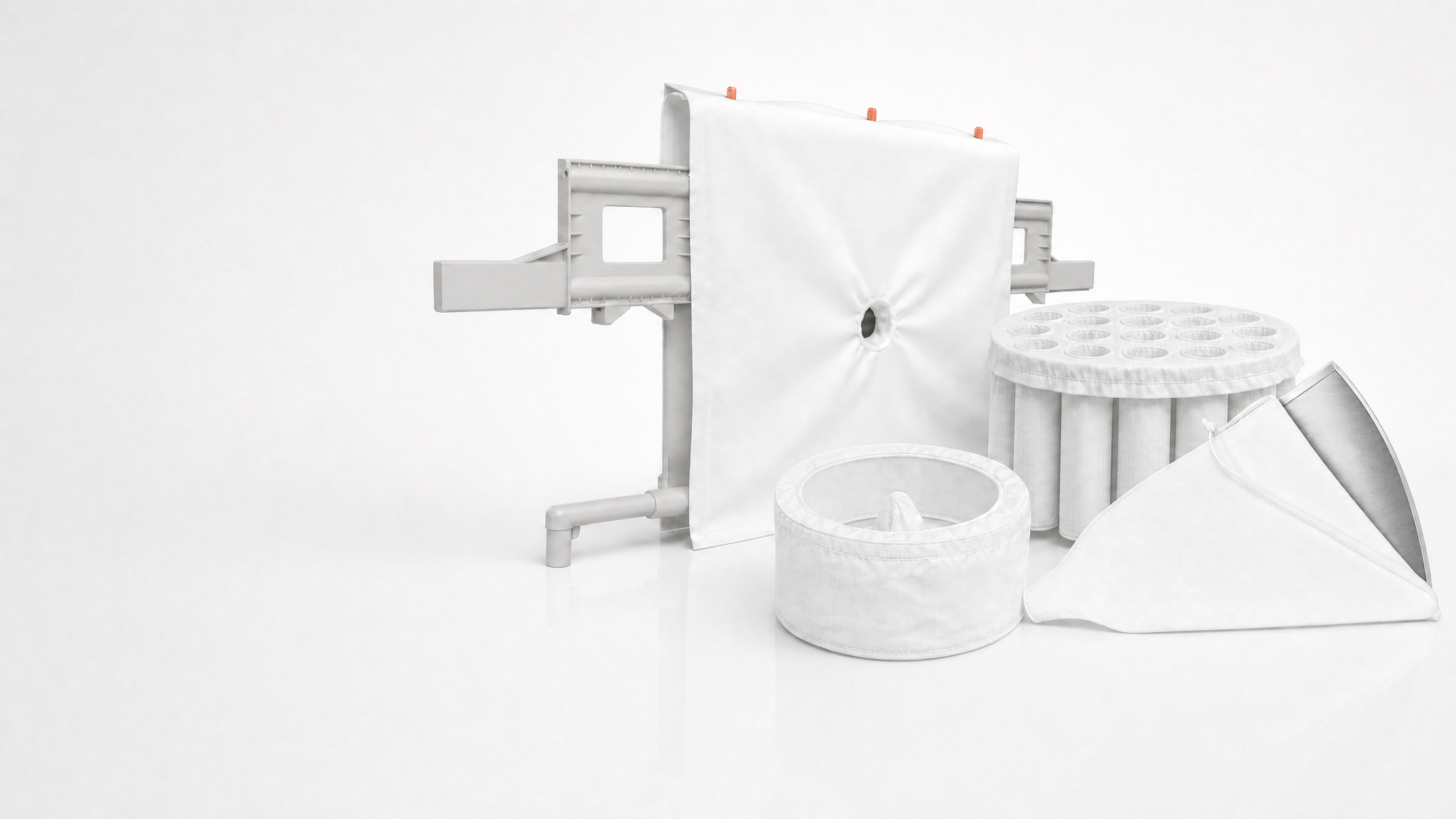
When cake dryness slips on a filter press, the instinct is often to blame the cycle time, feed pressure, or the slurry itself. In practice, the filter fabric is just as important: permeability, weave tightness, and membrane compatibility all shape how fast filtrate escapes and how much moisture stays trapped in the cake.
If you run a press day after day, the right cloth choice can mean fewer sticky cakes, cleaner discharge, and more stable throughput. This guide looks at the fabric decisions that have the biggest impact on final cake moisture, with practical checks you can apply on the plant floor.
🔑 Key Takeaways
- Permeability must match your slurry fine enough to retain solids, open enough to drain fast.
- Weave tightness affects pore structure, cloth blinding, and the pressure profile inside the cake.
- Membrane compatibility matters when squeeze pressure and cloth support need to work together.
- Correct fabric selection can improve cake release and reduce residual moisture without changing the entire process.
⚙️ Why Cake Dryness Starts with the Cloth
On a filter press, moisture leaves the cake through a chain of resistances: the slurry itself, the formed cake, and the filter cloth. If the cloth is too tight, filtrate flow slows and pressure builds early. If it is too open, fine solids can migrate, blind the surface, or reduce clarity.
The best cloth is not the one with the highest open area. It is the one that matches your particle size distribution, operating pressure, and cycle strategy. For many presses, the fabric determines whether the cake forms a porous drainage path or a dense, slow-dewatering layer.
💡 Tip: If cake dryness drops suddenly, compare the current cloth batch with the previous one first. Small changes in yarn, finishing, or seam construction can change drainage behavior more than operators expect.
🔬 Permeability vs. Weave Tightness: Finding the Balance
Permeability describes how easily liquid passes through the cloth. Weave tightness controls the pore geometry and how the fabric holds up under pressure. These two factors must be balanced, especially when the feed contains fine crystals, compressible solids, or sticky organics.
| Fabric Choice | Drainage Speed | Cake Moisture | Typical Use | Operator Risk |
|---|---|---|---|---|
| More open weave | High | Can improve early drainage | Coarser solids, faster cycles | Fine particle carryover, blinding |
| Balanced weave | Medium | Often the best compromise | General slurry duties | Needs process tuning |
| Tight weave | Lower | Can help retain fines, but may trap moisture | Fine solids, high clarity needs | Slow dewatering, harder release |
In the field, a cloth that is too tight can create an early filter cake skin that blocks drainage. A cloth that is too open may let fine particles load into the fabric, reducing effective permeability over time. For operators, the sweet spot is usually the fabric that keeps the cake open enough to drain but stable enough to discharge cleanly.
Rule of thumb: If the first filtrate is clear but the cake stays wet, the fabric may be too tight for the fines present. If the press drains fast at first but quickly blinding occurs, the fabric may be too open or insufficiently surface-finished.
🧪 Membrane Compatibility: When Squeeze Pressure Changes the Equation
On membrane filter presses, the cloth does more than just separate solids from liquid. It must also support the membrane during squeeze stages without wrinkling, migrating, or restricting the pressure profile across the chamber. Poor compatibility can leave wet zones in the cake even when squeeze pressure is high.
For membrane systems, compatibility is about more than chemistry. The fabric must tolerate the pressure cycle, maintain dimensional stability, and work with the membrane’s surface movement. If the cloth shifts, stretches, or wrinkles, the cake may never dewater evenly.
⚠️ Caution: Do not select a cloth for membrane presses based on permeability alone. A fabric that looks good in flow tests can still fail in squeeze performance if it lacks the right stability and support structure.
🛠️ Practical Operator Checks Before You Change Fabric
Before ordering new cloths, confirm whether the current moisture problem is really fabric-related. A clogged feed channel, worn plates, or incorrect feed pressure can mimic a cloth problem. A structured check keeps you from chasing the wrong cause.
Look for sticky zones, uneven discharge, or corner build-up. Poor release often points to cloth finish or weave behavior.
Search for blinding, embedded fines, seam damage, or polishing on the active filtration area.
Compare feed pressure, filtration time, squeeze time, and blow-down settings with earlier stable runs.
📋 Pre-Change Checklist
- Particle size and fines content unchanged?
- Feed concentration and pH within normal range?
- Cloth age, cleaning method, and chemical exposure documented?
- Membrane squeeze pressure verified?
- Plate alignment and drainage ports inspected?
📊 Selecting the Right Fabric for Better Dryness
When you specify a new cloth for a filter press, think in terms of process behavior, not just fabric data. The right selection should support fast drainage in the fill phase, stable cake formation in the middle of the cycle, and clean release at discharge.
- Use more open fabrics when your slurry is coarser and the main objective is throughput.
- Use balanced fabrics when you need a compromise between moisture, retention, and discharge.
- Use tighter fabrics when fine solids and clarity are critical, but watch for slower drainage.
- Match the finish to your cake: smoother surfaces can help release, while textured surfaces may help initial drainage.
If you operate a press with frequent cloth cleaning, focus on fabrics that resist blinding and recover permeability after wash cycles. In many plants, the best improvement in cake dryness comes not from pushing pressure harder, but from choosing a cloth that preserves open drainage paths throughout the cycle.
💡 Tip: If you are trialing a new fabric, change one variable at a time. Keep pressure, cycle duration, and feed solids constant so you can see the true effect of the cloth.
✅ Summary for Operators
Maximising cake dryness on a filter press is about aligning the fabric with the slurry and the machine. Permeability governs flow, weave tightness shapes resistance and retention, and membrane compatibility determines whether squeeze pressure can do its job. If you treat cloth selection as a process variable, not just a spare part, you will usually see better cake release and more stable dryness.
For a closer look at fabric options designed for press operation, explore our RF-FF Series. If you are reviewing the full system, our filter press machine overview can help you connect fabric selection with your hardware and cycle settings.
📩 Need Help Choosing the Right Fabric?
Our technical team at R+F FilterElements can help you find the perfect filter fabric for your specific application. Get in touch for a free consultation — we will recommend the right solution based on your machine, process, and operating conditions.