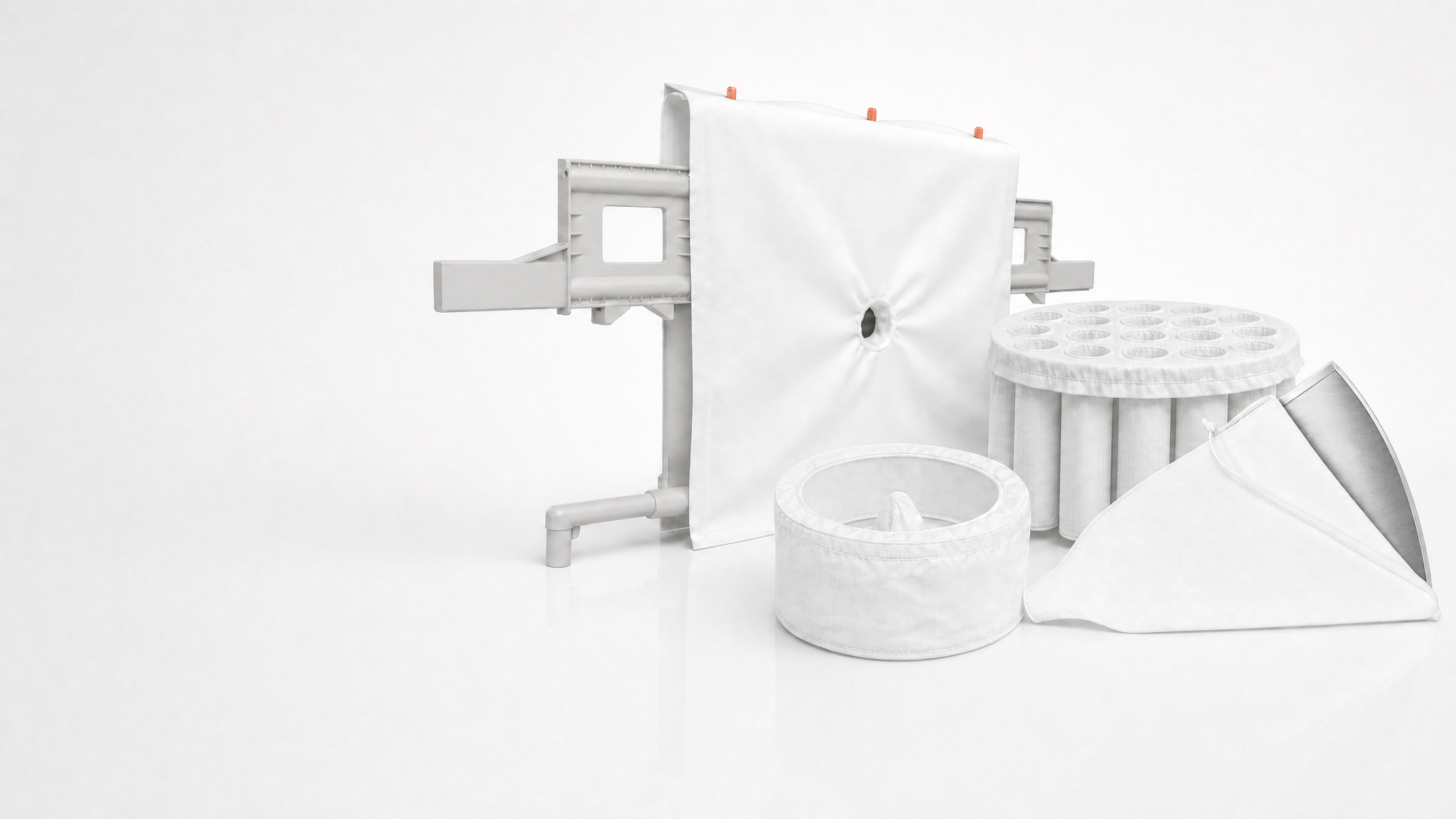
When a De Dietrich ANF system is running smoothly, the filter fabric is easy to forget — until leakage, slow drying, or poor cake release starts affecting the batch. RF-ANF fabrics are built as compatible replacement options for operators who need a seamless, welded, and FDA-conscious solution for Nutsche filtration. For plants working in pharma or fine chemicals, the right fabric can make the difference between a clean discharge and a repeated cleanup cycle.
🔑 Key Takeaways
- RF-ANF fabrics are designed for compatible use in De Dietrich ANF Nutsche filters.
- Welded and seamless constructions help reduce stitch-related contamination and edge leakage.
- Fit, permeability, and sealing geometry matter more than fabric name alone.
- Correct installation and start-up checks protect cake release, dryness, and cloth life.
⚙️ How RF-ANF Fabrics Fit De Dietrich ANF Systems
In a Nutsche filter, fabric fit is not just about covering the basket — it is about sealing cleanly at the rim, staying stable during agitation or pressure steps, and draining without dead zones. That is why operators using Nutsche filter equipment in pharmaceutical processing usually look for a replacement cloth that follows the original geometry closely and supports clean batch handling.
The RF-ANF Series for Nutsche pharma applications is intended for this type of retrofit work. In practice, that means matching the usable filtration area, the clamping zone, and the discharge behavior so the fabric behaves like a true plant component, not just a piece of media.
💡 Tip: For the fastest first-time fit, send the old fabric, basket dimensions, process temperature, and a photo of the sealing edge. That saves time on remakes and helps confirm the correct compatible design.
🔬 What Operators Need From a Pharma-Grade Replacement Fabric
In ANF service, the cloth has to do more than retain solids. It must support cleanability, low contamination risk, repeatable drainage, and reliable cake release. If the cloth is stitched in the wrong place or the edge finish is weak, you may see product carryover, drip leakage, or poor discharge at the end of the cycle. For that reason, many operators review issues such as contamination from stitching, drip leakage, and cake release problems before ordering a replacement.
- Sealing edge: Must sit flat without folds, gaps, or stress points.
- Surface finish: Should support release without trapping fine product.
- Material suitability: Must match temperature, chemistry, and cleaning regime.
- Construction: Welded seams are often preferred where contamination control matters.
⚠️ Caution: If your process uses solvents, dust, or dry product handling, review static control and grounding before start-up. For ATEX-related concerns, see our guidance on antistatic and ATEX risks.
📊 Seamless, Sewn, or Welded? A Practical Operator Comparison
When replacing a cloth in a De Dietrich ANF unit, the real question is often not “which fabric?” but “which construction keeps the process stable?” The table below shows how operators usually think about the options.
| Option | Best For | Operator Benefit | Watch Out For |
|---|---|---|---|
| Seamless / welded RF-ANF | Clean service, pharma, high-value batches | Reduced contamination risk and cleaner edge sealing | Requires correct dimensional matching |
| Conventional sewn cloth | Less critical processes | Simple construction and broad availability | Stitch lines can become weak points |
| Basic retrofit fabric | Short-term utility use | Fast replacement | Can cause leakage, poor release, or shorter life |
🛠️ Installation and Start-Up Checks That Prevent Early Failures
Most fabric problems show up early: the first batch reveals wrinkles, edge lift, drip lines, or tight spots that were not obvious during installation. A careful fit check is the easiest way to avoid clogging and premature cloth wear.
Remove residue, check for burrs, and confirm the rim is smooth before fitting the cloth.
Lay the cloth into position without tension first, then verify that the edge follows the geometry evenly.
Make sure the welded edge or fastening line sits flat and does not create a fold path for leakage.
Check drainage, cake formation, and discharge behavior before resuming full production.
Rule of thumb: If the cloth looks tight before the first fill, it is often too tight after the basket warms up or the cake loads.
✅ What to Check Before Ordering a Replacement
A good replacement order starts with plant data, not guesswork. If you document the process conditions clearly, the new cloth is much more likely to fit correctly and deliver the same drainage profile from batch one.
📋 Pre-Order Checklist
- Machine model and basket dimensions
- Product chemistry, temperature, and cleaning media
- Required permeability or drainage behavior
- Any FDA or cleanliness constraints
- Observed failure mode: leakage, clogging, or poor release
- Photo of the current sealing and clamping area
For operators unsure whether the issue is cloth design or process conditions, it helps to compare the symptoms with the machine behavior. A cloth that cakes up too quickly may point toward clogging, while difficult discharge usually points toward release issues. If you need a broader view across equipment types, our compatible ranges for belt filters and centrifuge filter fabrics show how the right media construction changes with the machine.
📩 Need Help Choosing the Right Fabric?
Our technical team at R+F FilterElements can help you find the perfect filter fabric for your specific application. Get in touch for a free consultation — we will recommend the right solution based on your machine, process, and operating conditions.