
Sewage Sludge Thickening
Filter Belts for Gravity Belt Thickeners
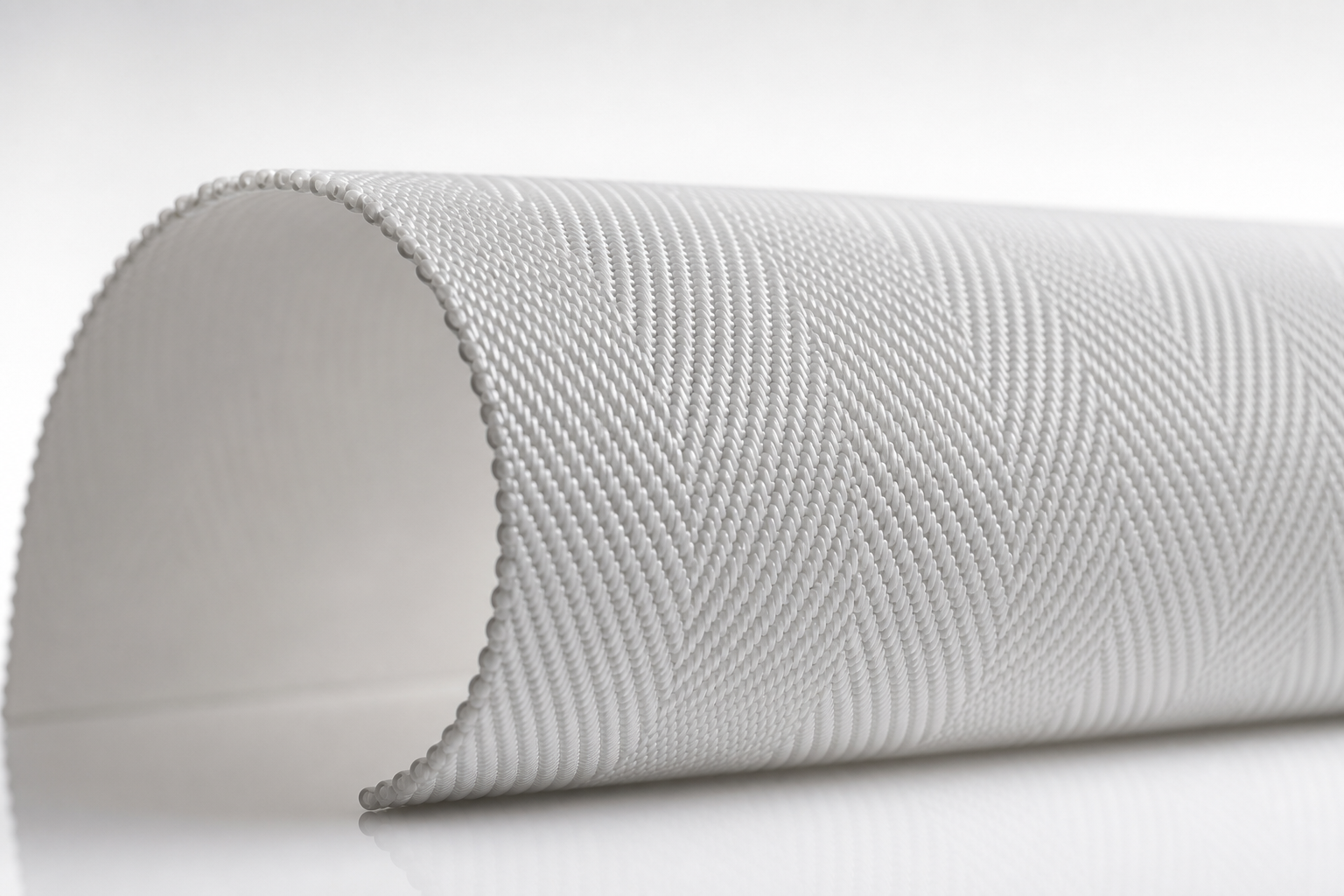
Replacement filter belts for gravity belt thickeners in municipal wastewater treatment — in two designs: a robust standard twill belt comparable to your current belt, or a high-drainage belt for faster dewatering and easier washing. Made to your machine, with clipper seam and reinforced edges.
In short
A gravity belt thickener needs a woven polyester filter belt that drains free water quickly, retains flocculated solids and can be cleaned continuously with spray water. R+F FilterElements supplies two designs for this duty: RF-B-FP-SW17-36 (standard twill, like-for-like replacement) and RF-B-FD-A7-68 (high-drainage, higher hydraulic capacity, less blinding) — both with stainless steel clipper seam and resin-reinforced edges, manufactured to the belt dimensions of your machine.
The Application: Thickening Municipal Sewage Sludge
In a gravity belt thickener, polymer-conditioned sludge is distributed onto a slowly moving filter belt. Free water drains through the belt by gravity while ploughs turn the sludge to open new drainage paths. At the discharge end the thickened sludge leaves the belt, and the belt is cleaned by water spray bars on the return run. A typical municipal duty: from approx. 0.5–1 % dry solids to approx. 5 % dry solids.
Gravity drainage
Free water must pass the belt fast
Solids capture
Flocs retained, clear filtrate
Washability
Continuous cleaning with spray water
Clipper seam
Quick installation on the machine
Typical Machines & Installed Belts
Gravity belt thickeners in municipal plants usually run a single endless belt with clipper seam, belt washing with water and — depending on the design — without polyurethane guide strips. Belt lengths of several metres and widths of up to around three metres are common.
Often the original belt data sheet is no longer available. Typical information from old shipping documents looks like this — and it is enough for us to start:
Example: existing belt description
- Designation: TPF-8/7 belt for gravity belt thickener
- Seam: stainless steel clipper seam
- Edges: resin-reinforced
- Connection: metallic connecting pin / cable
- Cleaning: water spray bars
Third-party designations are used for identification only. R+F FilterElements is an independent manufacturer and not affiliated with any machine or belt manufacturer.
Our Solution: Two Belt Designs
We usually quote both versions so you can decide between a proven like-for-like replacement and a performance upgrade for the drainage zone.
Option 1 — Standard design
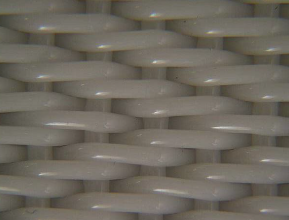
RF-B-FP-SW17-36
Comparable to the belts typically installed on gravity belt thickeners.
- Robust twill weave with high mechanical stability
- Proven in municipal sewage sludge thickening and dewatering
- Balanced solids retention and filtrate clarity
- Long service life under continuous operation
- Weave
- Twill
- Warp / weft
- PET / PET
- Yarn Ø warp / weft
- 0.7 / 0.9 mm
- Air permeability
- 400 cfm
- Thickness
- 2.1 mm
- Weight
- 1550 g/m²
Best for: like-for-like replacement when the current belt performs well.
View belt family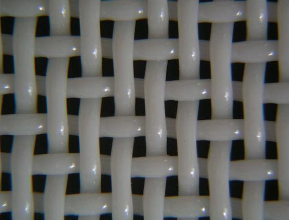
Option 2 — High-drainage design
RF-B-FD-A7-68
Faster free-water release and easier washing.
- Larger fabric aperture for increased hydraulic capacity
- Reduced risk of blinding with fine or polymer-rich sludge
- Easier cleaning with standard water spray bars
- Lower weight, open structure for quick drainage
- Weave
- Twill
- Warp / weft
- PET / PET
- Yarn Ø warp / weft
- 0.9 / 0.9 mm
- Air permeability
- 680 cfm
- Thickness
- 2.01 mm
- Weight
- 1133 g/m²
Best for: higher throughput, blinding issues or limited wash-water performance.
View belt familyTypical values. Final belt selection depends on sludge, polymer conditioning and machine settings.
Standard vs. High-Drainage at a Glance
| Criterion | RF-B-FP-SW17-36 (Standard) | RF-B-FD-A7-68 (High-drainage) |
|---|---|---|
| Fabric structure | Dense, robust twill | Open twill, larger aperture |
| Air permeability | 400 cfm | 680 cfm |
| Hydraulic capacity | Standard | Increased |
| Blinding tendency | Low – normal | Reduced |
| Washability | Good | Very good |
| Typical choice | Like-for-like replacement | Upgrade for throughput / blinding |
What We Need for Your Quotation
- •Machine type (gravity belt thickener)
- •Belt length × width
- •Seam type (e.g. stainless steel clipper seam)
- •Edge finish and connecting pin / cable
- •Designation of the current belt (if known)
- •Sludge type and dry solids in / out
- •Wash-water system (spray bars, pressure)
- •Number of belts required
No data sheet? Photos of the machine and the installed belt are often enough for a first assessment.
FAQ — Gravity Belt Thickener Filter Belts
Which filter belt is used on a gravity belt thickener?
Gravity belt thickeners typically run a woven monofilament polyester (PET) belt in twill weave, joined with a stainless steel clipper seam. R+F offers two designs: the standard twill belt RF-B-FP-SW17-36 for like-for-like replacement and the high-drainage belt RF-B-FD-A7-68 for higher hydraulic capacity and easier washing.
What does a gravity belt thickener achieve in municipal sludge treatment?
A gravity belt thickener removes free water from thin sludge by gravity drainage on a moving filter belt after polymer conditioning. In municipal plants a typical duty is thickening excess sludge from approx. 0.5–1 % dry solids to approx. 5 % dry solids — the filter belt has a direct influence on drainage rate, solids capture and washability.
I only have an old belt designation such as TPF-8/7 — can you still supply a replacement?
Yes. Many plants only have shipping documents with a designation such as "TPF-8/7", plus information on seam and edges. Together with the belt length, width and your operating data (sludge type, dry solids in/out, wash water), this is enough for us to recommend a matching R+F belt.
Standard or high-drainage belt — which one should I choose?
If your current belt performs well, the standard twill belt RF-B-FP-SW17-36 is the safe like-for-like choice. If the drainage zone is a bottleneck, the belt blinds or spray-bar cleaning is difficult, the high-drainage belt RF-B-FD-A7-68 offers a more open structure and higher air permeability. We are happy to quote both versions for comparison.
Which seam and edge designs are available?
Belts for gravity belt thickeners are usually supplied endless-ready with a stainless steel clipper seam and connecting pin or cable, and with resin-reinforced (sealed) edges against fraying. Seam and edge are configured to your machine — tell us what is installed today.
Get a Quote for Both Versions
Send us your belt dimensions and what you know about your current belt — we quote the standard and the high-drainage design side by side.
Request a Quotation