
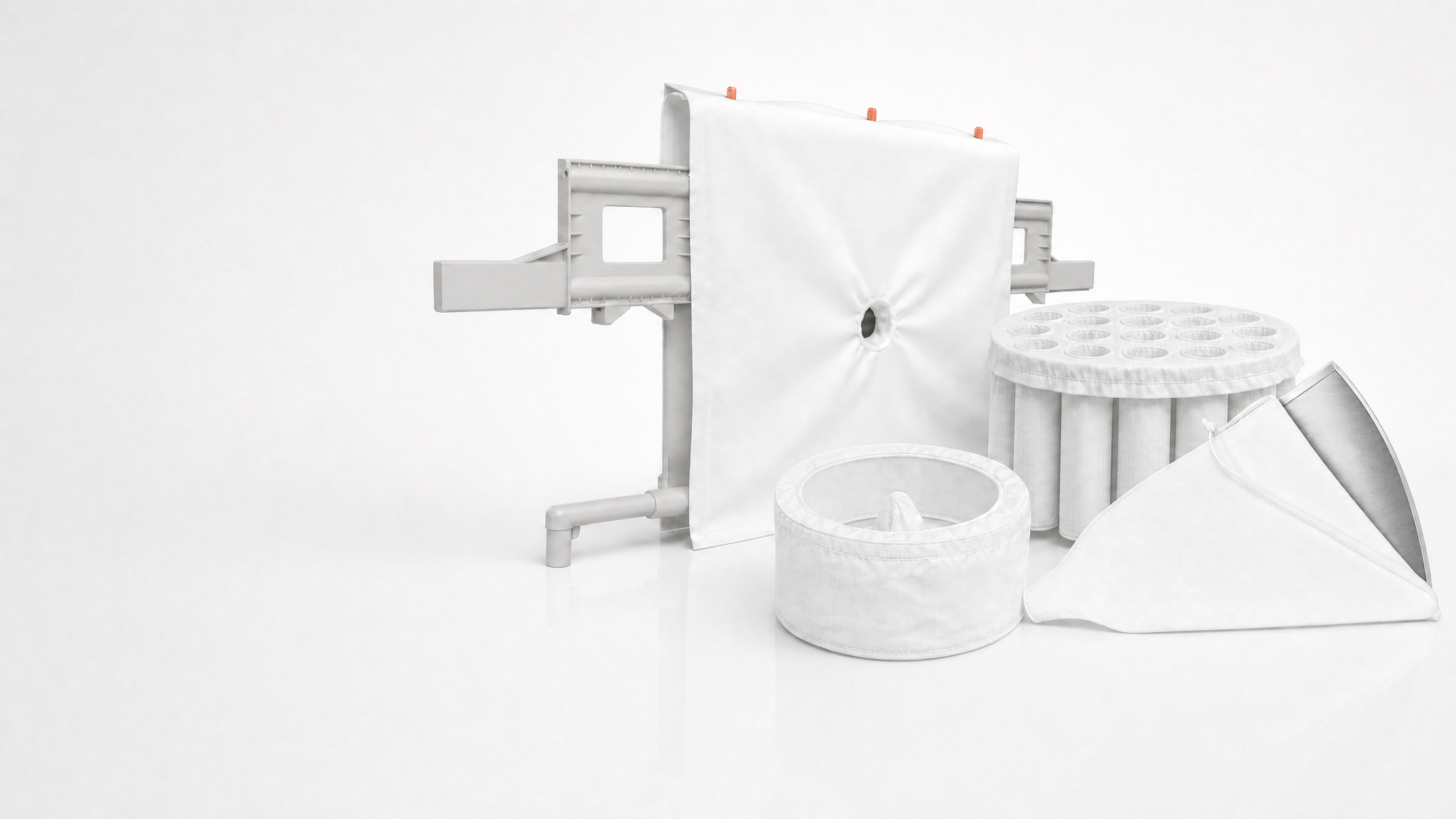
On a belt filter, the fabric is doing more than “holding solids back” — it controls how fast free water drains, how evenly the sludge layer spreads, and how cleanly the cake releases at discharge. If you run municipal sludge or tough industrial sludge, the right fabric choice can improve throughput, reduce carryover, and make the press easier to keep stable shift after shift.
For operators, the key is not choosing the most open fabric possible, but matching permeability, thread count, and weave pattern to the actual sludge behavior. The right RF-BF Series belt filter fabrics can make a visible difference in drainage, washability, and cake release on your belt filter.
🔑 Key Takeaways
- Permeability drives drainage speed, but too much openness can let fines pass or create unstable cake formation.
- Thread count affects support, surface smoothness, and how easily sludge particles blind the fabric.
- Weave pattern influences cake release, washing efficiency, and how the belt performs with sticky sludge.
- The best fabric is usually the one that balances drainage, solids capture, and cleanability for your specific sludge.
⚙️ Why Belt Fabric Matters So Much in Dewatering
In wastewater and process plants, sludge changes from day to day. Municipal biosolids, DAF sludge, and industrial sludges behave differently under pressure, shear, and washing. That means the belt fabric must do three jobs at once: drain water quickly, keep solids where they belong, and release the cake without forcing the operator to fight blinding and buildup.
If your belt is underperforming, the issue is often not the machine alone. It may be a fabric that is too tight for fast drainage, too open for fine solids, or too rough for sticky sludge release. For operators looking at broader system compatibility, see our pages on wastewater applications and filter cloth clogging.
💡 Tip: When you test a new belt fabric, change one variable at a time — permeability first, then weave, then thread count. That makes it much easier to see what actually improved the cake.
🔬 Permeability, Thread Count, and Weave Pattern Explained
These three factors work together, so it helps to think like an operator rather than a catalog reader. A fabric with high permeability drains quickly, but if the structure is too open it may lose fines or form a weak cake. A higher thread count often improves retention and support, but it can slow drainage if the fabric becomes too dense.
| Fabric factor | What it changes | Best for | Operator outcome |
|---|---|---|---|
| High permeability | Faster free-water drainage | Sludges with good floc formation | Higher throughput, but watch solids carryover |
| Higher thread count | More surface support and finer retention | Fine or weakly flocculated sludge | Cleaner filtrate, slower initial drainage |
| Balanced weave | Moderate drainage with better stability | Mixed municipal sludge | Good compromise between dryness and release |
| Special release-oriented weave | Improves discharge and washability | Sticky industrial sludge | Less carryback and easier belt cleaning |
As a rule, permeability controls how fast water gets out, while thread count and weave control how the cake forms and releases. If your plant struggles with sticky sludge, you may get more benefit from improving release than from simply opening up the fabric.
Rule of thumb: If the belt drains well but the cake sticks, don’t immediately go to a more open fabric. First look at weave structure and surface behavior, because cake release is often the real bottleneck.
Decision Point: Open Drainage or Better Retention?
📊 Matching the Fabric to Municipal and Industrial Sludge
Municipal sludge often benefits from a fabric that balances drainage and cake release, especially when polymer conditioning is stable. Industrial sludge can be more demanding: some sludges blind the surface quickly, while others need a fabric that can handle high fines without losing drainage performance.
📋 Fabric Selection Checklist
- Sludge type: municipal, biological, chemical, or mixed industrial
- Floc strength: stable, fragile, or highly variable
- Filtrate target: clarity versus maximum throughput
- Cake behavior: sticky, brittle, or easy-release
- Cleaning cycle: spray water, brush cleaning, or chemical wash
⚠️ Caution: A fabric that is too open can look great at first because throughput rises, but it may also increase solids passage, reduce cake consistency, and cause downstream handling issues.
For sticky or high-fines sludges, the RF-SB Series spiral belt solutions can be a useful option when your process needs more release-focused behavior. For standard belt press duties, the RF-BF Series belt filter fabrics remain the first choice for many wastewater operators.
🛠️ How to Tune Your Belt Filter for Better Dewatering
Once the fabric is installed, the real work begins on the machine. Small adjustments in tension, wash efficiency, and feed conditioning can reveal whether the fabric is a true match or just a temporary improvement. The goal is stable cake formation with the least possible carryover and the least operator intervention.
Measure cake dryness, filtrate clarity, belt wash water use, and any visible blinding before changing the fabric.
Try permeability and weave changes before increasing polymer or washing pressure. Fabric geometry often fixes the root cause.
Run the fabric under normal sludge variability, not just during a clean or easy-shift condition.
💡 Tip: If wash water demand keeps rising, check whether the fabric is blinding from fines. In many cases, a cleaner weave or a more suitable surface structure reduces washing better than increasing spray pressure.
💡 Common Mistakes Operators Can Avoid
Most belt dewatering problems do not start with a broken machine. They start with a mismatch between sludge, fabric, and operating settings. If you are troubleshooting low throughput or poor cake release, think first about whether the fabric is helping or fighting the process.
- Choosing the most open fabric available and expecting it to solve every drainage problem.
- Ignoring cake release when the real issue is a sticky surface that carries sludge back into the cycle.
- Changing polymer and fabric at the same time, which makes troubleshooting much harder.
- Overlooking cleaning performance on belts that run with high fines or oily industrial sludge.
When you need a practical starting point, use the fabric to restore balance first, then refine polymer dose and machine settings. That approach is especially effective in wastewater treatment lines where sludge quality shifts across the week.
📩 Need Help Choosing the Right Fabric?
Our technical team at R+F FilterElements can help you find the perfect filter fabric for your specific application. Get in touch for a free consultation — we will recommend the right solution based on your machine, process, and operating conditions.