
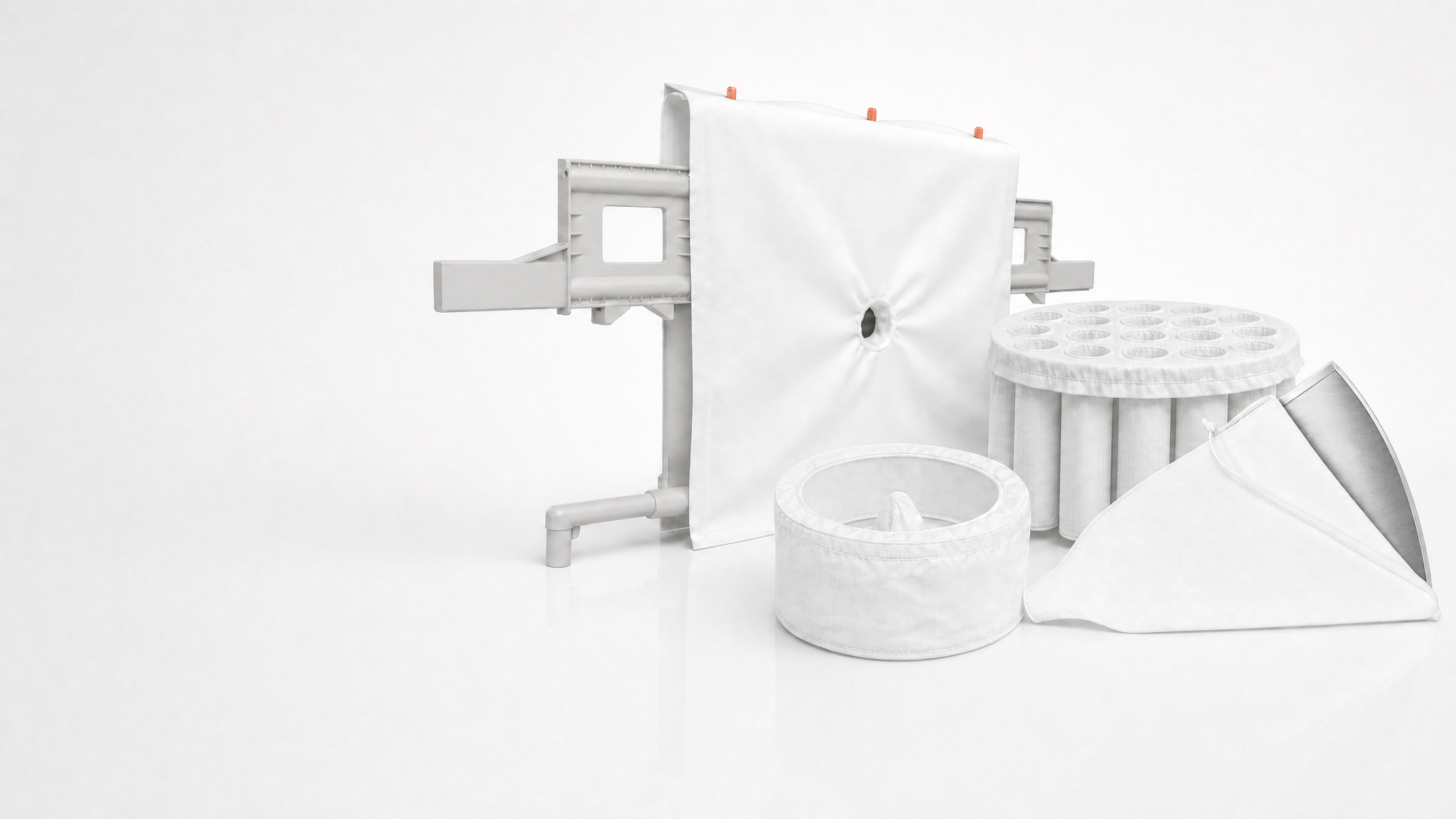
In a fluid bed dryer, the filter bags do more than keep fines out of the exhaust stream — they directly affect airflow, product quality, and cleaning efficiency. If you run an FBD every day, good cleaning and maintenance discipline can extend bag life, reduce downtime, and keep pressure drop under control.
🔑 Key Takeaways
- Use pulse-jet cleaning correctly to prevent blinding and airflow loss.
- Wash bags only when needed, and always with the right temperature and chemistry.
- Inspect seams, cuffs, and fabric surfaces at fixed intervals to catch wear early.
- Choose the right fabric construction for your product, dust load, and cleaning cycle.
⚙️ Why FBD Filter Bag Maintenance Matters
In a fluid bed dryer, a loaded or damaged bag can quickly lead to higher differential pressure, reduced drying performance, and product contamination risk. If you are troubleshooting recurring filter cloth clogging or short service life, the bag itself is often only part of the story — cleaning frequency, product properties, and operating conditions all matter.
For many plants, the best starting point is the right fabric selection for the machine. The fluid bed dryer machine setup and the bag construction should match your fines load, temperature, and cleaning strategy. If you also run sanitary or containment-sensitive processes, it may be worth comparing the material behavior of RF-FBD Series fluid bed dryer filter bags with other engineered fabric solutions.
💡 Tip: Track differential pressure trends after every cleaning cycle. A bag that no longer recovers to its normal baseline is often the first sign of blinding or hidden damage.
🔬 Pulse-Jet Cleaning: What Good Practice Looks Like
Pulse-jet cleaning is usually the first line of defense against bag fouling. The goal is not to “blast” the fabric, but to dislodge cake or dust without overstressing the seams and fiber structure.
Use only as much pulsing as needed to maintain stable airflow. Excessive pulsing can shorten fabric life.
Keep the pulse air within the machine and bag specification. Overpressure can damage seams and reduce consistency.
After each pulse cycle, confirm that pressure drop returns to the expected operating range.
If some bags stay visibly loaded, check air distribution, nozzle alignment, and bag fit.
Rule of thumb: If you are pulsing more often but getting less pressure-drop recovery, the bag is usually telling you it needs inspection, washing, or replacement.
When pulse-jet cleaning is not enough
If a sticky formulation, hygroscopic product, or fine adhesive dust starts to build a stubborn layer, pulse cleaning alone may not restore performance. That is when manual washing or a deeper maintenance review becomes necessary.
🛠️ Manual Washing: Safe Methods for Extending Bag Life
Manual washing can extend bag life, but only if you avoid aggressive treatment. The wrong detergent, excessive heat, or rough handling can do more harm than the contamination you are trying to remove.
| Cleaning method | Best for | Main risk | Operator note |
|---|---|---|---|
| Pulse-jet cleaning | Dry, free-flowing dust | Overpulsing and fabric fatigue | Use the lowest effective pulse intensity |
| Manual washing | Sticky residue and stubborn film | Heat, chemicals, and abrasion | Rinse gently and dry completely before reuse |
| Replacement | Severe wear or damage | Unexpected downtime if delayed too long | Keep spare bags ready for critical lines |
⚠️ Caution: Never use harsh brushes, sharp tools, or uncontrolled high-pressure washing on FBD filter bags. You can damage the fabric surface, weaken seams, and create premature leakage paths.
For plants with stricter material traceability or product-contact expectations, the fabric selection should be reviewed alongside the operating procedure. In some cases, it helps to configure your fluid bed dryer filter fabric online so you can generate a pre-filled, non-binding specification and inquiry for the exact bag requirements.
📋 Manual Washing Checklist
- Confirm the bag is compatible with offline washing
- Use a detergent suitable for the product residue
- Keep water temperature within the fabric limits
- Rinse until no foam or residue remains
- Air-dry fully before reinstalling
📊 Inspection Intervals That Prevent Unexpected Failures
Bag inspection should be routine, not reactive. A simple interval plan helps operators catch seam wear, abrasion, and fit issues before they become production stops.
Recommended inspection focus areas
- Seams and stitching: look for fraying, loose thread, or opening lines.
- Cuffs and mounting points: check for leakage, deformation, or poor sealing.
- Fabric surface: inspect for polishing, abrasion, staining, or embedded particles.
- Fit and tension: make sure the bag hangs correctly without twisting or folding.
💡 Tip: If one bag in a set fails early, inspect the surrounding bags too. Uneven airflow or mechanical contact often affects a whole zone, not just one component.
✅ How to Extend Bag Life in Daily Operation
Long bag life is usually the result of small decisions made consistently. The best operators combine stable process conditions, disciplined cleaning, and early inspection.
Avoid rapid changes in feed rate, air volume, or temperature that can overload the fabric.
Early intervention is easier on the fabric than recovery after heavy buildup.
Drying dusty minerals is very different from processing fine pharmaceutical powders or hygroscopic products.
Plan bag replacement during scheduled maintenance instead of waiting for leakage or a torn seam.
If your line also handles challenging powders in other equipment, the same maintenance mindset applies to other fabric systems such as RF-CF Series centrifuge filter fabrics or nutsche filter applications. The operating environment changes, but the principle is the same: correct fabric, correct cleaning, correct inspection.
📋 Pre-Start Check After Reinstallation
- Bag is seated correctly and evenly
- No trapped folds or twists are present
- Seals are tight and clean
- Pulse system is functioning normally
- Initial pressure drop is within the expected range
📩 Need Help Choosing the Right Fabric?
Our technical team at R+F FilterElements can help you find the perfect filter fabric for your specific application. Get in touch for a free consultation — we will recommend the right solution based on your machine, process, and operating conditions.
To speed up selection, you can also configure your fluid bed dryer filter fabric online and receive a pre-filled, non-binding specification and inquiry in just a few steps.