
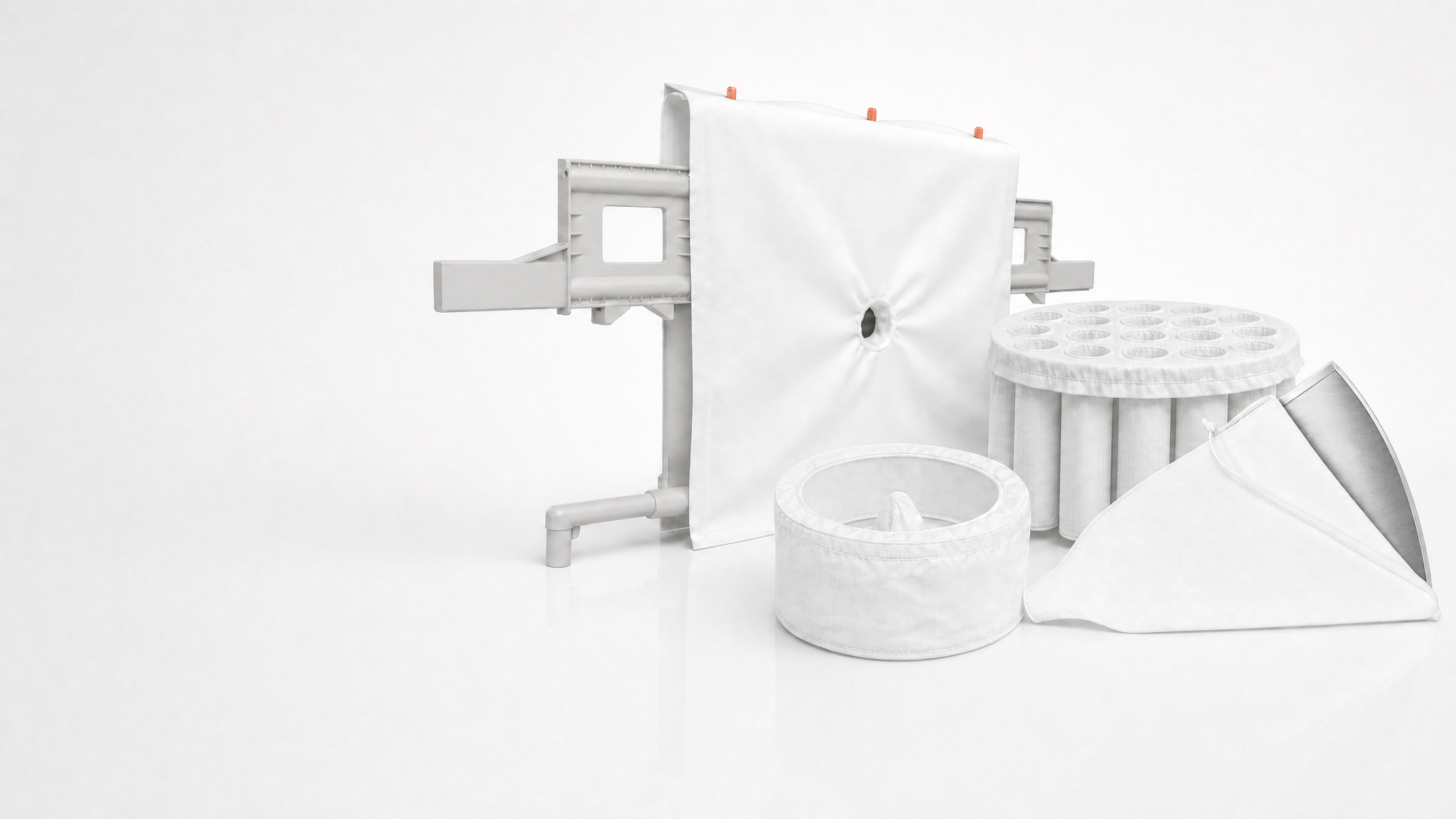
If you run a belt filter, the belt is not just a wear part — it controls drainage, cake formation, and how hard your operators have to work on cleaning and maintenance. When choosing between a woven belt and a spiral link belt, the real question is simple: do you need finer retention and stable cake support, or maximum open area and fast drainage?
This guide compares RF-BF woven belts and RF-SB spiral link belts from an operator’s point of view, so you can match the fabric to your process, not the other way around.
🔑 Key Takeaways
- RF-BF woven belts are a strong choice when you need better particle retention and a smoother cake surface.
- RF-SB spiral link belts usually offer higher open area, faster drainage, and easier wash-down.
- The best belt depends on your solids, cake stickiness, wash water availability, and target throughput.
- For many plants, the right answer is not “better belt” but better match to operating conditions.
⚙️ Woven vs. Spiral Link: What Changes on the Machine?
On paper, both belts do the same job: they support the slurry, allow liquid to pass, and carry the cake through the dewatering zone. In daily operation, though, the surface structure makes a big difference.
RF-BF woven belts
Woven belts are the better fit when you want a more uniform surface and stronger solids support. That can help if your cake is fine, soft, or prone to smearing through a more open belt. In practical terms, many operators use woven belts when they want more controlled filtration and a more stable discharge pattern.
RF-SB spiral link belts
Spiral link belts are designed with a more open structure, which usually means faster drainage and less resistance to wash water. They are often preferred when throughput is high, the cake releases well, and you want to keep cleaning intervals short. If you run a process with frequent wash-downs, that easy-clean advantage can save real shift time.
💡 Tip: If your belt keeps blinding too quickly, look at the cake characteristics first. A belt with more open area can help drainage, but only if the solids are not too fine to escape or lodge in the structure.
📊 Side-by-Side Comparison for Operators
Use the table below as a quick field guide when you are deciding between the two belt types for a belt filter line.
| Factor | RF-BF Woven Belt | RF-SB Spiral Link Belt | Operator Takeaway |
|---|---|---|---|
| Open area | Moderate | High | More open area usually means faster liquid removal. |
| Drainage speed | Controlled, steady | Fast | Choose spiral link when cycle time is critical. |
| Cleaning ease | Good, but may need more attention | Very good | Open structures are often easier to flush and brush. |
| Lifespan | Strong when correctly matched to solids | Strong in cleaner-running applications | Service life depends heavily on abrasion, chemistry, and maintenance. |
| Cost | Usually more economical upfront | Often higher initial investment | Lower purchase price does not always mean lower total cost. |
🛠️ Where Woven Belts Usually Perform Best
RF-BF woven belts are often the safer starting point for difficult dewatering duties where retention matters more than raw drainage speed. If your process handles fine particles, compressible sludge, or products that tend to migrate through large openings, a woven surface can help keep the cake more stable.
Best fit for
- Fine solids that need better capture
- Processes where cake consistency matters
- Applications with moderate wash-water pressure
- Plants that want a durable, cost-conscious baseline solution
Rule of thumb: If you are losing solids, start with more retention. If the belt is staying clean but drainage is too slow, move toward more open area.
For operators dealing with sticking or smearing at discharge, it is also worth checking cake release issues and cloth clogging. A belt that looks “wrong” may simply be the wrong structure for the solids load.
🔬 Where Spiral Link Belts Have the Edge
RF-SB spiral link belts are built for open drainage and easy washing. That makes them attractive in lines that run hard all day and need fast recovery between cycles. If your biggest headache is buildup on the belt, a spiral link design can reduce the time spent stopping, flushing, and restarting.
Best fit for
- High-throughput dewatering lines
- Applications with frequent wash-downs
- Products that release cleanly from the belt
- Plants aiming to minimize operator intervention
⚠️ Caution: If your process involves solvent vapors, fine combustible dust, or ATEX-classified areas, the belt choice must also consider electrostatic behavior and compliance. Review antistatic / ATEX requirements before ordering.
Spiral link belts can also make sense when water use for cleaning is limited but you still need quick restoration of performance. In those cases, the open geometry helps prevent buildup from becoming a long-term maintenance problem.
✅ How to Choose in 3 Practical Steps
Ask whether the cake is fine, sticky, abrasive, or easy-releasing. This tells you whether retention or openness should dominate the design.
If drainage is slow, look toward RF-SB. If solids loss or cake stability is the issue, RF-BF is usually the better first choice.
If operators have limited cleaning time, the easier-wash spiral structure can reduce downtime and improve consistency across shifts.
📋 Pre-Order Checklist
- Solids size and stickiness confirmed
- Target cake dryness defined
- Cleaning method and water availability checked
- Operating temperature and chemistry reviewed
- Any ATEX or contamination risks identified
- Machine type and belt dimensions verified on the belt filter
For a machine-level overview, see our belt filter systems and related dewatering applications. If you are comparing belts across multiple lines, it is often useful to standardize around one structure only where the process truly supports it.
📩 Need Help Choosing the Right Fabric?
Our technical team at R+F FilterElements can help you find the perfect filter fabric for your specific application. Get in touch for a free consultation — we will recommend the right solution based on your machine, process, and operating conditions.