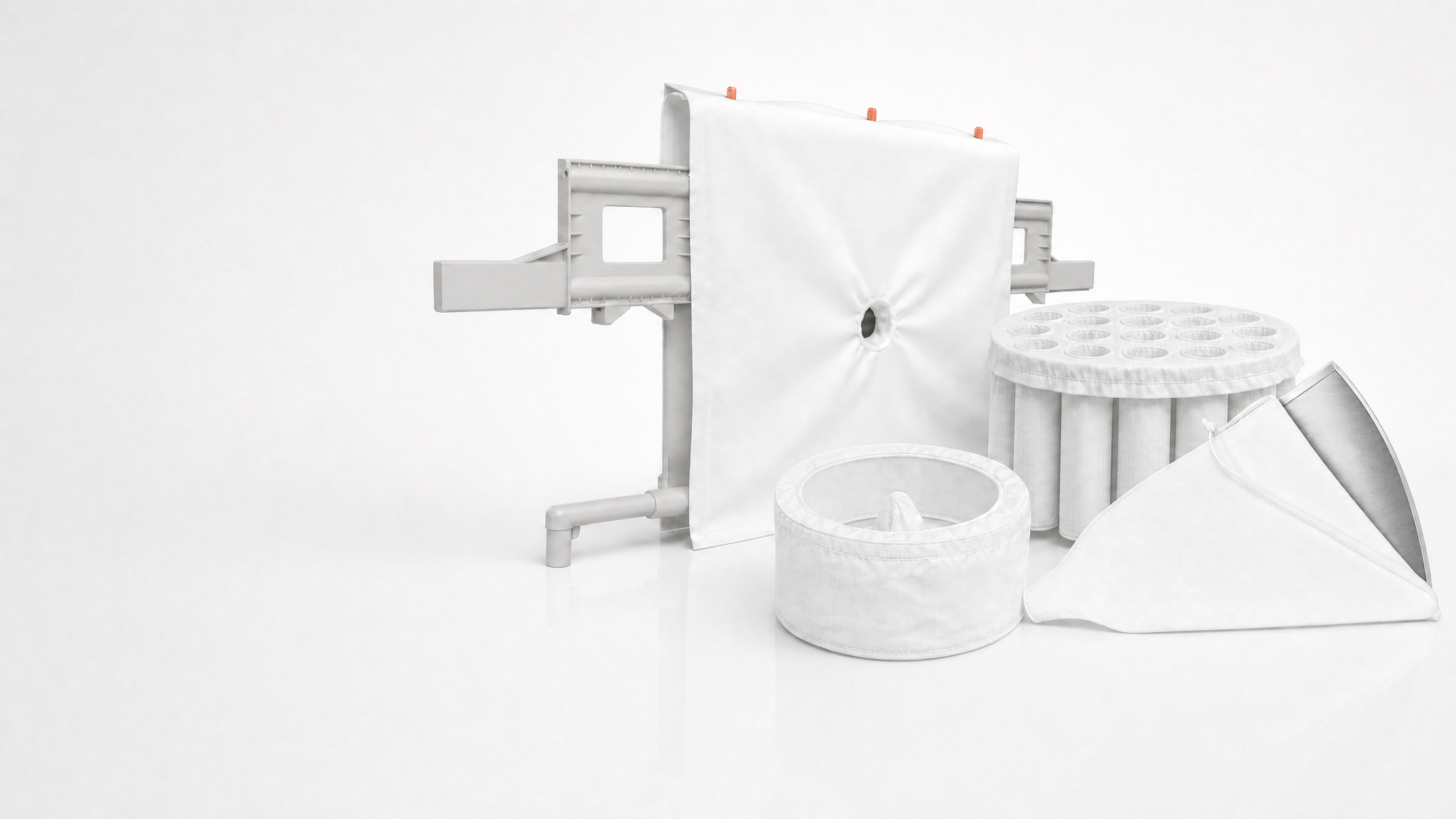
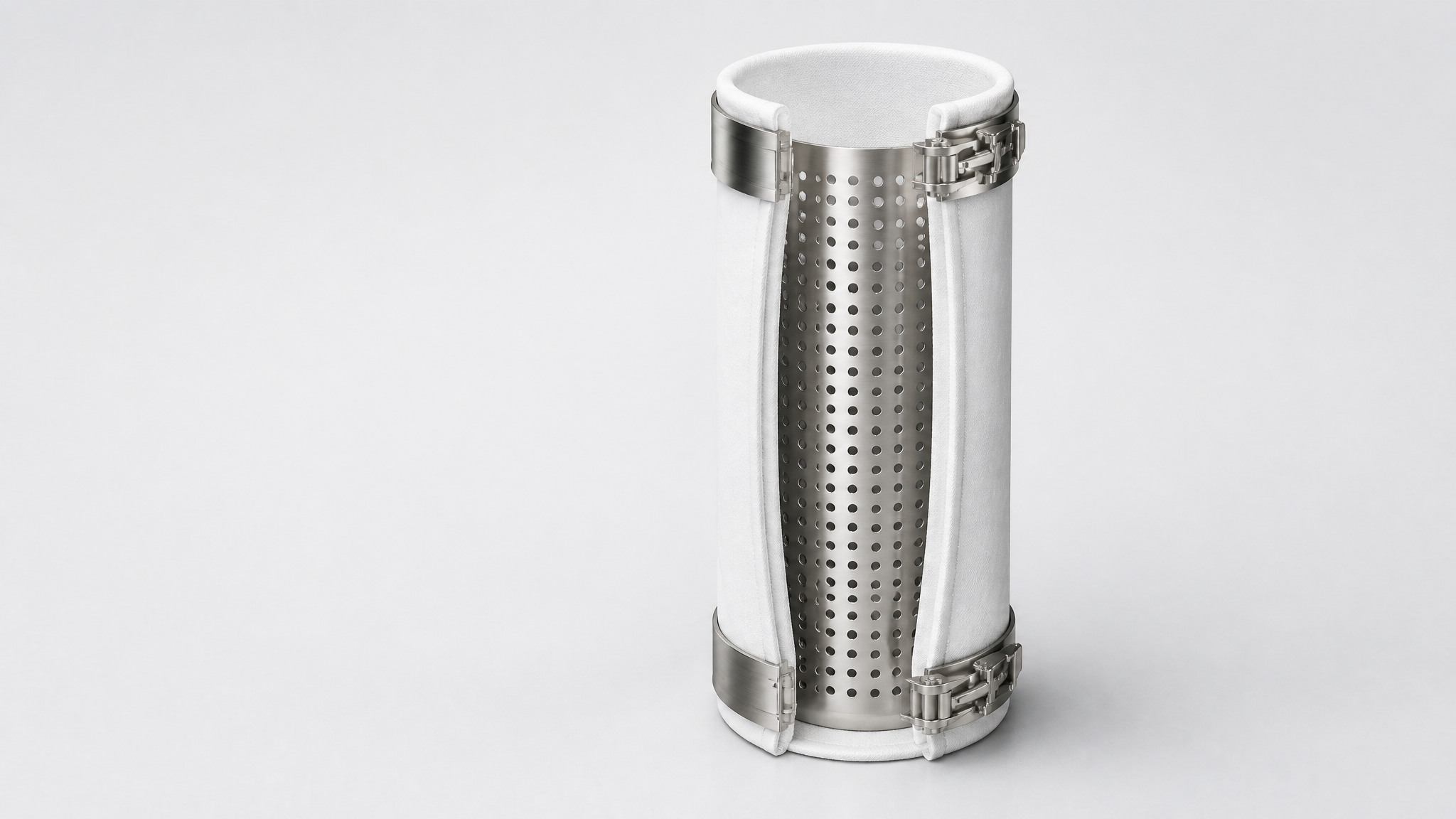
We regularly receive enquiries in which a textile filter sleeve or filter cloth is expected to separate oil from water. This deserves a clear distinction: a fabric filter is a solid–liquid filter. It retains particles – it is not an oil separator and it does not separate two liquid phases.
What a fabric filter does – and does not do
A filter fabric works through its pore structure: particles larger than the effective pore size are retained while the liquid phase passes through. An emulsified or dissolved oil, however, is not a particulate phase in the classic sense. Fine oil droplets can pass through a fabric or wet and clog it – a reliable water/oil phase separation is therefore not achieved.
Why the distinction matters
Expecting oil separation from a fabric filter risks mis-specification: inadequate discharge quality, wetted and blinded fabrics and frequent changes. Oil separation is its own process engineering task (for example gravity separators, coalescing separators or other specialised methods) – not the job of a filter fabric.
Where a fabric filter is strong instead
- Retention of sand, sludge and fine solids from water.
- Gravity dewatering, for example as a filter sleeve over a perforated pipe.
- Solid–liquid separation in filter presses, centrifuges, vacuum and belt filters.
When solids and oil occur together
In practice a mixture is common: solids-laden water with an oil fraction. A fabric filter can then handle the solids, while oil separation is left to an upstream or downstream stage designed for it. The key is to keep the tasks cleanly separated and not to expect both from a single component.
Conclusion
A filter fabric separates solids from liquids – reliably and in finely graded qualities. Oil separation, however, belongs in a process designed for it. Tell us what your water contains and we will assess the filtration task honestly – get in touch.