Filtering activated carbon in a chamber filter press is more demanding than it first appears. Activated carbon often arrives as a very fine, partly fractured grain and tends to penetrate the filter cloth or blind its pores. At the same time the carbon serves a valuable process – such as decolourisation or purification of a product stream – so any breakthrough of carbon into the filtrate is unacceptable. The filter cloth therefore has to meet two goals at once: reliable retention of the fine carbon particles and adequate throughput across the whole cycle.
Why activated carbon is so hard to filter
Activated carbon brings a broad particle distribution, from coarse grains down to the finest attrition dust. It is the fines that govern filtration behaviour: they lodge in the cloth pores and progressively build up differential pressure. Choose the cloth too open and carbon breaks through into the filtrate, clouding the product. Choose it too tight and it blinds quickly, cycle time rises and the press needs cleaning more often. The key is matching pore size to the real particle distribution – not to the mean value alone.
The most common causes of trouble
- Carbon breakthrough into the filtrate: pore size or weave construction is too open for the fines. Fix: a tighter or multi-layer fabric, with an adjusted surface if needed.
- Rapid blinding: fine carbon penetrates the pores and builds differential pressure. Fix: design surface and pore size for retention with good cleanability.
- Poor cake release: moist carbon clings to the weave. Fix: a smooth, monofilament cake-side surface.
- Declining service life: carbon residue stays in the weave after cleaning. Fix: review the cleaning regime and regenerability.
We describe related failure patterns and remedies on our pages about filter cloth clogging and contamination through the seam.
Choosing the right filter cloth for activated carbon
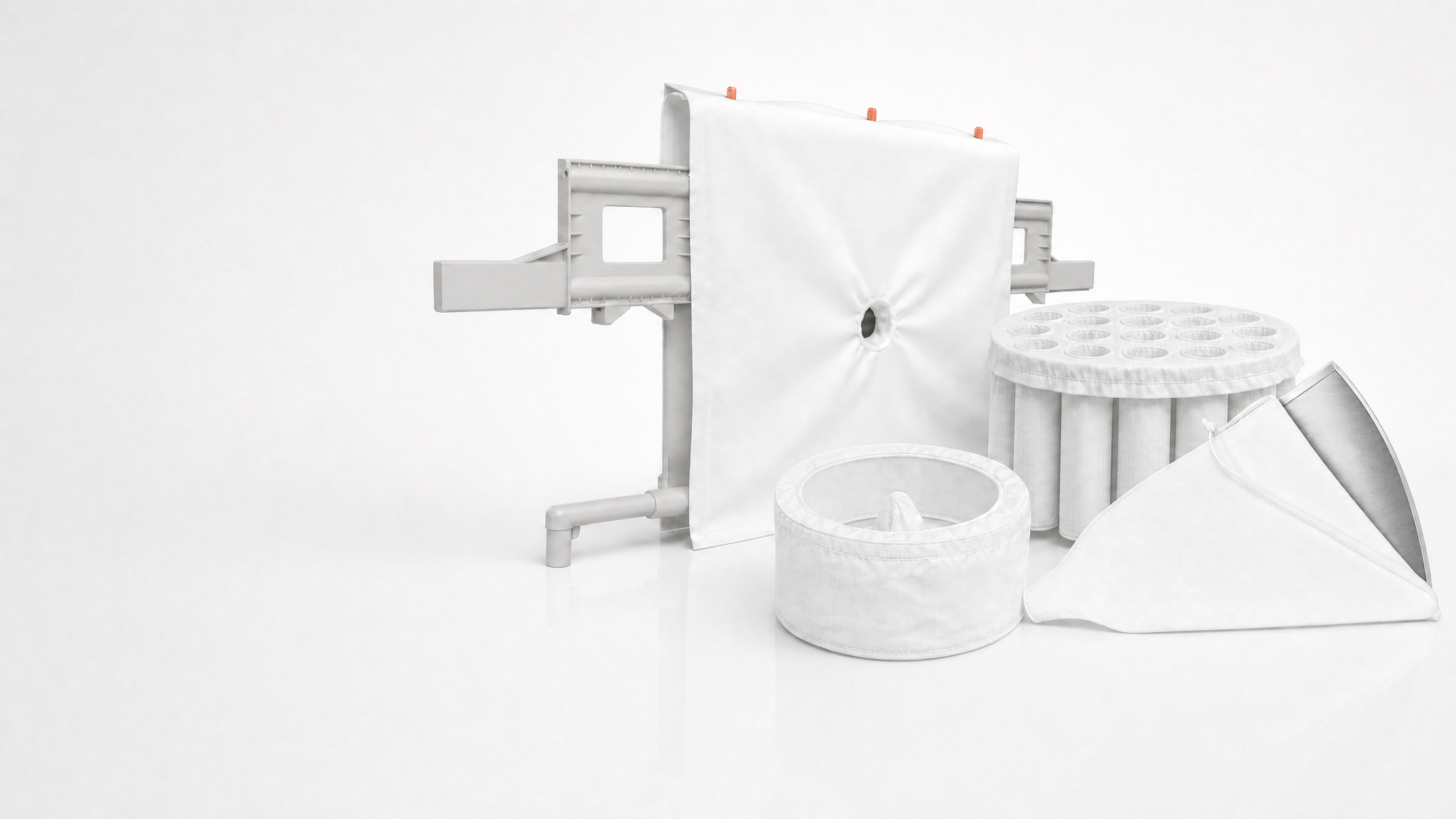
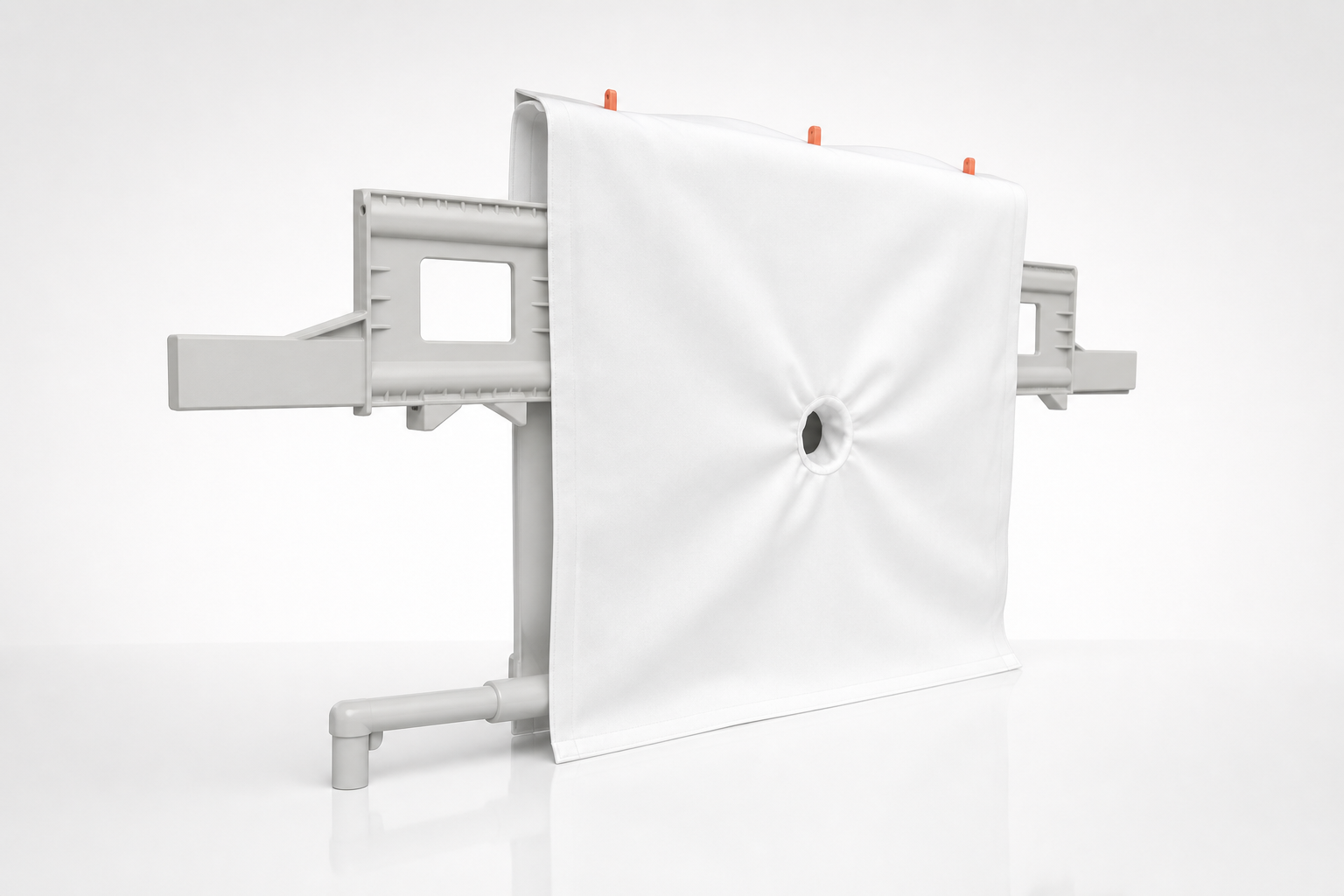
For reliable retention of fine carbon, a defined, rather tight surface is decisive – without sacrificing throughput unnecessarily. Multifilament or fine staple-fibre fabrics offer high retention, while a smooth cake-side surface improves release. In many cases a graded construction that combines fine retention with cleanability makes sense. Our RF-FF Series for filter presses offers graded fabric qualities and fabrication options for exactly this – from the seam design to edge sealing.
Material: PP, PET or a specialised polymer?
Material selection follows the process liquid, pH, temperature and cleaning chemistry. PP offers broad chemical resistance and is a solid basis for many aqueous and solvent-bearing carbon applications. PET scores mechanically, provided temperature and pH sit in a suitable range. For aggressive media or higher temperatures, specialised polymers come into consideration. We deliberately do not quote general resistance ratings before the real process data is known.
Balancing retention and throughput
Activated carbon filtration is always a compromise between maximum retention and acceptable throughput. A cloth that is too tight protects the filtrate but shortens cycle time through rapid blinding. A cloth that is too open runs long but risks carbon breakthrough. A reliable design is only possible with knowledge of the particle distribution, the solids concentration and the required filtrate clarity. Often a sample trial with several fabric qualities is the fastest route to a robust operating point.
What we need to make a recommendation
For a reliable recommendation we need the type of activated carbon (granular, ground, powdered) and its particle distribution, the carrier liquid with pH and temperature, the solids content, the required filtrate clarity, the press type with plate format and operating pressure, the currently used cloth and its failure pattern, and the cleaning process.
Conclusion
Successful activated carbon filtration stands or falls with retention of the fines at an economical throughput. With the right combination of pore size, weave construction, material and cleaning regime, carbon breakthrough and premature blinding can be avoided. A structured starting point is our application page on activated carbon filtration, the overview of the filter press and the filter press cloth configurator. We are happy to analyse your specific case – get in touch.