
Application
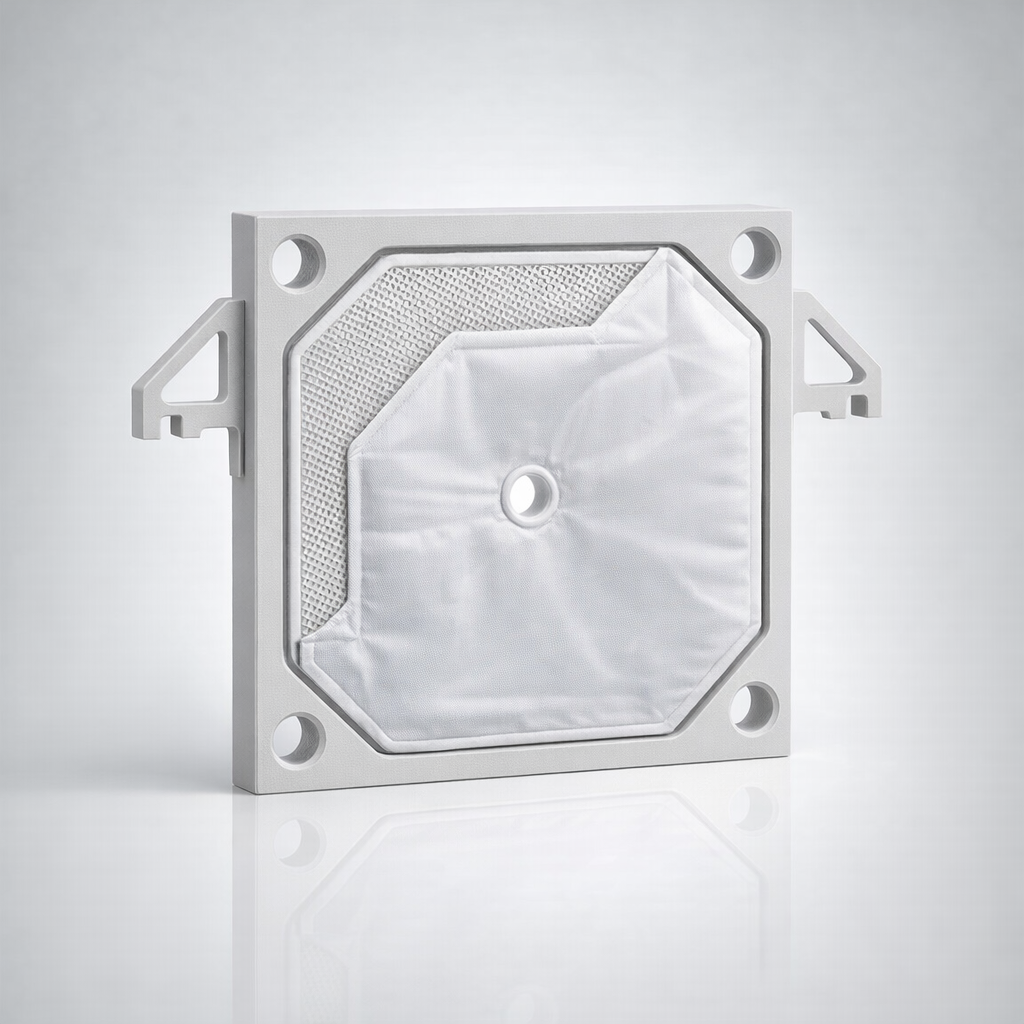
Filter Cloths for Wax Filtration in Chamber Filter Presses
Poor cake release, blinded cloths or long cycle times when filtering wax? We analyse the process and the filter cloth and develop a fabric solution engineered for clean cake release, low blinding and stable filtration performance.
The Challenge with Wax
Filtering wax and wax-bearing suspensions places special demands on filter cloths for chamber filter presses. While many solid–liquid separations focus on filtrate clarity and throughput, with wax a further factor often decides the economics of the process: the reliable detachment of the filter cake.
If the wax cake sticks to the cloth when the press opens, cleaning and cycle times increase and residual wax can partly seal the pores. The result is falling throughput, rising filtration pressure and an earlier cloth change.
Wax is temperature-sensitive: too warm and the cake is soft and tacky; too cold and viscosity rises while crystals blind the weave. The right cloth must therefore always be selected together with the process — never from air permeability alone.
Typical Wax Filtration Challenges
What We Optimise Filter Cloths For
For wax applications the filtration fineness alone is not decisive. These five objectives guide the technical selection and the fabric engineering.
Excellent Cake Release
A smooth, defined cake surface, monofilament yarns and a satin weave on the cake side give the wax fewer points to anchor to — usually the central benefit in wax filtration.
Adequate Filtrate Clarity
The building cake carries much of the separation. We match pore size to crystal size and clarity target — not too fine (blinding) and not too coarse (breakthrough).
Low Blinding & Regenerability
Wax residue can penetrate and solidify in the weave. We optimise for stable permeability over the service life and reliable regeneration after each cycle.
Temperature & Chemical Resistance
Temperature is a process parameter and a selection criterion. We match the polymer (PP, PET, PPS, PTFE) to the real filtration temperature, chemistry and cleaning regime.
Press Geometry & Fabrication
Through-cloth, overhang or single cloth, plate format and hole pattern, neck, edge sealing and reinforcement, backing cloth and seam design all belong to a working solution.
Cake Structure Support
Crystallisation, cooling profile and solids content shape the cake. We advise on the fabric and, where useful, on filtration aids so the cake stays permeable and releasable.
Common Causes of Poor Cake Release with Wax
Poor cake release usually has a specific, addressable cause. This overview links the typical root causes to the direction we take when optimising the cloth and the process.
| Cause | What happens | Optimisation approach |
|---|---|---|
| Filtration temperature too high | Wax is soft and tacky and adheres to the cloth. | Review the temperature window; discharge only once the cake is sufficiently firm. |
| Filtration temperature too low | Viscosity rises sharply; pores blind, cycle time and differential pressure increase. | Stabilise temperature control; review media and process data together. |
| Rough or structured weave | Wax clings to yarn crossings, recesses and fibres. | Smooth cake surface, preferably monofilament and satin weave. |
| Multifilament / staple-fibre surface | Fine filaments create a larger effective surface that can hold wax. | For release, evaluate smooth monofilament constructions. |
| Wrong pore size | Too fine increases blinding; too coarse causes cloudy filtrate or breakthrough. | Match pore size to crystal/particle size and desired clarity. |
| Fine or deformable crystals | The cake becomes dense, smeary and poorly permeable. | Review crystallisation, cooling profile, solids content and filtration aids. |
| Insufficient cloth cleaning | Residual wax stays in the pores; performance drops each cycle. | Review cleaning regime, temperature, medium and cloth-change interval. |
What We Need to Specify the Right Cloth
The cloth is never selected independently of the process. For a reliable recommendation we ask for the following — and, where useful, we run a sample trial with several graded fabric qualities.
Configure your filter press cloth online
Answer a few guided questions about your application and receive a near-complete specification with a pre-filled inquiry. Skip anything you are unsure about.
Related Topics
Explore the machine, the underlying problem and the industries where wax filtration matters.
Filter Cloths for Filter Presses
The hub page for chamber and membrane filter press cloths.
Learn MorePoor Cake Release
Causes and fabric solutions for sticky, hard-to-discharge cakes.
Learn MoreFilter Cloth Clogging
Blinding, rising pressure and falling throughput — and how to fix it.
Learn MoreChemical Industry
Chemically resistant cloths for demanding process environments.
Learn MoreRF-FF Series Filter Press Fabrics
Our engineered filter press cloth programme with CGR sealing options.
Learn MoreFind My Filter Fabric
Configure a filter press cloth against your process in a few steps.
Learn MoreFrequently Asked Questions
Why does wax cake stick to the filter cloth?
Wax changes its properties significantly with temperature. At too high a filtration temperature the cake stays soft and tacky and adheres to the cloth; at too low a temperature viscosity rises and wax crystals progressively blind the pores. Rough or highly structured weaves give the wax additional mechanical anchor points. Poor cake release is therefore caused by both process conditions and an unsuitable filter cloth.
Which filter cloth is best for sticky wax cakes in a filter press?
For difficult cake release a smooth, defined cake-side surface is preferred. Monofilament yarns and a satin weave typically release better because they create a smooth surface and offer the wax fewer points to anchor to mechanically. The correct pore size still depends on wax crystal size, contaminants and the required filtrate clarity — too fine increases blinding, too coarse allows solids breakthrough.
Which material should be used for wax filtration – PP, PET, PPS or PTFE?
It depends on the actual filtration temperature, pH, cleaning chemistry and pressure. PP offers good chemical resistance and interesting anti-stick behaviour but has temperature limits. PET has good mechanical properties for many applications but its real service limit must be checked at sustained high temperatures. PPS and PTFE are interesting for high temperatures, difficult chemistry or when very low surface energy is required, but are usually special solutions. We do not quote general temperature ratings before the real process data is known.
How do I stop the filter cloth blinding during wax filtration?
Wax residue can penetrate the weave during temperature changes and partly solidify, causing rising filtration times, higher pump pressure and shorter cloth life. The key levers are a smooth low-blinding surface (preferably monofilament), a pore size matched to the crystal size, a stable filtration temperature and a suitable cleaning regime. Good regenerability over the service life is as important as filtration fineness.
What information do you need to recommend a wax filtration cloth?
To engineer a reliable recommendation we need the wax type and composition, the temperature during filtration and when the press opens, the solids content and particle/crystal size, the press type, plate format and operating pressure, the required filtrate clarity, the currently used cloth and its failure pattern, and the cleaning process and medium. In practice a sample trial with several graded fabric qualities is often the fastest route to a robust selection.
Struggling with wax cake release or blinded cloths?
Tell us about your wax, filtration temperature, press type and current cloth — we will recommend a fabric engineered for clean release and stable performance.
Send Inquiry