
Vacuum Filtration · Phosphoric Acid
Filter Cloths for Rotary Table & Tilting Pan Filters
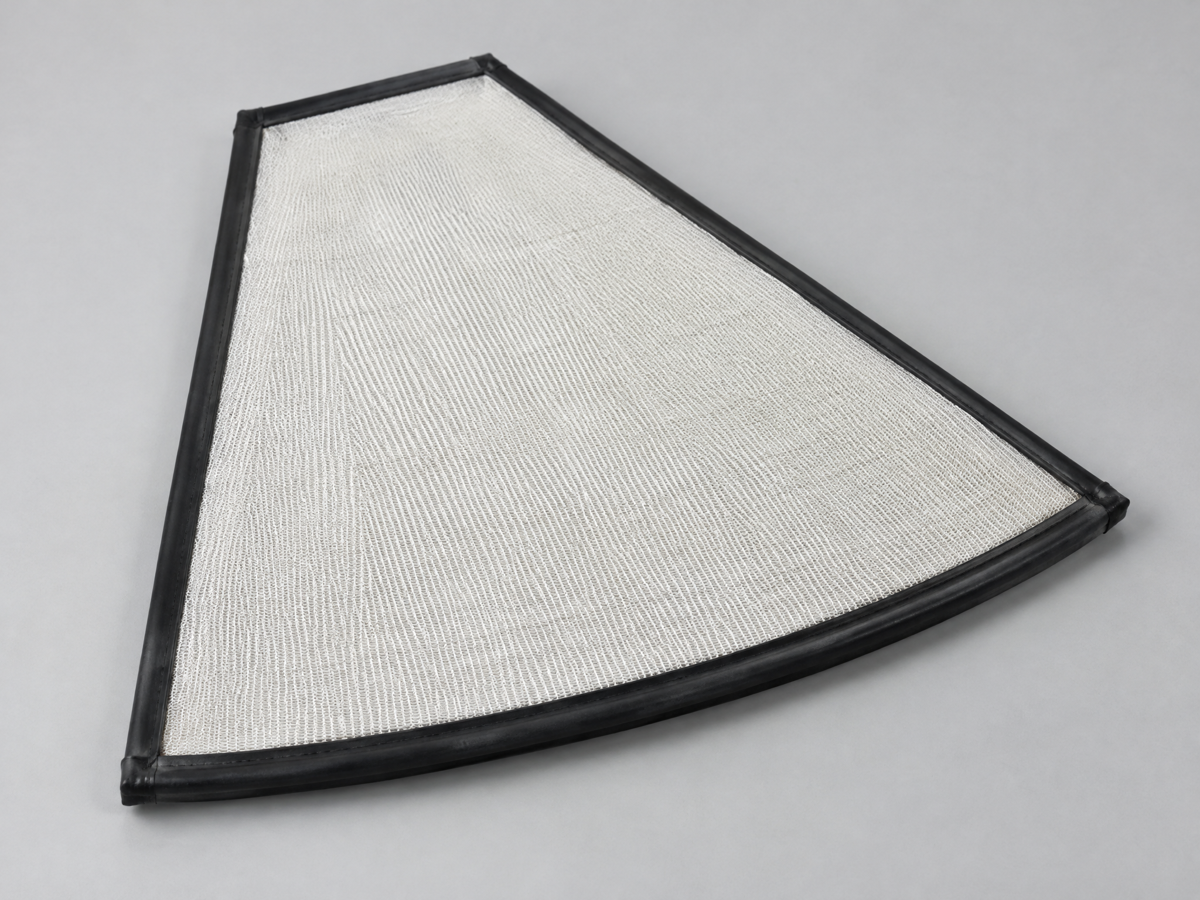
One-piece trapezoidal sector cloths in monofilament PP or PET, heat-set and calendered — made to the cell geometry of your table or pan filter for phosphoric acid, alumina hydrate and other demanding vacuum filtration duties.
Also known as: pan filter covers · filter segments · sector cloths · cell cloths
In short
Rotary table filters and tilting pan filters are horizontal vacuum filters used above all in phosphoric acid production to separate phosphogypsum from the acid and wash the cake counter-currently. Their filter cloths must combine high permeability with fine crystal retention, resist abrasion, acid and temperature, stay dimensionally stable and release the cake cleanly. R+F FilterElements manufactures these cloths as woven monofilament PP or PET, heat-set and calendered, cut in one piece to each cell — with the edge execution of your filter, based on a drawing or a sample.
The Machines
Rotary table filters
A horizontal circular table divided into cells rotates continuously under vacuum. Slurry is fed, the cake is washed counter-currently and finally discharged, often by a screw conveyor. Each cell carries its own trapezoidal (sector-shaped) filter cloth, so a filter needs dozens of identical cloths.
Tilting pan filters
Individual pans move on a circular track; after filtration and washing each pan tilts to discharge the cake and the cloth is cleaned with spray water. Tilting and back-washing put additional mechanical stress on the cloth and its fixing.
Typical duties: phosphoric acid (dihydrate and hemihydrate processes) with phosphogypsum, potash slimes, aluminium hydrate, phosphate rock beneficiation and other chemical and mineral processes.
Two Core Duties, Different Priorities
Phosphoric acid / phosphogypsum
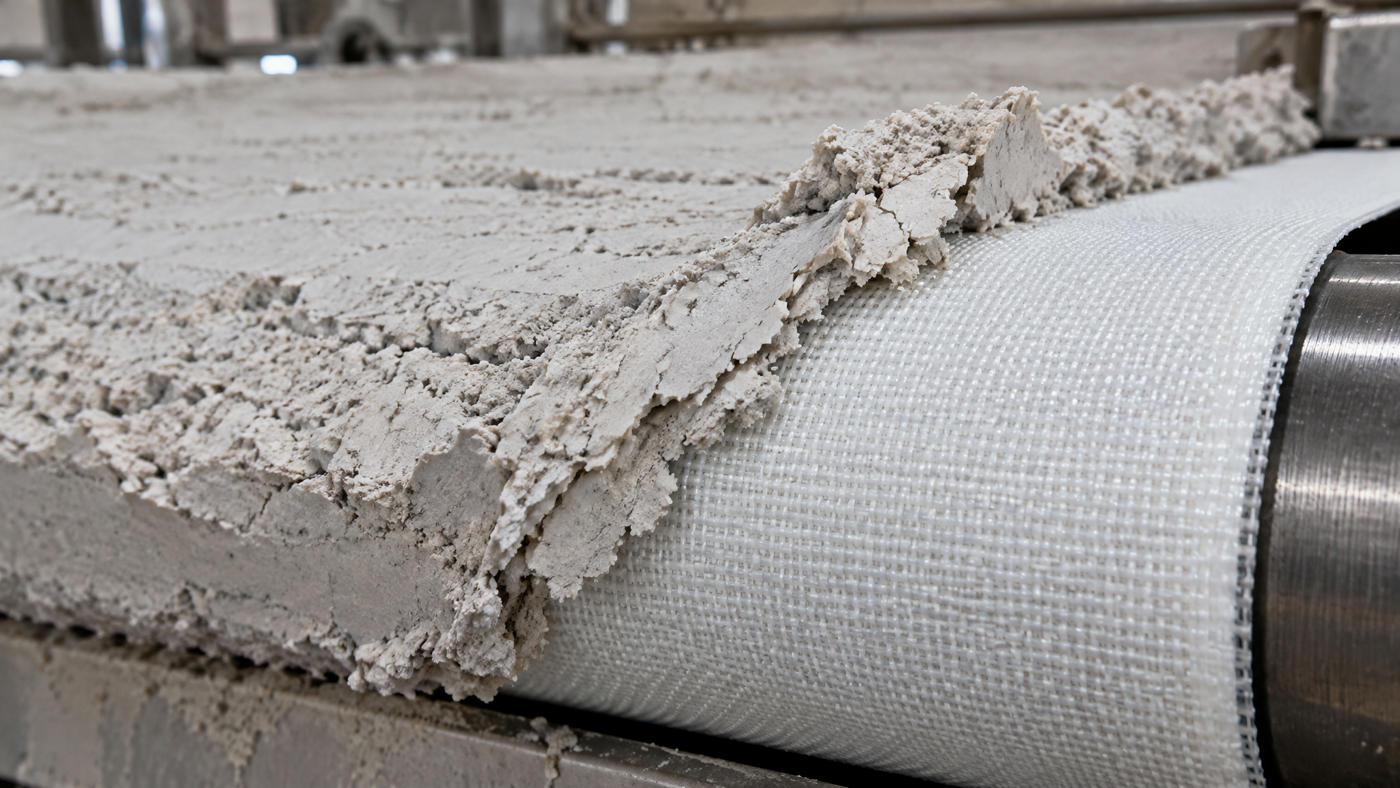
Dihydrate, hemihydrate and hemi-dihydrate processes. The cloth has to retain gypsum crystals, let the counter-current wash recover as much P₂O₅ as possible, withstand hot acid and resist abrasion and scaling. A smooth, calendered cake side helps the cake come off cleanly at discharge.
Alumina hydrate (Bayer process)
The goal is a clear filtrate and efficient cake washing, so that little caustic soda remains in the hydrate. The liquor is alkaline, so polypropylene is usually the material of choice. Pore size distribution and drainage decide throughput and washing efficiency.
What the Cloth Has to Withstand
Abrasion
Hard gypsum crystals and screw discharge wear the cake side.
Blinding & scaling
Crystals and scale must not clog the pores; spray water must clean them.
Heat & acid
Hot acidic slurry — shrinkage must stay minimal at operating temperature.
Fixing & fit
Exact cell geometry and a durable edge for the rubber fixing.
Our Solution
- Woven monofilament PP or PET — material chosen for acid, temperature and washing regime
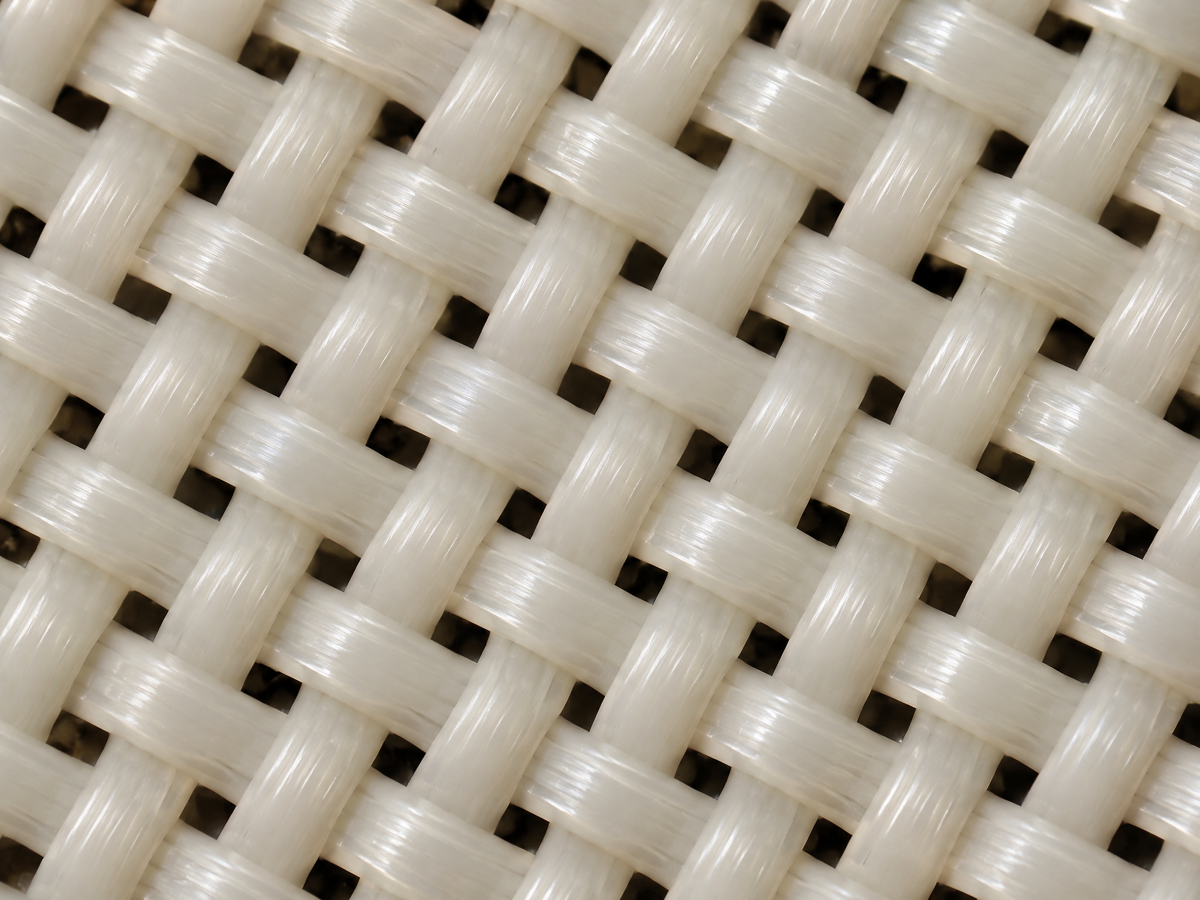
- Weave and yarn diameter balanced for permeability, crystal retention and abrasion resistance
- Heat-set for dimensional stability, calendered for a smooth cake side and clean cake release
- One-piece trapezoidal sector cloths — no welded or sewn joints in the filtering area
- Edge execution to match your cells, e.g. rubber bead or cord — from drawing or sample
- Precision-cut to the cell or pan geometry for a leak-free fit under vacuum
- Installation aids on request, such as reinforced edges, eyelets or fixing strips, for faster cloth changes
- Complete sets for all cells plus spare cloths
- Technical proposal with weight, thread count, yarn diameter, air permeability, strength and shrinkage
Why Monofilament?
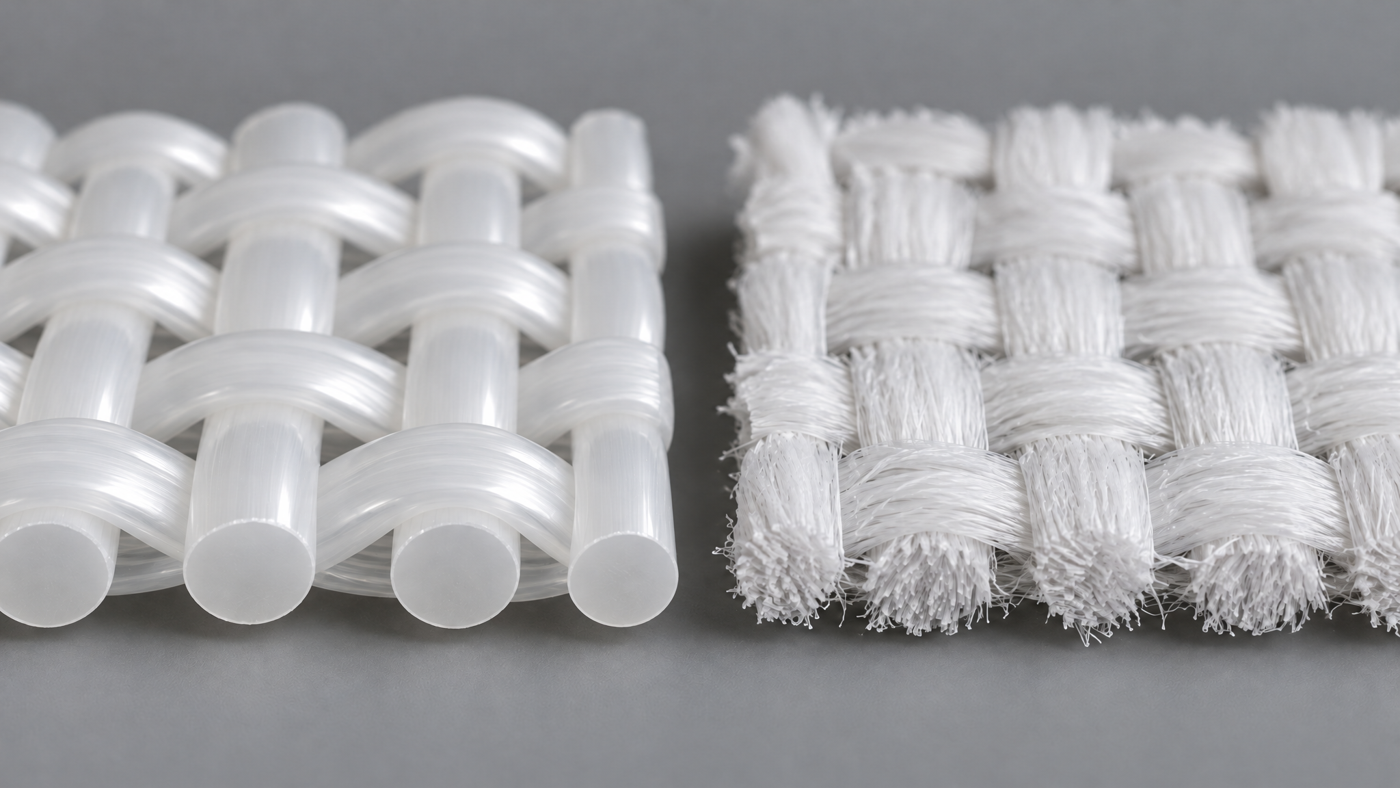
A monofilament yarn is a single smooth, round filament. Crystals cannot work their way into the yarn, so the cake releases more easily, spray water cleans the cloth better and the risk of blinding and scaling is lower. This is why table and pan filters mostly run monofilament cloths.
Multifilament yarns are bundles of fine fibres. They retain finer particles but tend to hold solids inside the yarn. Where very fine retention is needed, we balance both requirements through weave, yarn diameter and finishing.
PP or PET?
| Criterion | Polypropylene (PP) | Polyester (PET) |
|---|---|---|
| Acid resistance | Very good | Good |
| Alkali resistance | Very good | Limited |
| Temperature resistance | Moderate | Higher |
| Dimensional stability (heat-set) | Good | Very good |
| Typical choice | Chemically aggressive, moderate temperature | Higher temperature, high dimensional stability |
General guidance. The final selection depends on your process data.
Aftermarket
Replacement filter cloths for UCEGO® table filters
Compatible one-piece sector cloths for filters with 30 or 36 cells — from an independent manufacturer.
What We Need for Your Quotation
- •Filter type and manufacturer
- •Number of cells or pans
- •Drawing or sample of the existing cloth
- •Edge / fixing method (e.g. rubber bead)
- •Current cloth: material, air permeability, strength
- •Process: product, temperature, pH, particle size
- •Washing regime (spray water, flood washing)
- •Quantity incl. spare sets
No drawing? A used cloth or clear photos with measurements are often enough to start.
FAQ — Table & Pan Filter Cloths
What is a pan filter cover or filter segment?
Pan filter covers, filter segments and sector cloths are different names for the same part: the individual filter cloth that covers one cell of a rotary table filter or one pan of a tilting pan filter. Each one is cut to the exact shape of the cell or pan, usually trapezoidal, and is fixed at its edges so that the vacuum seal stays tight.
Do you supply filter cloths for alumina hydrate filtration?
Yes. In the Bayer process, table and pan filters separate and wash aluminium hydrate. The cloth must give a clear filtrate and allow efficient washing so that little caustic soda stays in the hydrate. Because the liquor is alkaline, polypropylene is usually the material of choice. Send us your process data and we propose a construction.
Which filter cloth is used on a rotary table or tilting pan filter?
Rotary table and tilting pan vacuum filters usually run woven monofilament cloths in polypropylene (PP) or polyester (PET). Monofilament yarns release the cake well and can be washed clean with spray water. The cloths are heat-set and calendered for dimensional stability and a smooth cake side, and are made to the shape of each cell — on table filters typically as trapezoidal sector cloths.
PP or PET for phosphoric acid filtration?
Both are used. Polypropylene offers very broad chemical resistance to acids and alkalis but has a lower temperature limit. Polyester offers higher temperature resistance and dimensional stability and good resistance to acids, but is not suitable for strongly alkaline conditions. The right choice depends on acid concentration, operating temperature and washing regime — send us your process data and we recommend the material.
Can you supply one-piece trapezoidal cloths without welded seams?
Yes. We manufacture sector cloths cut in one piece to your cell geometry, so there are no welded or sewn joints in the filtering area. The edge execution — for example a rubber bead or cord for fixing in the cell — is made to your drawing or to a sample of the existing cloth.
What causes short cloth life on table and pan filters?
Typical causes are abrasion from hard crystals such as gypsum, scaling and blinding in the cloth pores, thermal shrinkage at operating temperature and mechanical stress at the fixing edges and during cake discharge. A suitable yarn diameter, weave, heat-setting and calendering reduce these effects — see also our page on short filter lifespan.
What information do you need for a quotation?
Filter type and manufacturer, number of cells or pans, a drawing or a sample of the existing cloth, the edge or fixing method, data of the current cloth (material, air permeability, strength) and the process conditions (product, temperature, pH, washing). With this we propose a construction and state weight, thread count, yarn diameter, air permeability, tensile strength and dimensional stability.
Do you also supply cloths for UCEGO® table filters?
Yes. As an independent manufacturer we produce compatible replacement filter cloths for UCEGO® table filters with 30 or 36 cells. UCEGO® is a registered trademark of Technip Energies; R+F FilterElements is not affiliated with the trademark owner or the machine supplier.
Trademark & independence notice: UCEGO® is a registered trademark of Technip Energies. ANDRITZ is a trademark of ANDRITZ AG. All trademarks, product and machine designations mentioned are the property of their respective owners and are used solely to identify the machines for which we manufacture compatible replacement filter cloths. R+F FilterElements GmbH is an independent filter media manufacturer and is not affiliated with, endorsed or authorised by the trademark owners or machine manufacturers; our cloths are not original (OEM) parts.
Request Your Technical Proposal
Send us your filter type, cell drawing or sample and process data — we propose a cloth construction with full technical values.
Request a Quotation